

DEVELOPMENTS IN SEXUAL ORGANOGENESIS
267
from the area under the hypostome, the same section passes successively
through the three regions, so that the same interstitial cells undergo three
different types of inductions. This leads to the assumption that the spreading out of the three zones corresponds to the position of three physiologically
different regions.
Brien has compared all these observed facts to the phenomena known in
crustaceans. Oogenesis would be the neutral type of gametogenesis, whatever the genetic sex might be. It would be inhibited in the anterior region
of the polyp by the physiological condition of masculinity, which induces
differentiation in the male direction.
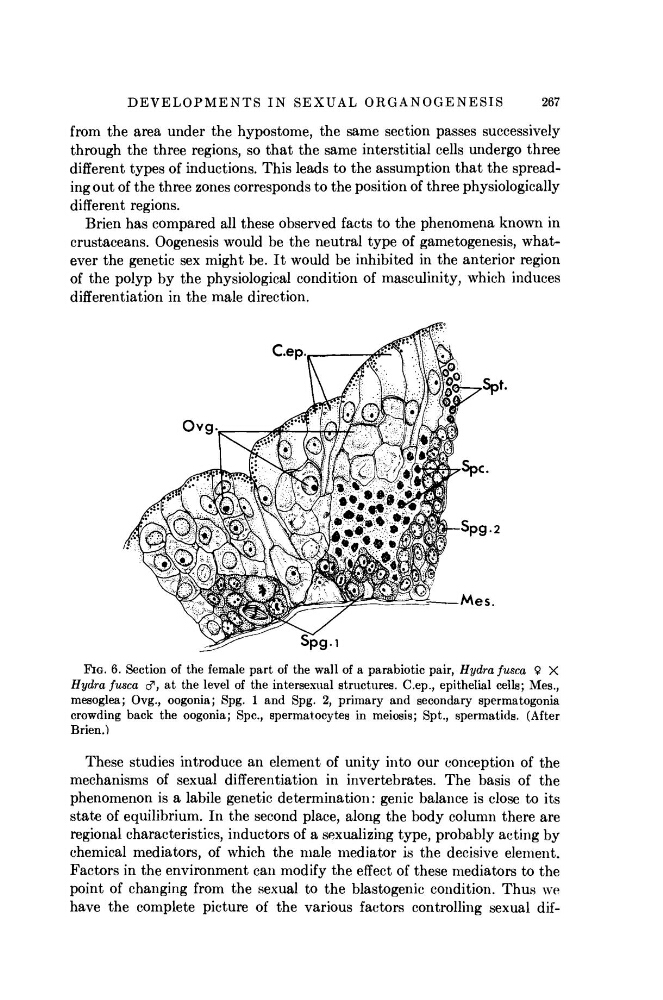
FIG. 6. Section of the female part of the wall of a parabiotic pair, Hydra fusca 9 X
Hydra fusca d\ at the level of the intersexual structures. C.ep., epithelial cells; Mes.,
mesoglea; Ovg., oogonia; Spg. 1 and Spg. 2, primary and secondary spermatogonia
crowding back the oogonia; Spc, spermatocytes in meiosis; Spt., spermatids. (After
Brien.)
These studies introduce an element of unity into our conception of the
mechanisms of sexual differentiation in invertebrates. The basis of the
phenomenon is a labile genetic determination: genie balance is close to its
state of equilibrium. In the second place, along the body column there are
regional characteristics, inductors of a sexualizing type, probably acting by
chemical mediators, of which the male mediator is the decisive element.
Factors in the environment can modify the effect of these mediators to the
point of changing from the sexual to the blastogenic condition. Thus we
have the complete picture of the various factors controlling sexual dif-
267
from the area under the hypostome, the same section passes successively
through the three regions, so that the same interstitial cells undergo three
different types of inductions. This leads to the assumption that the spreading out of the three zones corresponds to the position of three physiologically
different regions.
Brien has compared all these observed facts to the phenomena known in
crustaceans. Oogenesis would be the neutral type of gametogenesis, whatever the genetic sex might be. It would be inhibited in the anterior region
of the polyp by the physiological condition of masculinity, which induces
differentiation in the male direction.
FIG. 6. Section of the female part of the wall of a parabiotic pair, Hydra fusca 9 X
Hydra fusca d\ at the level of the intersexual structures. C.ep., epithelial cells; Mes.,
mesoglea; Ovg., oogonia; Spg. 1 and Spg. 2, primary and secondary spermatogonia
crowding back the oogonia; Spc, spermatocytes in meiosis; Spt., spermatids. (After
Brien.)
These studies introduce an element of unity into our conception of the
mechanisms of sexual differentiation in invertebrates. The basis of the
phenomenon is a labile genetic determination: genie balance is close to its
state of equilibrium. In the second place, along the body column there are
regional characteristics, inductors of a sexualizing type, probably acting by
chemical mediators, of which the male mediator is the decisive element.
Factors in the environment can modify the effect of these mediators to the
point of changing from the sexual to the blastogenic condition. Thus we
have the complete picture of the various factors controlling sexual dif-