

D E V E L O P M E N T S I N S E X U A L O R G A N O G E N E S I S
265
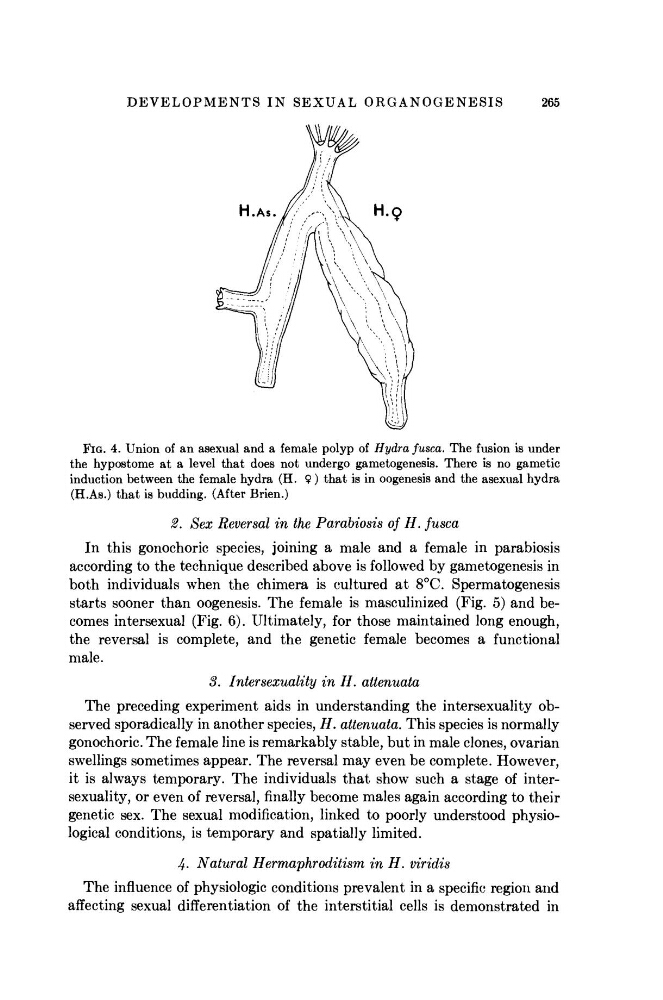
FIG. 4. Union of an asexual and a female polyp of Hydra fusca. The fusion is under
the hypostome at a level that does not undergo gametogenesis. There is no garnet ic
induction between the female hydra (H. Ç ) that is in oogenesis and the asexual hydra
(H.As.) that is budding. (After Brien.)
2. Sex Reversal in the Parabiosis of H. fusca
In this gonochoric species, joining a male and a female in parabiosis
according to the technique described above is followed by gametogenesis in
both individuals when the chimera is cultured at 8°C. Sperma togenesis
starts sooner than oogenesis. The female is masculinized (Fig. 5) and becomes intersexual (Fig. 6). Ultimately, for those maintained long enough,
the reversal is complete, and the genetic female becomes a functional
male.
3. Inter sexuality in H. attenuata
The preceding experiment aids in understanding the intersexuality observed sporadically in another species, H. attenuata. This species is normally
gonochoric. The female line is remarkably stable, but in male clones, ovarian
swellings sometimes appear. The reversal may even be complete. However,
it is always temporary. The individuals that show such a stage of intersexuality, or even of reversal, finally become males again according to their
genetic sex. The sexual modification, linked to poorly understood physiological conditions, is temporary and spatially limited.
4. Natural Hermaphroditism in H. viridis
The influence of physiologic conditions prevalent in a specific region and
affecting sexual differentiation of the interstitial cells is demonstrated in
265
FIG. 4. Union of an asexual and a female polyp of Hydra fusca. The fusion is under
the hypostome at a level that does not undergo gametogenesis. There is no garnet ic
induction between the female hydra (H. Ç ) that is in oogenesis and the asexual hydra
(H.As.) that is budding. (After Brien.)
2. Sex Reversal in the Parabiosis of H. fusca
In this gonochoric species, joining a male and a female in parabiosis
according to the technique described above is followed by gametogenesis in
both individuals when the chimera is cultured at 8°C. Sperma togenesis
starts sooner than oogenesis. The female is masculinized (Fig. 5) and becomes intersexual (Fig. 6). Ultimately, for those maintained long enough,
the reversal is complete, and the genetic female becomes a functional
male.
3. Inter sexuality in H. attenuata
The preceding experiment aids in understanding the intersexuality observed sporadically in another species, H. attenuata. This species is normally
gonochoric. The female line is remarkably stable, but in male clones, ovarian
swellings sometimes appear. The reversal may even be complete. However,
it is always temporary. The individuals that show such a stage of intersexuality, or even of reversal, finally become males again according to their
genetic sex. The sexual modification, linked to poorly understood physiological conditions, is temporary and spatially limited.
4. Natural Hermaphroditism in H. viridis
The influence of physiologic conditions prevalent in a specific region and
affecting sexual differentiation of the interstitial cells is demonstrated in