

418
CH. DEVILLERS
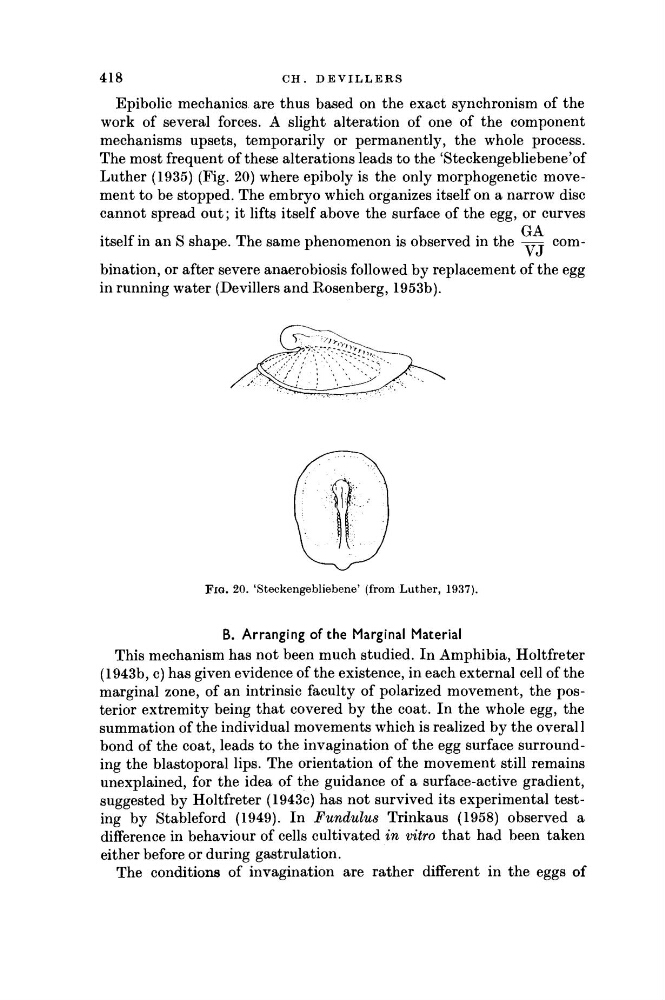
FIG. 20. 'Steckengebliebene' (from Luther, 1937).
B. Arranging of the Marginal Material
This mechanism has not been much studied. In Amphibia, Holtfreter
(1943b, c) has given evidence of the existence, in each external cell of the
marginal zone, of an intrinsic faculty of polarized movement, the posterior extremity being that covered by the coat. In the whole egg, the
summation of the individual movements which is realized by the overall
bond of the coat, leads to the invagination of the egg surface surrounding the blastoporal lips. The orientation of the movement still remains
unexplained, for the idea of the guidance of a surface-active gradient,
suggested by Holtfreter (1943c) has not survived its experimental testing by Stableford (1949). In Fundulus Trinkaus (1958) observed a
difference in behaviour of cells cultivated in vitro that had been taken
either before or during gastrulation.
The conditions of invagination are rather different in the eggs of
Epibolic mechanics are thus based on the exact synchronism of the
work of several forces. A slight alteration of one of the component
mechanisms upsets, temporarily or permanently, the whole process.
The most frequent of these alterations leads to the 'SteckengebliebeneOf
Luther (1935) (Fig. 20) where epiboly is the only morphogenetic movement to be stopped. The embryo which organizes itself on a narrow disc
cannot spread out; it lifts itself above the surface of the egg, or curves
GA
itself in an S shape. The same phenomenon is observed in the
comV J
bination, or after severe anaerobiosis followed by replacement of the egg
in running water (Devillers and Rosenberg, 1953b).
CH. DEVILLERS
FIG. 20. 'Steckengebliebene' (from Luther, 1937).
B. Arranging of the Marginal Material
This mechanism has not been much studied. In Amphibia, Holtfreter
(1943b, c) has given evidence of the existence, in each external cell of the
marginal zone, of an intrinsic faculty of polarized movement, the posterior extremity being that covered by the coat. In the whole egg, the
summation of the individual movements which is realized by the overall
bond of the coat, leads to the invagination of the egg surface surrounding the blastoporal lips. The orientation of the movement still remains
unexplained, for the idea of the guidance of a surface-active gradient,
suggested by Holtfreter (1943c) has not survived its experimental testing by Stableford (1949). In Fundulus Trinkaus (1958) observed a
difference in behaviour of cells cultivated in vitro that had been taken
either before or during gastrulation.
The conditions of invagination are rather different in the eggs of
Epibolic mechanics are thus based on the exact synchronism of the
work of several forces. A slight alteration of one of the component
mechanisms upsets, temporarily or permanently, the whole process.
The most frequent of these alterations leads to the 'SteckengebliebeneOf
Luther (1935) (Fig. 20) where epiboly is the only morphogenetic movement to be stopped. The embryo which organizes itself on a narrow disc
cannot spread out; it lifts itself above the surface of the egg, or curves
GA
itself in an S shape. The same phenomenon is observed in the
comV J
bination, or after severe anaerobiosis followed by replacement of the egg
in running water (Devillers and Rosenberg, 1953b).