

IV. ACTION OF MORPHOSTATIC SUBSTANCES
175
350 ρ
Duration of incubation, minutes
»
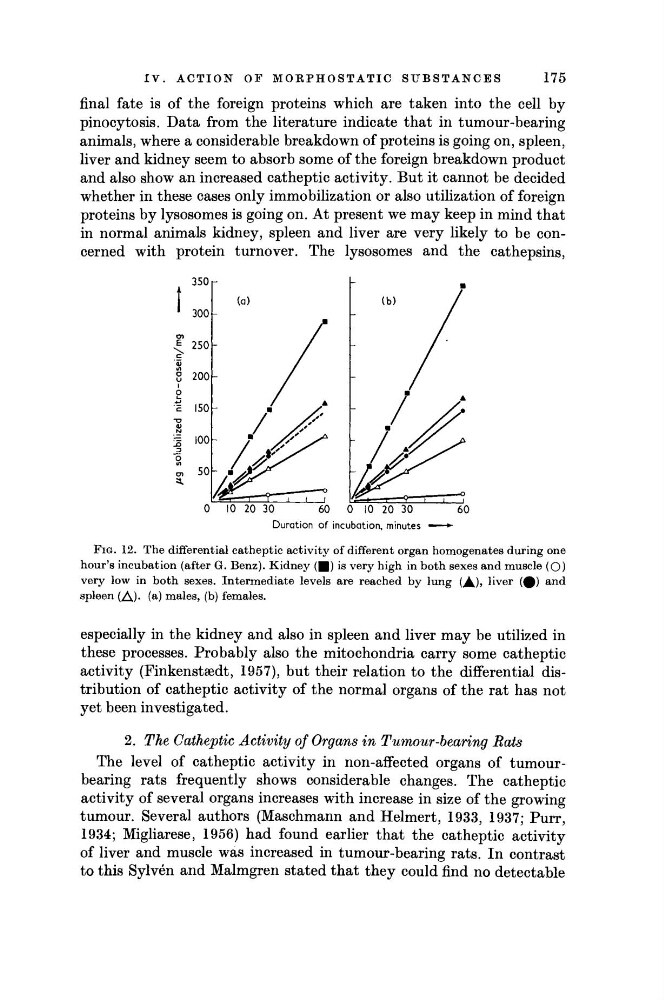
FIG. 12. The differential catheptic activity of different organ homogenates during one
hour's incubation (after G. Benz). Kidney (•) is very high in both sexes and muscle (O)
very low in both sexes. Intermediate levels are reached by lung [J±), liver (φ)
and
spleen (A),
(a) males, (b) females.
especially in the kidney and also in spleen and liver may be utilized in
these processes. Probably also the mitochondria carry some catheptic
activity (Finkenstaedt, 1957), but their relation to the differential distribution of catheptic activity of the normal organs of the rat has not
yet been investigated.
2. The Catheptic Activity of Organs in Tumour-bearing Rats
The level of catheptic activity in non-affected organs of tumourbearing rats frequently shows considerable changes. The catheptic
activity of several organs increases with increase in size of the growing
tumour. Several authors (Maschmann and Helmert, 1933, 1937; Purr,
1934; Migliarese, 1956) had found earlier that the catheptic activity
of liver and muscle was increased in tumour-bearing rats. In contrast
to this Sylvén and Malmgren stated that they could find no detectable
final fate is of the foreign proteins which are taken into the cell by
pinocytosis. Data from the literature indicate that in tumour-bearing
animals, where a considerable breakdown of proteins is going on, spleen,
liver and kidney seem to absorb some of the foreign breakdown product
and also show an increased catheptic activity. But it cannot be decided
whether in these cases only immobilization or also utilization of foreign
proteins by lysosomes is going on. At present we may keep in mind that
in normal animals kidney, spleen and liver are very likely to be concerned with protein turnover. The lysosomes and the cathepsins,
175
350 ρ
Duration of incubation, minutes
»
FIG. 12. The differential catheptic activity of different organ homogenates during one
hour's incubation (after G. Benz). Kidney (•) is very high in both sexes and muscle (O)
very low in both sexes. Intermediate levels are reached by lung [J±), liver (φ)
and
spleen (A),
(a) males, (b) females.
especially in the kidney and also in spleen and liver may be utilized in
these processes. Probably also the mitochondria carry some catheptic
activity (Finkenstaedt, 1957), but their relation to the differential distribution of catheptic activity of the normal organs of the rat has not
yet been investigated.
2. The Catheptic Activity of Organs in Tumour-bearing Rats
The level of catheptic activity in non-affected organs of tumourbearing rats frequently shows considerable changes. The catheptic
activity of several organs increases with increase in size of the growing
tumour. Several authors (Maschmann and Helmert, 1933, 1937; Purr,
1934; Migliarese, 1956) had found earlier that the catheptic activity
of liver and muscle was increased in tumour-bearing rats. In contrast
to this Sylvén and Malmgren stated that they could find no detectable
final fate is of the foreign proteins which are taken into the cell by
pinocytosis. Data from the literature indicate that in tumour-bearing
animals, where a considerable breakdown of proteins is going on, spleen,
liver and kidney seem to absorb some of the foreign breakdown product
and also show an increased catheptic activity. But it cannot be decided
whether in these cases only immobilization or also utilization of foreign
proteins by lysosomes is going on. At present we may keep in mind that
in normal animals kidney, spleen and liver are very likely to be concerned with protein turnover. The lysosomes and the cathepsins,