

28
J A C K C O H E N
though Willier (1952) argues for hormonal control of this sexual dimorphism, H ü t t (1953), perhaps relying on arguments advanced by
Willier and Rawles (1948), believed it to be an intrinsic phenomenon
dependent on the sex chromosomes carried by t h e pigment cell itself.
Also, Cock (personal communication, 1964) has noticed a correlation
between barring and the extent of the barbulation of barbs in pigmented
and light bars. H e argues convincingly for the pigment cell periodicity
as the primary one, as he has feathers (in genetic mosaics, see below)
barred on one side of the vane but not on the other; the barbulation
Β
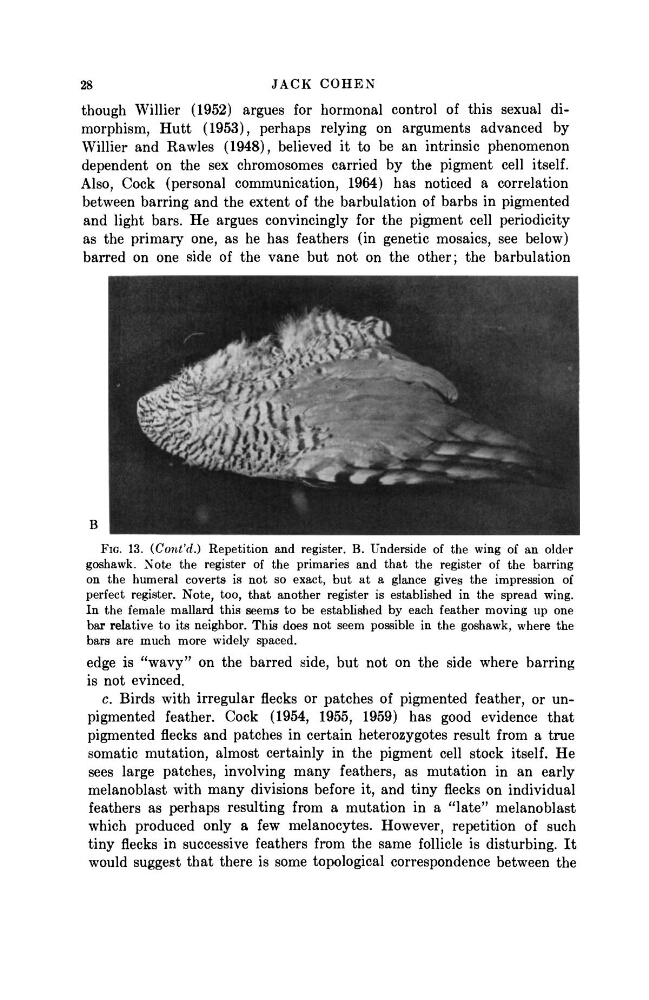
FIG. 13. (Cont'd.) Repetition and register. B. Underside of the wing of an older
goshawk. Note the register of the primaries and that the register of the barring
on the humeral coverts is not so exact, but at a glance gives the impression of
perfect register. Note, too, that another register is established in the spread wing.
In the female mallard this seems to be established by each feather moving up one
bar relative to its neighbor. This does not seem possible in the goshawk, where the
bars are much more widely spaced.
edge is " w a v y " on the barred side, b u t not on the side where barring
is not evinced.
c. Birds with irregular flecks or patches of pigmented feather, or unpigmented feather. Cock (1954, 1955, 1959) has good evidence t h a t
pigmented flecks and patches in certain heterozygotes result from a true
somatic mutation, almost certainly in the pigment cell stock itself. H e
sees large patches, involving many feathers, as mutation in an early
melanoblast with many divisions before it, and tiny flecks on individual
feathers as perhaps resulting from a mutation in a " l a t e " melanoblast
which produced only a few melanocytes. However, repetition of such
tiny flecks in successive feathers from the same follicle is disturbing. I t
would suggest t h a t there is some topological correspondence between the
J A C K C O H E N
though Willier (1952) argues for hormonal control of this sexual dimorphism, H ü t t (1953), perhaps relying on arguments advanced by
Willier and Rawles (1948), believed it to be an intrinsic phenomenon
dependent on the sex chromosomes carried by t h e pigment cell itself.
Also, Cock (personal communication, 1964) has noticed a correlation
between barring and the extent of the barbulation of barbs in pigmented
and light bars. H e argues convincingly for the pigment cell periodicity
as the primary one, as he has feathers (in genetic mosaics, see below)
barred on one side of the vane but not on the other; the barbulation
Β
FIG. 13. (Cont'd.) Repetition and register. B. Underside of the wing of an older
goshawk. Note the register of the primaries and that the register of the barring
on the humeral coverts is not so exact, but at a glance gives the impression of
perfect register. Note, too, that another register is established in the spread wing.
In the female mallard this seems to be established by each feather moving up one
bar relative to its neighbor. This does not seem possible in the goshawk, where the
bars are much more widely spaced.
edge is " w a v y " on the barred side, b u t not on the side where barring
is not evinced.
c. Birds with irregular flecks or patches of pigmented feather, or unpigmented feather. Cock (1954, 1955, 1959) has good evidence t h a t
pigmented flecks and patches in certain heterozygotes result from a true
somatic mutation, almost certainly in the pigment cell stock itself. H e
sees large patches, involving many feathers, as mutation in an early
melanoblast with many divisions before it, and tiny flecks on individual
feathers as perhaps resulting from a mutation in a " l a t e " melanoblast
which produced only a few melanocytes. However, repetition of such
tiny flecks in successive feathers from the same follicle is disturbing. I t
would suggest t h a t there is some topological correspondence between the