

F E A T H E R S A N D P A T T E R N S
27
3. Birds with partially pigmented plumage. Again we must distinguish
here among three kinds:
a. Those birds in which some feathers in some tracts are regularly
pigmented while other tracts are quite white (see Fig. 2 B ) . Here two
explanations have been offered. One view is t h a t of Rawles (1959), who
believes t h a t at least some cases (e.g., Campine wing-tip feathers) can
best be explained in terms of differential migration of melanoblasts in
the embryo [the same view has been advanced for the hooded rat
(Rawles, 1955; Pepper, 1956) and for the belted mouse (W. Quevedo,
unpublished observations, 1964) ] . This ties in well with similar explanations advanced for skin pigment patterns in Amphibia (see, for example,
A
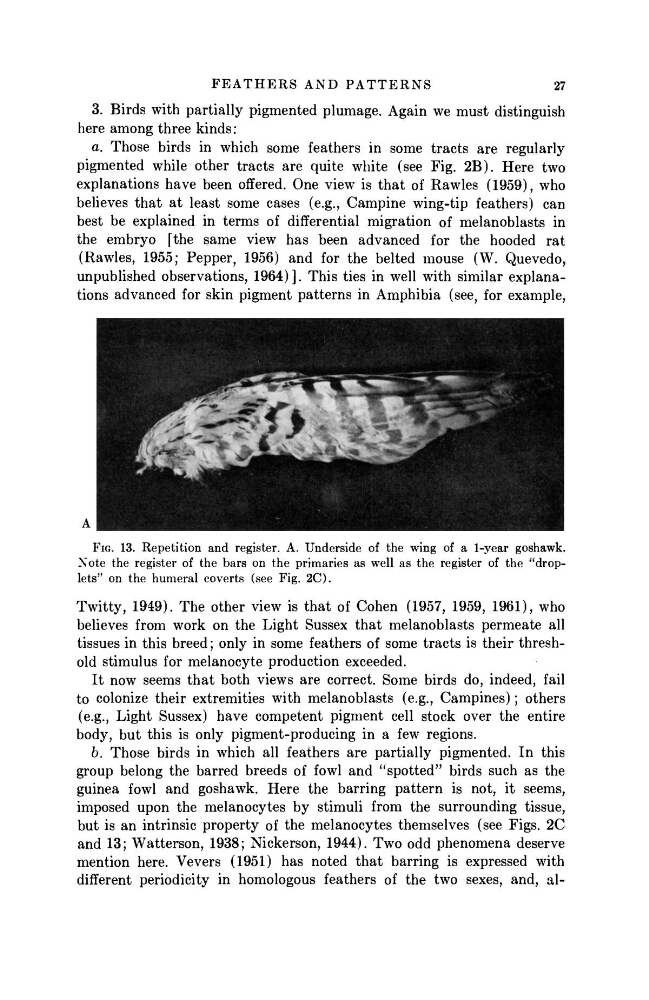
FIG. 13. Repetition and register. A. Underside of the wing of a 1-year goshawk.
Note the register of the bars on the primaries as well as the register of the "droplets" on the humeral coverts (see Fig. 2 C ) .
Twitty, 1949). The other view is t h a t of Cohen (1957, 1959, 1961), who
believes from work on the Light Sussex t h a t melanoblasts permeate all
tissues in this breed ; only in some feathers of some tracts is their threshold stimulus for melanocyte production exceeded.
I t now seems t h a t both views are correct. Some birds do, indeed, fail
to colonize their extremities with melanoblasts (e.g., Campines) ; others
(e.g., Light Sussex) have competent pigment cell stock over the entire
body, but this is only pigment-producing in a few regions.
b. Those birds in which all feathers are partially pigmented. In this
group belong the barred breeds of fowl and "spotted" birds such as the
guinea fowl and goshawk. Here the barring pattern is not, it seems,
imposed upon the melanocytes by stimuli from the surrounding tissue,
but is an intrinsic property of the melanocytes themselves (see Figs. 2C
and 13; Watterson, 1938; Nickerson, 1944). Two odd phenomena deserve
mention here. Vevers (1951) has noted t h a t barring is expressed with
different periodicity in homologous feathers of the two sexes, and, al-
27
3. Birds with partially pigmented plumage. Again we must distinguish
here among three kinds:
a. Those birds in which some feathers in some tracts are regularly
pigmented while other tracts are quite white (see Fig. 2 B ) . Here two
explanations have been offered. One view is t h a t of Rawles (1959), who
believes t h a t at least some cases (e.g., Campine wing-tip feathers) can
best be explained in terms of differential migration of melanoblasts in
the embryo [the same view has been advanced for the hooded rat
(Rawles, 1955; Pepper, 1956) and for the belted mouse (W. Quevedo,
unpublished observations, 1964) ] . This ties in well with similar explanations advanced for skin pigment patterns in Amphibia (see, for example,
A
FIG. 13. Repetition and register. A. Underside of the wing of a 1-year goshawk.
Note the register of the bars on the primaries as well as the register of the "droplets" on the humeral coverts (see Fig. 2 C ) .
Twitty, 1949). The other view is t h a t of Cohen (1957, 1959, 1961), who
believes from work on the Light Sussex t h a t melanoblasts permeate all
tissues in this breed ; only in some feathers of some tracts is their threshold stimulus for melanocyte production exceeded.
I t now seems t h a t both views are correct. Some birds do, indeed, fail
to colonize their extremities with melanoblasts (e.g., Campines) ; others
(e.g., Light Sussex) have competent pigment cell stock over the entire
body, but this is only pigment-producing in a few regions.
b. Those birds in which all feathers are partially pigmented. In this
group belong the barred breeds of fowl and "spotted" birds such as the
guinea fowl and goshawk. Here the barring pattern is not, it seems,
imposed upon the melanocytes by stimuli from the surrounding tissue,
but is an intrinsic property of the melanocytes themselves (see Figs. 2C
and 13; Watterson, 1938; Nickerson, 1944). Two odd phenomena deserve
mention here. Vevers (1951) has noted t h a t barring is expressed with
different periodicity in homologous feathers of the two sexes, and, al-