

V I T E L L I N E M E M B R A N E A N D C O R T I C A L P A R T I C L E S 2 3 7
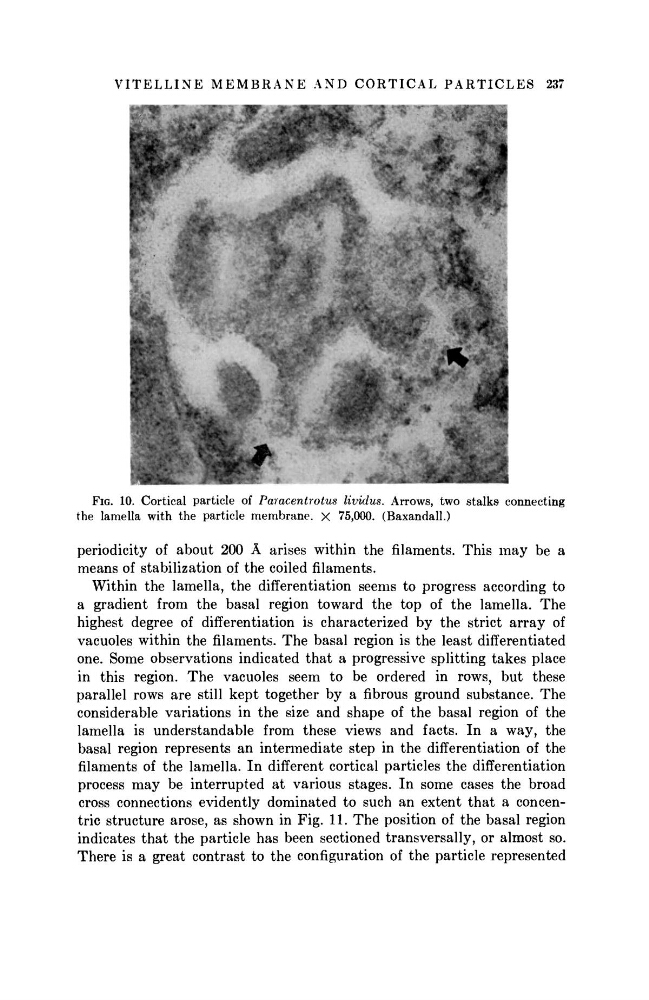
FIG. 10. Cortical particle of Paracentrotus lividus. Arrows, two stalks connecting
the lamella with the particle membrane. X 75,000. (Baxandall.)
periodicity of about 200 Â arises within the filaments. This may be a
means of stabilization of the coiled filaments.
Within the lamella, the differentiation seems to progress according to
a gradient from the basal region toward the top of the lamella. The
highest degree of differentiation is characterized by the strict array of
vacuoles within the filaments. The basal region is the least differentiated
one. Some observations indicated t h a t a progressive splitting takes place
in this region. The vacuoles seem to be ordered in rows, but these
parallel rows are still kept together by a fibrous ground substance. The
considerable variations in the size and shape of the basal region of the
lamella is understandable from these views and facts. In a way, the
basal region represents an intermediate step in the differentiation of the
filaments of the lamella. In different cortical particles the differentiation
process m a y be interrupted at various stages. In some cases the broad
cross connections evidently dominated to such an extent t h a t a concentric structure arose, as shown in Fig. 11. The position of the basal region
indicates t h a t the particle has been sectioned transversally, or almost so.
There is a great contrast to the configuration of the particle represented
FIG. 10. Cortical particle of Paracentrotus lividus. Arrows, two stalks connecting
the lamella with the particle membrane. X 75,000. (Baxandall.)
periodicity of about 200 Â arises within the filaments. This may be a
means of stabilization of the coiled filaments.
Within the lamella, the differentiation seems to progress according to
a gradient from the basal region toward the top of the lamella. The
highest degree of differentiation is characterized by the strict array of
vacuoles within the filaments. The basal region is the least differentiated
one. Some observations indicated t h a t a progressive splitting takes place
in this region. The vacuoles seem to be ordered in rows, but these
parallel rows are still kept together by a fibrous ground substance. The
considerable variations in the size and shape of the basal region of the
lamella is understandable from these views and facts. In a way, the
basal region represents an intermediate step in the differentiation of the
filaments of the lamella. In different cortical particles the differentiation
process m a y be interrupted at various stages. In some cases the broad
cross connections evidently dominated to such an extent t h a t a concentric structure arose, as shown in Fig. 11. The position of the basal region
indicates t h a t the particle has been sectioned transversally, or almost so.
There is a great contrast to the configuration of the particle represented