

152
S A U L W I S C H N I T Z E R
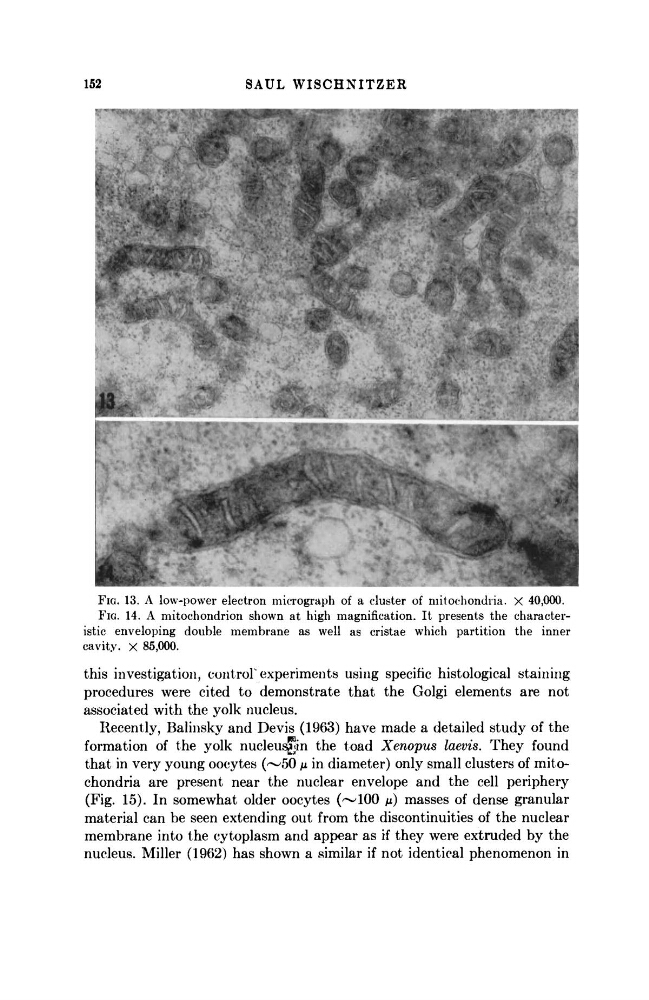
FIG. 13. A low-power electron micrograph of a cluster of mitochondria. X 40,000.
FIG. 14. A mitochondrion shown at high magnification. It presents the characteristic enveloping double membrane as well as cristae which partition the inner
cavity. X 85,000.
this investigation, control experiments using specific histological staining
procedures were cited to demonstrate t h a t the Golgi elements are not
associated with the yolk nucleus.
Recently, Balinsky and Devis (1963) have made a detailed study of the
formation of the yolk nucleusgan the toad Xenopus laevis. They found
t h a t in very young oocytes ( ^ 5 0 μ in diameter) only small clusters of mitochondria are present near the nuclear envelope and the cell periphery
(Fig. 15). In somewhat older oocytes ( ^ 1 0 0 μ) masses of dense granular
material can be seen extending out from the discontinuities of the nuclear
membrane into the cytoplasm and appear as if they were extruded by the
nucleus. Miller (1962) has shown a similar if not identical phenomenon in
S A U L W I S C H N I T Z E R
FIG. 13. A low-power electron micrograph of a cluster of mitochondria. X 40,000.
FIG. 14. A mitochondrion shown at high magnification. It presents the characteristic enveloping double membrane as well as cristae which partition the inner
cavity. X 85,000.
this investigation, control experiments using specific histological staining
procedures were cited to demonstrate t h a t the Golgi elements are not
associated with the yolk nucleus.
Recently, Balinsky and Devis (1963) have made a detailed study of the
formation of the yolk nucleusgan the toad Xenopus laevis. They found
t h a t in very young oocytes ( ^ 5 0 μ in diameter) only small clusters of mitochondria are present near the nuclear envelope and the cell periphery
(Fig. 15). In somewhat older oocytes ( ^ 1 0 0 μ) masses of dense granular
material can be seen extending out from the discontinuities of the nuclear
membrane into the cytoplasm and appear as if they were extruded by the
nucleus. Miller (1962) has shown a similar if not identical phenomenon in