

REGENERATION IN ANNELIDS
195
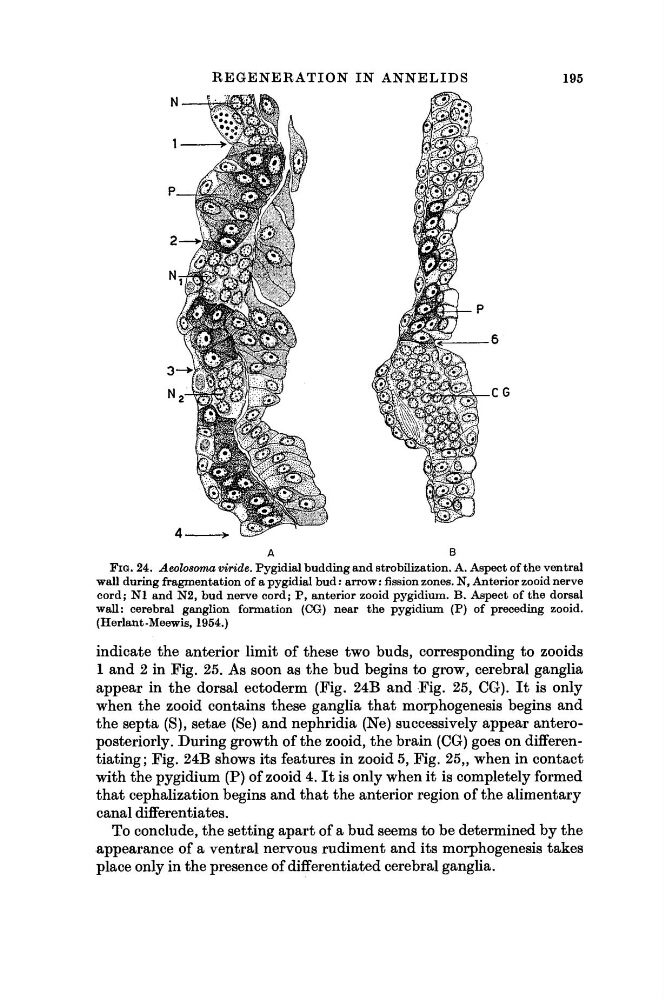
FIG. 24. Aeolosoma viride. Pygidial budding and strobilization. A. Aspect of the ventral
wall during fragmentation of a pygidial bud : arrow : fission zones. N, Anterior zooid nerve
cord; N l and N2, bud nerve cord; P, anterior zooid pygidium. B. Aspect of the dorsal
wall: cerebral ganglion formation (CG) near the pygidium (P) of preceding zooid.
(Herlant-Meewis, 1954.)
indicate the anterior limit of these two buds, corresponding to zooids
1 and 2 in Fig. 25. As soon as the bud begins to grow, cerebral ganglia
appear in the dorsal ectoderm (Fig. 24B and Fig. 25, CG). I t is only
when the zooid contains these ganglia that morphogenesis begins and
the septa (S), setae (Se) and nephridia (Ne) successively appear anteroposteriorly. During growth of the zooid, the brain (CG) goes on differentiating; Fig. 24B shows its features in zooid 5, Fig. 25,, when in contact
with the pygidium (P) of zooid 4. I t is only when it is completely formed
that cephalization begins and that the anterior region of the alimentary
canal differentiates.
To conclude, the setting apart of a bud seems to be determined by the
appearance of a ventral nervous rudiment and its morphogenesis takes
place only in the presence of differentiated cerebral ganglia.
195
FIG. 24. Aeolosoma viride. Pygidial budding and strobilization. A. Aspect of the ventral
wall during fragmentation of a pygidial bud : arrow : fission zones. N, Anterior zooid nerve
cord; N l and N2, bud nerve cord; P, anterior zooid pygidium. B. Aspect of the dorsal
wall: cerebral ganglion formation (CG) near the pygidium (P) of preceding zooid.
(Herlant-Meewis, 1954.)
indicate the anterior limit of these two buds, corresponding to zooids
1 and 2 in Fig. 25. As soon as the bud begins to grow, cerebral ganglia
appear in the dorsal ectoderm (Fig. 24B and Fig. 25, CG). I t is only
when the zooid contains these ganglia that morphogenesis begins and
the septa (S), setae (Se) and nephridia (Ne) successively appear anteroposteriorly. During growth of the zooid, the brain (CG) goes on differentiating; Fig. 24B shows its features in zooid 5, Fig. 25,, when in contact
with the pygidium (P) of zooid 4. I t is only when it is completely formed
that cephalization begins and that the anterior region of the alimentary
canal differentiates.
To conclude, the setting apart of a bud seems to be determined by the
appearance of a ventral nervous rudiment and its morphogenesis takes
place only in the presence of differentiated cerebral ganglia.