

94
E N R I C O U R R A N I
The behaviour of acid and alkaline phenylphosphatase is further
proof of the analogy between these conditions and those observed in the
amphibians. The activity of these enzymes can be compared with other
metabolic activities in the same developmental period. Interesting
research along these lines was recently undertaken by Dutrieu (1960a,
b), who correlated enzyme activity and changes in the contents total
nitrogen, total carbohydrates and total lipids.
100
80
60
401
20
-
i
* * " · * ·
·
"" " ^ ■ » ^ ^
>
~
~
Artemia
i
salina
i
1
i
__TN
V T C
TL
20
hours
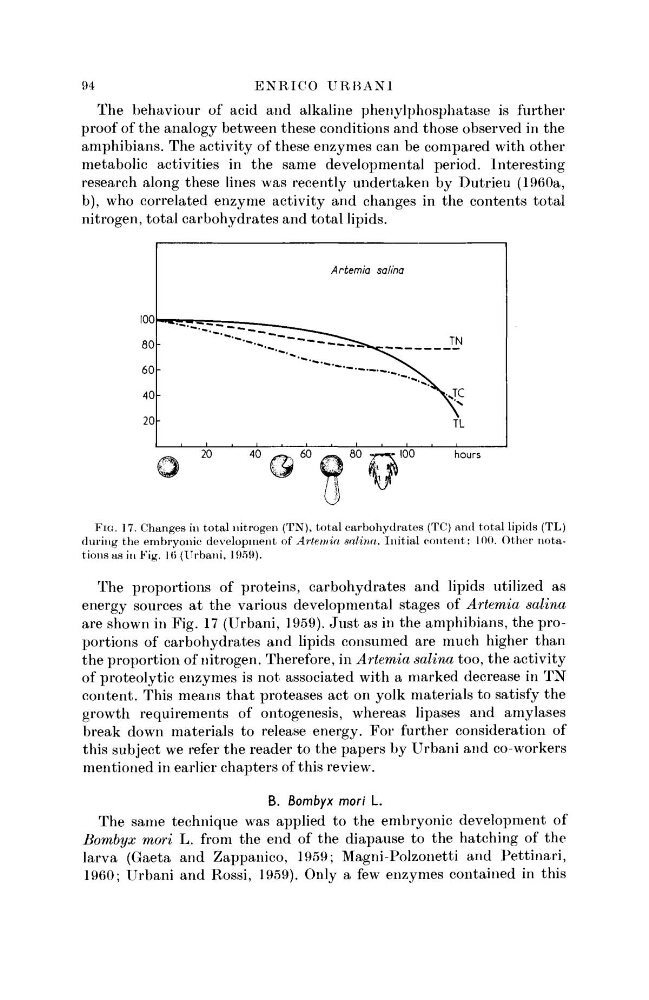
FIG. 17. Changes in total nitrogen (TN), total carbohydrates (TC) and total lipids (TL)
during the embryonic development of Artemia salina. Initial content: 100. Other notations as in Fig. 16 (Urbani, 1959).
The proportions of proteins, carbohydrates and lipids utilized as
energy sources at the various developmental stages of Artemia salina
are shown in Fig. 17 (Urbani, 1959). Just as in the amphibians, the proportions of carbohydrates and lipids consumed are much higher than
the proportion of nitrogen. Therefore, in Artemia salina too, the activity
of proteolytic enzymes is not associated with a marked decrease in TN
content. This means that proteases act on yolk materials to satisfy the
growth requirements of ontogenesis, whereas lipases and amylases
break down materials to release energy. For further consideration of
this subject we refer the reader to the papers by Urbani and co-workers
mentioned in earlier chapters of this review.
B. Bombyx mori L.
The same technique was applied to the embryonic development of
Bombyx mori L. from the end of the diapause to the hatching of the
larva (Gaeta and Zappanico, 1959; Magni-Polzonetti and Pettinari,
1960; Urbani and Rossi, 1959). Only a few enzymes contained in this
E N R I C O U R R A N I
The behaviour of acid and alkaline phenylphosphatase is further
proof of the analogy between these conditions and those observed in the
amphibians. The activity of these enzymes can be compared with other
metabolic activities in the same developmental period. Interesting
research along these lines was recently undertaken by Dutrieu (1960a,
b), who correlated enzyme activity and changes in the contents total
nitrogen, total carbohydrates and total lipids.
100
80
60
401
20
-
i
* * " · * ·
·
"" " ^ ■ » ^ ^
>
~
~
Artemia
i
salina
i
1
i
__TN
V T C
TL
20
hours
FIG. 17. Changes in total nitrogen (TN), total carbohydrates (TC) and total lipids (TL)
during the embryonic development of Artemia salina. Initial content: 100. Other notations as in Fig. 16 (Urbani, 1959).
The proportions of proteins, carbohydrates and lipids utilized as
energy sources at the various developmental stages of Artemia salina
are shown in Fig. 17 (Urbani, 1959). Just as in the amphibians, the proportions of carbohydrates and lipids consumed are much higher than
the proportion of nitrogen. Therefore, in Artemia salina too, the activity
of proteolytic enzymes is not associated with a marked decrease in TN
content. This means that proteases act on yolk materials to satisfy the
growth requirements of ontogenesis, whereas lipases and amylases
break down materials to release energy. For further consideration of
this subject we refer the reader to the papers by Urbani and co-workers
mentioned in earlier chapters of this review.
B. Bombyx mori L.
The same technique was applied to the embryonic development of
Bombyx mori L. from the end of the diapause to the hatching of the
larva (Gaeta and Zappanico, 1959; Magni-Polzonetti and Pettinari,
1960; Urbani and Rossi, 1959). Only a few enzymes contained in this