

AMPHIBIAN AND INVERTEBRATE DEVELOPMENT 75
important to bear in mind that metabolic activity in induced metamorphosis may not be a true representation of that during normal metamorphosis (Frieden, 1956; Herner and Frieden, 1960; Lewis and Frieden,
1959).
I t is possible that the tail contains the materials required for growth
and energy during metamorphosis, and it would be worth while investigating the contribution brought by tail tissues to the constructive requirements of the individual. From determinations of changes in total
nitrogen (TN), total carbohydrates (TC) and total lipids (TL) during
metamorphosis, it appears that 10-92 calories are spent in this process,
as against 2-58 calories in the embryonic development of the same species.
This is, of course, an indicative figure only, for we do not know what
proportions of TN, TC and TL are lost through oxidation.
These considerations on the biochemical significance of tail resorption
in the Anura are all the more important in view of the results of a
parallel research made on Urodeles, whose metamorphosis does not
involve tail regression. We felt that there might be some interest in
extending our studies to strictly autolytic activity of the proteolytic
900
800
700
600
500
400
300
200
100
Stages
I
II
HI
IV
i f f *
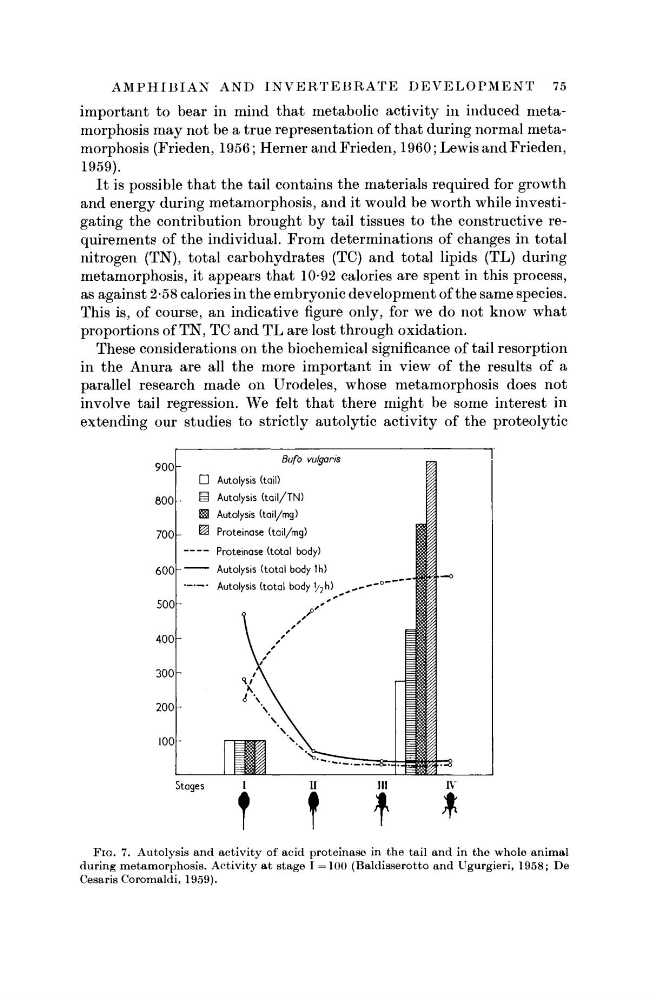
FIG. 7. Autolysis and activity of acid proteinase in the tail and in the whole animal
during metamorphosis. Activity at stage I = 100 (Baldisserotto and Ugurgieri, 1958; De
Cesar is Coromaldi, 1959).
important to bear in mind that metabolic activity in induced metamorphosis may not be a true representation of that during normal metamorphosis (Frieden, 1956; Herner and Frieden, 1960; Lewis and Frieden,
1959).
I t is possible that the tail contains the materials required for growth
and energy during metamorphosis, and it would be worth while investigating the contribution brought by tail tissues to the constructive requirements of the individual. From determinations of changes in total
nitrogen (TN), total carbohydrates (TC) and total lipids (TL) during
metamorphosis, it appears that 10-92 calories are spent in this process,
as against 2-58 calories in the embryonic development of the same species.
This is, of course, an indicative figure only, for we do not know what
proportions of TN, TC and TL are lost through oxidation.
These considerations on the biochemical significance of tail resorption
in the Anura are all the more important in view of the results of a
parallel research made on Urodeles, whose metamorphosis does not
involve tail regression. We felt that there might be some interest in
extending our studies to strictly autolytic activity of the proteolytic
900
800
700
600
500
400
300
200
100
Stages
I
II
HI
IV
i f f *
FIG. 7. Autolysis and activity of acid proteinase in the tail and in the whole animal
during metamorphosis. Activity at stage I = 100 (Baldisserotto and Ugurgieri, 1958; De
Cesar is Coromaldi, 1959).