

PROTEINS IN DEVELOPMENT
227
Fert.
hDiapausen
i
i
i _
Embr.
Hatchinq n Silk
■
u worm
Sea
urchin
AFrog
€nmtP5
p Chick
64 ^Guinea
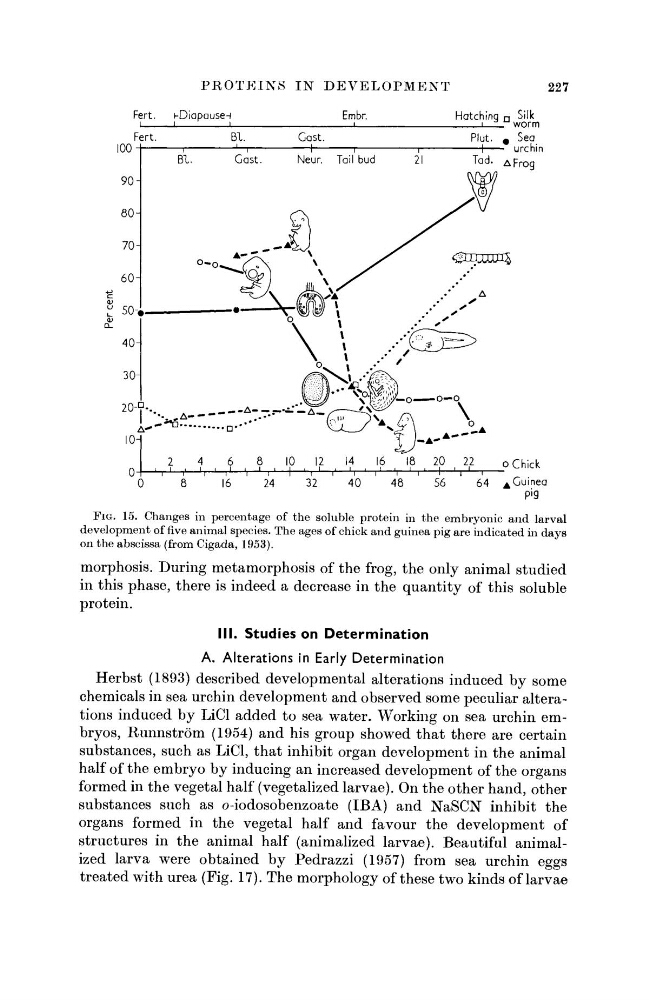
FIG. 15. Changes in percentage of the soluble protein in the embryonic and larval
development of five animal species. The ages of chick and guinea pig are indicated in days
on the abscissa (from Cigada, 1953).
morphosis. During metamorphosis of the frog, the only animal studied
in this phase, there is indeed a decrease in the quantity of this soluble
protein.
III. Studies on Determination
A. Alterations in Early Determination
Herbst (1893) described developmental alterations induced by some
chemicals in sea urchin development and observed some peculiar alterations induced by LiCl added to sea water. Working on sea urchin embryos, Runnström (1954) and his group showed that there are certain
substances, such as LiCl, that inhibit organ development in the animal
half of the embryo by inducing an increased development of the organs
formed in the vegetal half (vegetalized larvae). On the other hand, other
substances such as o-iodosobenzoate (IBA) and NaSCN inhibit the
organs formed in the vegetal half and favour the development of
structures in the animal half (animalized larvae). Beautiful animal -
ized larva were obtained by Pedrazzi (1957) from sea urchin eggs
treated with urea (Fig. 17). The morphology of these two kinds of larvae
227
Fert.
hDiapausen
i
i
i _
Embr.
Hatchinq n Silk
■
u worm
Sea
urchin
AFrog
€nmtP5
p Chick
64 ^Guinea
FIG. 15. Changes in percentage of the soluble protein in the embryonic and larval
development of five animal species. The ages of chick and guinea pig are indicated in days
on the abscissa (from Cigada, 1953).
morphosis. During metamorphosis of the frog, the only animal studied
in this phase, there is indeed a decrease in the quantity of this soluble
protein.
III. Studies on Determination
A. Alterations in Early Determination
Herbst (1893) described developmental alterations induced by some
chemicals in sea urchin development and observed some peculiar alterations induced by LiCl added to sea water. Working on sea urchin embryos, Runnström (1954) and his group showed that there are certain
substances, such as LiCl, that inhibit organ development in the animal
half of the embryo by inducing an increased development of the organs
formed in the vegetal half (vegetalized larvae). On the other hand, other
substances such as o-iodosobenzoate (IBA) and NaSCN inhibit the
organs formed in the vegetal half and favour the development of
structures in the animal half (animalized larvae). Beautiful animal -
ized larva were obtained by Pedrazzi (1957) from sea urchin eggs
treated with urea (Fig. 17). The morphology of these two kinds of larvae