

16.
A C T I O N S
O F
H O R M O N E S
629
mitosis fell to a normal level and the hyperplasia was gradually
reversed.
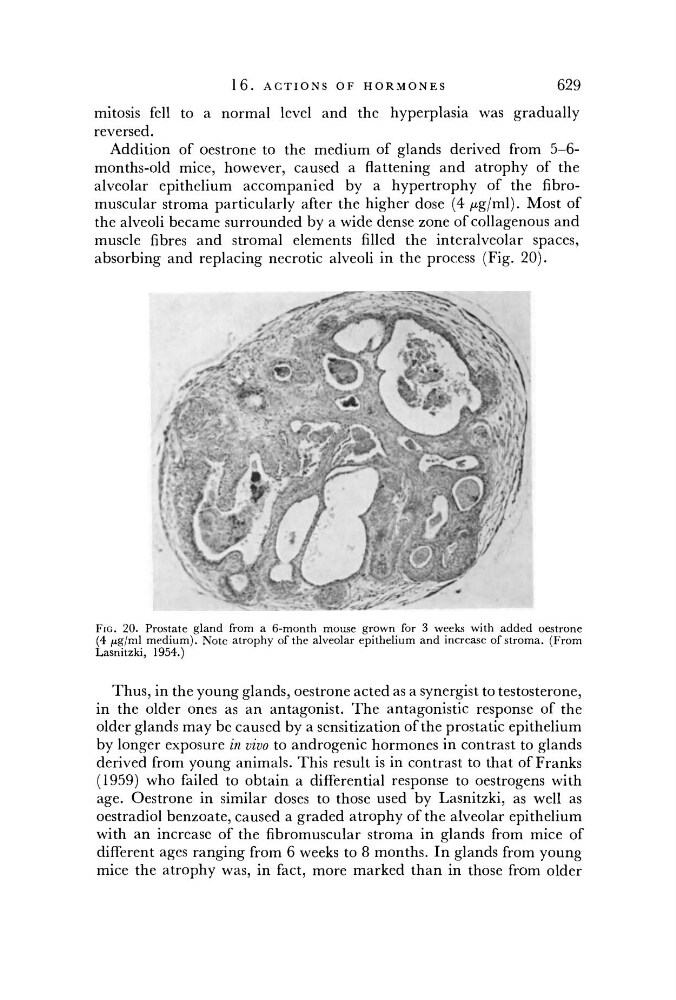
Addition of oestrone to the medium of glands derived from 5-6months-old mice, however, caused a flattening and atrophy of the
alveolar epithelium accompanied by a hypertrophy of the fibromuscular stroma particularly after the higher dose (4 /xg/ml). Most of
the alveoli became surrounded by a wide dense zone of collagenous and
muscle fibres and stromal elements filled the interalveolar spaces,
absorbing and replacing necrotic alveoli in the process (Fig. 20).
FIG. 20. Prostate gland from a 6-month mouse grown for 3 weeks with added oestrone
(4 /Ltg/ml medium). Note atrophy of the alveolar epithelium and increase of stroma. (From
Lasnitzki, 1954.)
Thus, in the young glands, oestrone acted as a synergist to testosterone,
in the older ones as an antagonist. The antagonistic response of the
older glands may be caused by a sensitization of the prostatic epithelium
by longer exposure in vivo to androgenic hormones in contrast to glands
derived from young animals. This result is in contrast to that of Franks
(1959) who failed to obtain a differential response to oestrogens with
age. Oestrone in similar doses to those used by Lasnitzki, as well as
oestradiol benzoate, caused a graded atrophy of the alveolar epithelium
with an increase of the fibromuscular stroma in glands from mice of
different ages ranging from 6 weeks to 8 months. In glands from young
mice the atrophy was, in fact, more marked than in those from older