

IV. INVESTIGATION OF C . UIf’HTHElUAE
135
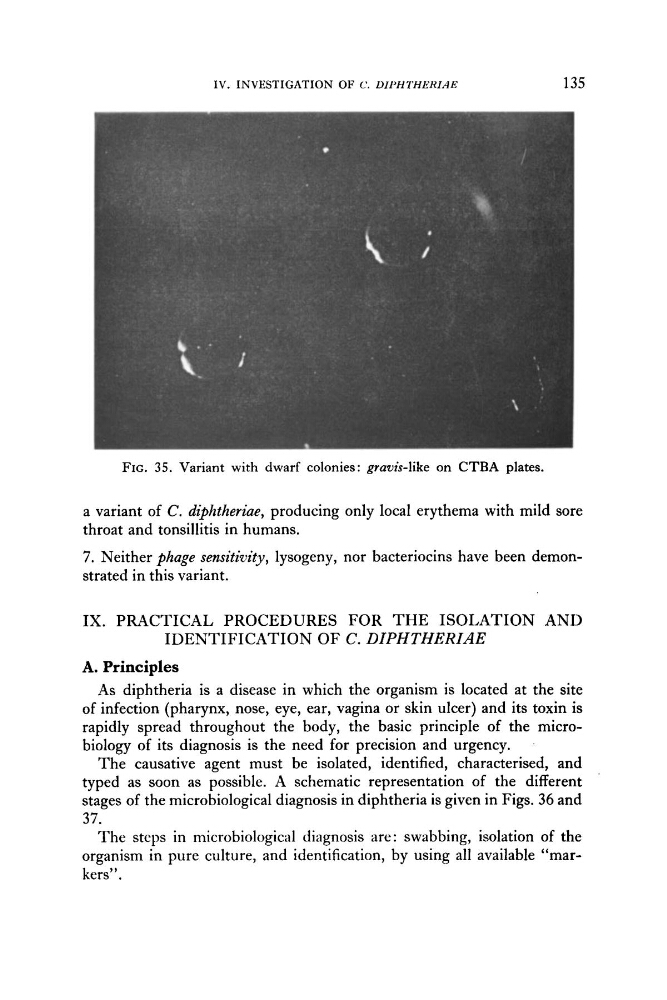
FIG. 35. Variant with dwarf colonies: gravis-like on CTBA plates.
a variant of C. diphtheriae, producing only local erythema with mild sore
throat and tonsillitis in humans.
7. Neither phage sensitizuly, lysogeny, nor bacteriocins have been demonstrated in this variant.
IX. PRACTICAL PROCEDURES FOR T H E ISOLATION AND
IDENTIFICATION O F C. DIPHTHERIAE
A. Principles
As diphtheria is a disease in which the organism is located at the site
of infection (pharynx, nose, eye, ear, vagina or skin ulcer) and its toxin is
rapidly spread throughout the body, the basic principle of the microbiology of its diagnosis is the need for precision and urgency.
The causative agent must be isolated, identified, characterised, and
typed as soon as possible. A schematic representation of the different
stages of the microbiological diagnosis in diphtheria is given in Figs. 36 and
37.
The steps in microbiological diagnosis are: swabbing, isolation of the
organism in pure culture, and identification, by using all available “markers”.
135
FIG. 35. Variant with dwarf colonies: gravis-like on CTBA plates.
a variant of C. diphtheriae, producing only local erythema with mild sore
throat and tonsillitis in humans.
7. Neither phage sensitizuly, lysogeny, nor bacteriocins have been demonstrated in this variant.
IX. PRACTICAL PROCEDURES FOR T H E ISOLATION AND
IDENTIFICATION O F C. DIPHTHERIAE
A. Principles
As diphtheria is a disease in which the organism is located at the site
of infection (pharynx, nose, eye, ear, vagina or skin ulcer) and its toxin is
rapidly spread throughout the body, the basic principle of the microbiology of its diagnosis is the need for precision and urgency.
The causative agent must be isolated, identified, characterised, and
typed as soon as possible. A schematic representation of the different
stages of the microbiological diagnosis in diphtheria is given in Figs. 36 and
37.
The steps in microbiological diagnosis are: swabbing, isolation of the
organism in pure culture, and identification, by using all available “markers”.