

394
JAMES E. DEACON AND W. L MINCKLEY
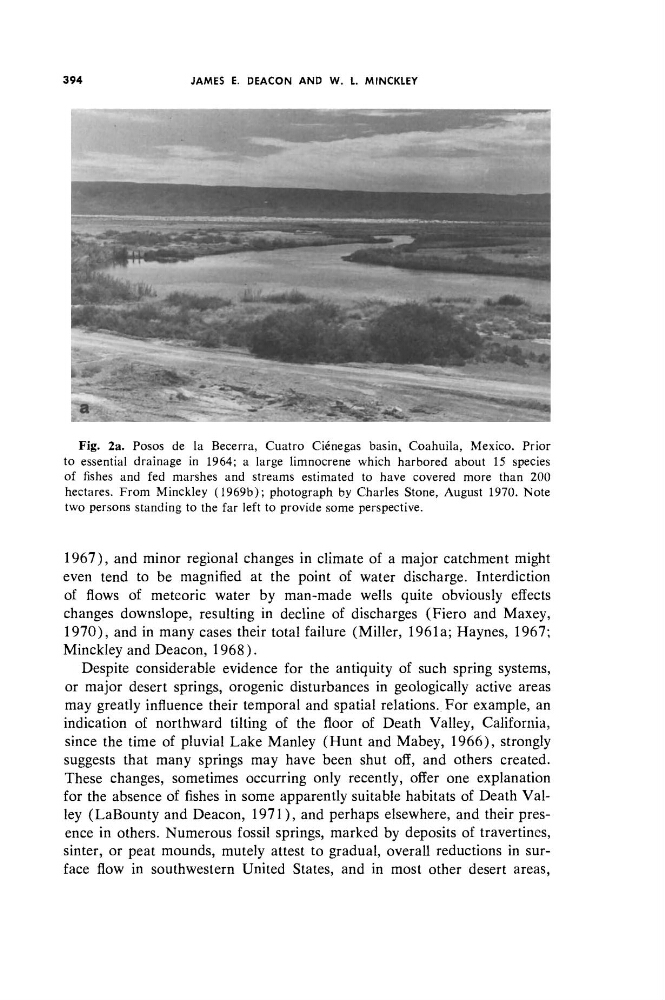
Fig. 2a. Posos de la Becerra, Cuatro Ciénegas basin % Coahuila, Mexico. Prior
to essential drainage in 1964; a large limnocrene which harbored about 15 species
of fishes and fed marshes and streams estimated to have covered more than 200
hectares. From Minckley (1969b); photograph by Charles Stone, August 1970. Note
two persons standing to the far left to provide some perspective.
1967), and minor regional changes in climate of a major catchment might
even tend to be magnified at the point of water discharge. Interdiction
of flows of meteoric water by man-made wells quite obviously effects
changes downslope, resulting in decline of discharges (Fiero and Maxey,
1970), and in many cases their total failure (Miller, 1961a; Haynes, 1967;
Minckley and Deacon, 1968).
Despite considerable evidence for the antiquity of such spring systems,
or major desert springs, orogenic disturbances in geologically active areas
may greatly influence their temporal and spatial relations. For example, an
indication of northward tilting of the floor of Death Valley, California,
since the time of pluvial Lake Manley (Hunt and Mabey, 1966), strongly
suggests that many springs may have been shut off, and others created.
These changes, sometimes occurring only recently, offer one explanation
for the absence of fishes in some apparently suitable habitats of Death Valley (LaBounty and Deacon, 1971), and perhaps elsewhere, and their presence in others. Numerous fossil springs, marked by deposits of travertines,
sinter, or peat mounds, mutely attest to gradual, overall reductions in surface flow in southwestern United States, and in most other desert areas,
JAMES E. DEACON AND W. L MINCKLEY
Fig. 2a. Posos de la Becerra, Cuatro Ciénegas basin % Coahuila, Mexico. Prior
to essential drainage in 1964; a large limnocrene which harbored about 15 species
of fishes and fed marshes and streams estimated to have covered more than 200
hectares. From Minckley (1969b); photograph by Charles Stone, August 1970. Note
two persons standing to the far left to provide some perspective.
1967), and minor regional changes in climate of a major catchment might
even tend to be magnified at the point of water discharge. Interdiction
of flows of meteoric water by man-made wells quite obviously effects
changes downslope, resulting in decline of discharges (Fiero and Maxey,
1970), and in many cases their total failure (Miller, 1961a; Haynes, 1967;
Minckley and Deacon, 1968).
Despite considerable evidence for the antiquity of such spring systems,
or major desert springs, orogenic disturbances in geologically active areas
may greatly influence their temporal and spatial relations. For example, an
indication of northward tilting of the floor of Death Valley, California,
since the time of pluvial Lake Manley (Hunt and Mabey, 1966), strongly
suggests that many springs may have been shut off, and others created.
These changes, sometimes occurring only recently, offer one explanation
for the absence of fishes in some apparently suitable habitats of Death Valley (LaBounty and Deacon, 1971), and perhaps elsewhere, and their presence in others. Numerous fossil springs, marked by deposits of travertines,
sinter, or peat mounds, mutely attest to gradual, overall reductions in surface flow in southwestern United States, and in most other desert areas,