

VI. DESERT ARTHROPODS
369
Sunrise
Sunset
I
a. m.
6
9
_J I
I I I L_
Hours local time (G.M.T. + 1)
3
6
9
I
I
I
I
I
I
I
I
I
- I
1 1 1
1—I
I I
20
ioh
M
*,,l„u i f T l u„t,„u, 1 f Π Ί
I I Sunshine
EZJ Shade
- I
I I I
L
70
60
o 50
δ 40
30
20
10
■·- Ground (sun)
o - Ground (shade)
*- In Eragrositis bush
■&— Air (+1 cm-sun)
A_ Ground base of
Acacia giraffae
-o—10 cm (shade)
9
a.m.
_i ι
i i L_
12
3
6
9
Hours local time (G.M.T. + 1)
_J I i I i I I I l
L
12
3
a. m.
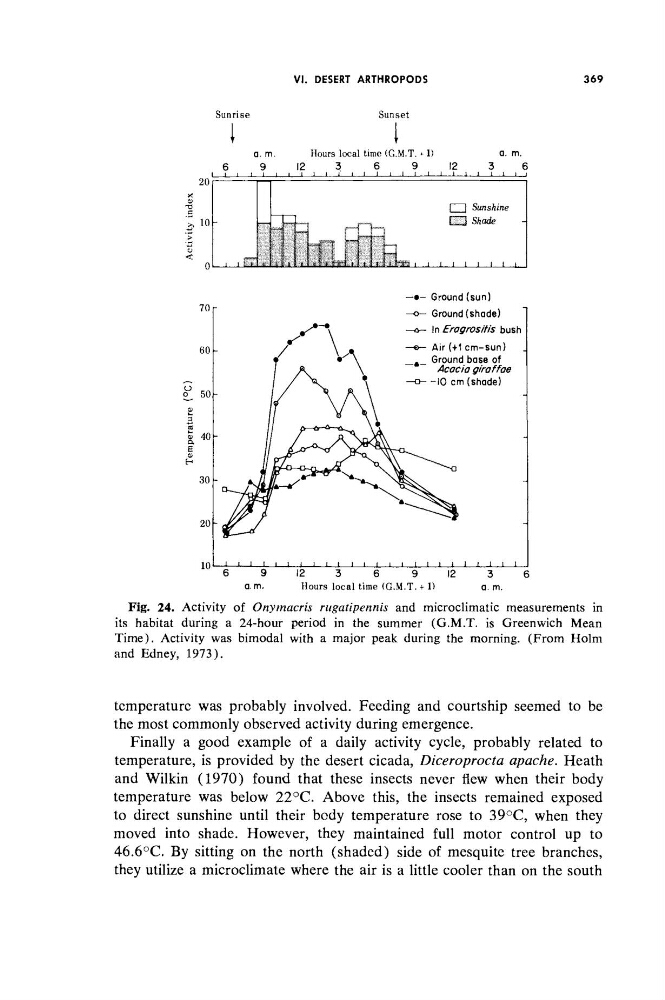
Fig. 24. Activity of Onymacris rugatipennis and microclimatic measurements in
its habitat during a 24-hour period in the summer (G.M.T. is Greenwich Mean
Time). Activity was bimodal with a major peak during the morning. (From Holm
and Edney, 1973).
temperature was probably involved. Feeding and courtship seemed to be
the most commonly observed activity during emergence.
Finally a good example of a daily activity cycle, probably related to
temperature, is provided by the desert cicada, Diceroprocta apache. Heath
and Wilkin (1970) found that these insects never flew when their body
temperature was below 22°C. Above this, the insects remained exposed
to direct sunshine until their body temperature rose to 39°C, when they
moved into shade. However, they maintained full motor control up to
46.6°C. By sitting on the north (shaded) side of mesquite tree branches,
they utilize a microclimate where the air is a little cooler than on the south
369
Sunrise
Sunset
I
a. m.
6
9
_J I
I I I L_
Hours local time (G.M.T. + 1)
3
6
9
I
I
I
I
I
I
I
I
I
- I
1 1 1
1—I
I I
20
ioh
M
*,,l„u i f T l u„t,„u, 1 f Π Ί
I I Sunshine
EZJ Shade
- I
I I I
L
70
60
o 50
δ 40
30
20
10
■·- Ground (sun)
o - Ground (shade)
*- In Eragrositis bush
■&— Air (+1 cm-sun)
A_ Ground base of
Acacia giraffae
-o—10 cm (shade)
9
a.m.
_i ι
i i L_
12
3
6
9
Hours local time (G.M.T. + 1)
_J I i I i I I I l
L
12
3
a. m.
Fig. 24. Activity of Onymacris rugatipennis and microclimatic measurements in
its habitat during a 24-hour period in the summer (G.M.T. is Greenwich Mean
Time). Activity was bimodal with a major peak during the morning. (From Holm
and Edney, 1973).
temperature was probably involved. Feeding and courtship seemed to be
the most commonly observed activity during emergence.
Finally a good example of a daily activity cycle, probably related to
temperature, is provided by the desert cicada, Diceroprocta apache. Heath
and Wilkin (1970) found that these insects never flew when their body
temperature was below 22°C. Above this, the insects remained exposed
to direct sunshine until their body temperature rose to 39°C, when they
moved into shade. However, they maintained full motor control up to
46.6°C. By sitting on the north (shaded) side of mesquite tree branches,
they utilize a microclimate where the air is a little cooler than on the south