

366
E. B. EDNEY
% R H
1 0 0
JULY 19-20, 1967
PS.T (hours)
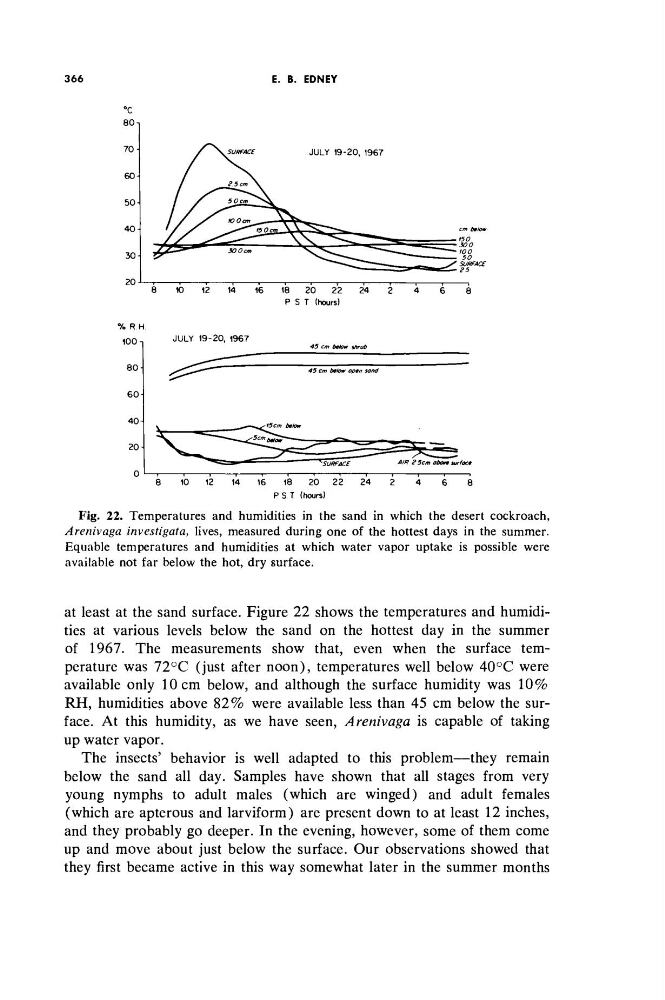
Fig. 22. Temperatures and humidities in the sand in which the desert cockroach,
Arenivaga investigata, lives, measured during one of the hottest days in the summer.
Equable temperatures and humidities at which water vapor uptake is possible were
available not far below the hot, dry surface.
at least at the sand surface. Figure 22 shows the temperatures and humidities at various levels below the sand on the hottest day in the summer
of 1967. The measurements show that, even when the surface temperature was 72°C (just after noon), temperatures well below 40°C were
available only 10 cm below, and although the surface humidity was 10%
RH, humidities above 82% were available less than 45 cm below the surface. At this humidity, as we have seen, Arenivaga is capable of taking
up water vapor.
The insects' behavior is well adapted to this problem—they remain
below the sand all day. Samples have shown that all stages from very
young nymphs to adult males (which are winged) and adult females
(which are apterous and larviform) are present down to at least 12 inches,
and they probably go deeper. In the evening, however, some of them come
up and move about just below the surface. Our observations showed that
they first became active in this way somewhat later in the summer months
E. B. EDNEY
% R H
1 0 0
JULY 19-20, 1967
PS.T (hours)
Fig. 22. Temperatures and humidities in the sand in which the desert cockroach,
Arenivaga investigata, lives, measured during one of the hottest days in the summer.
Equable temperatures and humidities at which water vapor uptake is possible were
available not far below the hot, dry surface.
at least at the sand surface. Figure 22 shows the temperatures and humidities at various levels below the sand on the hottest day in the summer
of 1967. The measurements show that, even when the surface temperature was 72°C (just after noon), temperatures well below 40°C were
available only 10 cm below, and although the surface humidity was 10%
RH, humidities above 82% were available less than 45 cm below the surface. At this humidity, as we have seen, Arenivaga is capable of taking
up water vapor.
The insects' behavior is well adapted to this problem—they remain
below the sand all day. Samples have shown that all stages from very
young nymphs to adult males (which are winged) and adult females
(which are apterous and larviform) are present down to at least 12 inches,
and they probably go deeper. In the evening, however, some of them come
up and move about just below the surface. Our observations showed that
they first became active in this way somewhat later in the summer months