

V. NEW APPROACH TO WATER RELATIONS OF DESERT PLANTS
299
Herbs
AI ha g i persarum
5
Malcolmia of ricana
9
Lepidium perfolia'turn
9
Artemisia kemrudica
7
Artemisia bodghysi
8
Matncoria lamellota
12
Glycyrrhiza glabro
8
Grasses and grasslike plants
Phragmites com m un is
15.5
Poa bulbosa
7.5
St/pa szowitsiana
10
Carex physodes
7
Riverine woods
Salix songarico
7
Populus diver si folia
6 5
Elaeagnus orientai/s
6
A s h
Ash (%)
Si02 P205
(% dry weight) 0 10 20 30 40 50 (%) (%)
CLI Ψ/iWvÄ
5
10
15
: ^ ^
I
rz3 i
69
36
74
ff
S1O2 not determind
^
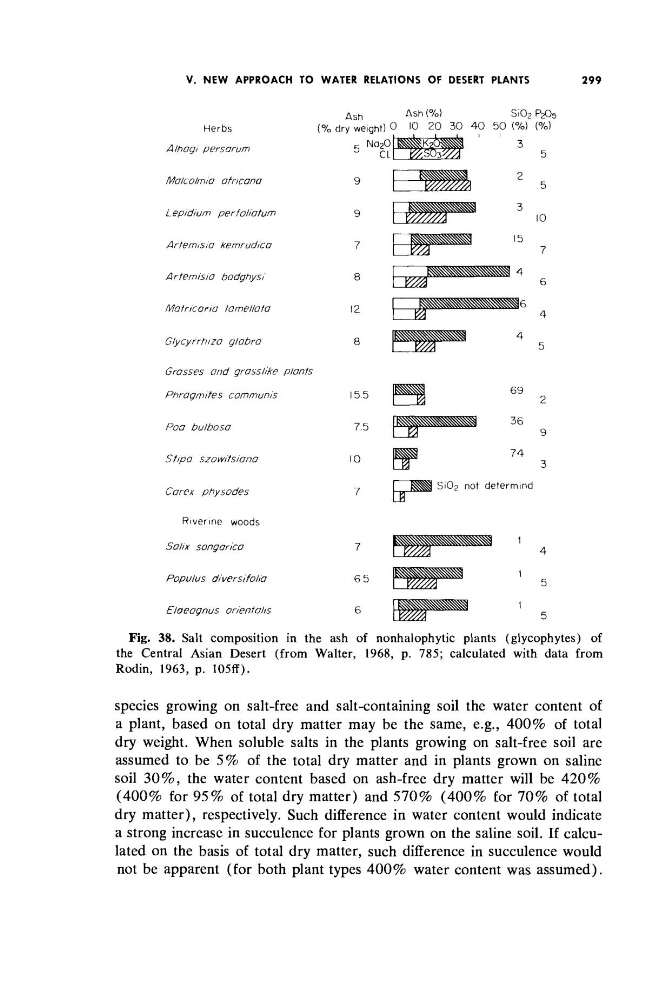
Fig. 38. Salt composition in the ash of nonhalophytic plants (glycophytes) of
the Central Asian Desert (from Walter, 1968, p. 785; calculated with data from
Rodin, 1963, p. 105ff).
species growing on salt-free and salt-containing soil the water content of
a plant, based on total dry matter may be the same, e.g., 400% of total
dry weight. When soluble salts in the plants growing on salt-free soil are
assumed to be 5% of the total dry matter and in plants grown on saline
soil 30%, the water content based on ash-free dry matter will be 420%
(400% for 95% of total dry matter) and 570% (400% for 70% of total
dry matter), respectively. Such difference in water content would indicate
a strong increase in succulence for plants grown on the saline soil. If calculated on the basis of total dry matter, such difference in succulence would
not be apparent (for both plant types 400% water content was assumed).
299
Herbs
AI ha g i persarum
5
Malcolmia of ricana
9
Lepidium perfolia'turn
9
Artemisia kemrudica
7
Artemisia bodghysi
8
Matncoria lamellota
12
Glycyrrhiza glabro
8
Grasses and grasslike plants
Phragmites com m un is
15.5
Poa bulbosa
7.5
St/pa szowitsiana
10
Carex physodes
7
Riverine woods
Salix songarico
7
Populus diver si folia
6 5
Elaeagnus orientai/s
6
A s h
Ash (%)
Si02 P205
(% dry weight) 0 10 20 30 40 50 (%) (%)
CLI Ψ/iWvÄ
5
10
15
: ^ ^
I
rz3 i
69
36
74
ff
S1O2 not determind
^
Fig. 38. Salt composition in the ash of nonhalophytic plants (glycophytes) of
the Central Asian Desert (from Walter, 1968, p. 785; calculated with data from
Rodin, 1963, p. 105ff).
species growing on salt-free and salt-containing soil the water content of
a plant, based on total dry matter may be the same, e.g., 400% of total
dry weight. When soluble salts in the plants growing on salt-free soil are
assumed to be 5% of the total dry matter and in plants grown on saline
soil 30%, the water content based on ash-free dry matter will be 420%
(400% for 95% of total dry matter) and 570% (400% for 70% of total
dry matter), respectively. Such difference in water content would indicate
a strong increase in succulence for plants grown on the saline soil. If calculated on the basis of total dry matter, such difference in succulence would
not be apparent (for both plant types 400% water content was assumed).