

H. WALTER AND E. STADELMANN
5040
I 30
α>
a>
a.
1 20o
!0
1 2 3 4 5 6 7 8 9 10 II 12
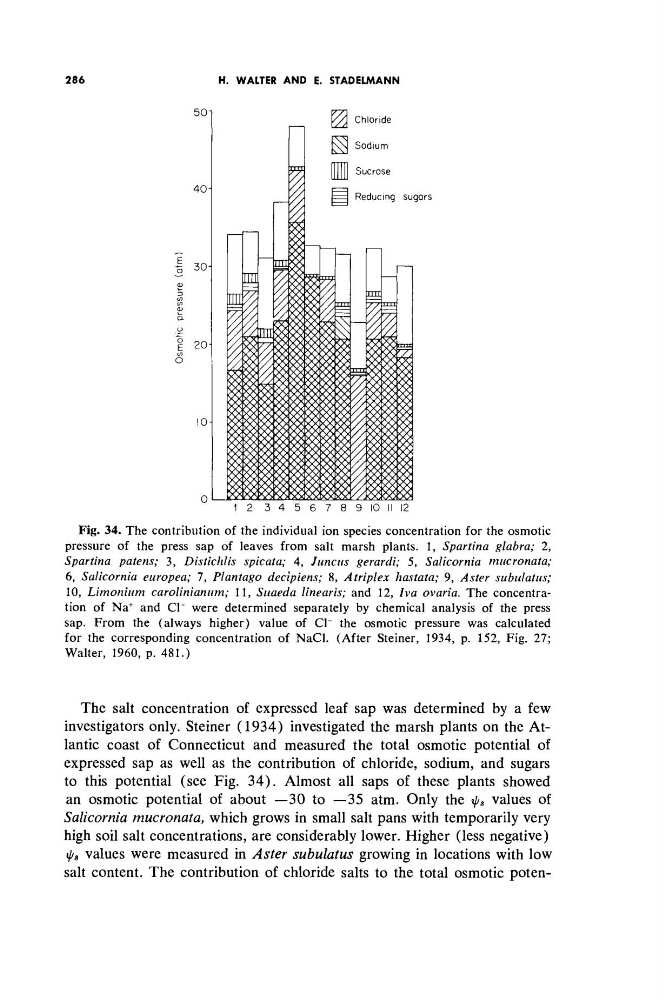
Fig. 34. The contribution of the individual ion species concentration for the osmotic
pressure of the press sap of leaves from salt marsh plants. 1, Spartina glabra; 2,
Spartina patens; 3, Distichlis spicata; 4, Juncus gerardi; 5, Salicornia mucronata;
6, Salicornia europea; 7, Plantago decipiens; 8, A triplex hastata; 9, Aster subulatus;
10, Limonium carolinianum; 11, Suaeda linearis; and 12, Iva ovaria. The concentration of Na
+ and Cl~ were determined separately by chemical analysis of the press
sap. From the (always higher) value of Cl~ the osmotic pressure was calculated
for the corresponding concentration of NaCl. (After Steiner, 1934, p. 152, Fig. 27;
Walter, 1960, p. 481.)
The salt concentration of expressed leaf sap was determined by a few
investigators only. Steiner (1934) investigated the marsh plants on the Atlantic coast of Connecticut and measured the total osmotic potential of
expressed sap as well as the contribution of chloride, sodium, and sugars
to this potential (see Fig. 34). Almost all saps of these plants showed
an osmotic potential of about —30 to —35 atm. Only the φ 8 values of
Salicornia mucronata, which grows in small salt pans with temporarily very
high soil salt concentrations, are considerably lower. Higher (less negative)
ψ 8 values were measured in Aster subulatus growing in locations with low
salt content. The contribution of chloride salts to the total osmotic poten286
5040
I 30
α>
a>
a.
1 20o
!0
1 2 3 4 5 6 7 8 9 10 II 12
Fig. 34. The contribution of the individual ion species concentration for the osmotic
pressure of the press sap of leaves from salt marsh plants. 1, Spartina glabra; 2,
Spartina patens; 3, Distichlis spicata; 4, Juncus gerardi; 5, Salicornia mucronata;
6, Salicornia europea; 7, Plantago decipiens; 8, A triplex hastata; 9, Aster subulatus;
10, Limonium carolinianum; 11, Suaeda linearis; and 12, Iva ovaria. The concentration of Na
+ and Cl~ were determined separately by chemical analysis of the press
sap. From the (always higher) value of Cl~ the osmotic pressure was calculated
for the corresponding concentration of NaCl. (After Steiner, 1934, p. 152, Fig. 27;
Walter, 1960, p. 481.)
The salt concentration of expressed leaf sap was determined by a few
investigators only. Steiner (1934) investigated the marsh plants on the Atlantic coast of Connecticut and measured the total osmotic potential of
expressed sap as well as the contribution of chloride, sodium, and sugars
to this potential (see Fig. 34). Almost all saps of these plants showed
an osmotic potential of about —30 to —35 atm. Only the φ 8 values of
Salicornia mucronata, which grows in small salt pans with temporarily very
high soil salt concentrations, are considerably lower. Higher (less negative)
ψ 8 values were measured in Aster subulatus growing in locations with low
salt content. The contribution of chloride salts to the total osmotic poten286