

278
H. WALTER AND E. STADELMANN
TABLE X I V
CLIMATE, COMPOSITION OF THE GROUNDWATER, AND T Y P E OF VEGETATION
ON SOILS HAVING A H I G H GROUND W A T E R L E V E L
Vegetation on soils with high
ground water level or type of
Climate
Composition of the groundwater
the brackening process
Extremely
Electrolyte free, very acid, colored Oligotrophic bogs
humid
brown by humus colloids
Humid
Generally neutral or slightly
Eutrophic bogs
alkaline
Subhumid
High content of Ca(HC0 3 )2
Alkalitrophic bogs
Semiarid
Low content of N a H C 0 3
Soda brackening (black alkali
soils)
Arid
Low amount of sodium chloride or Chloride or sulfate brackening
sodium sulfate
(white alkali soils)
low salt concentration and a high pH around or over 9; the latter have
high salt concentration and a pH slightly over 7.
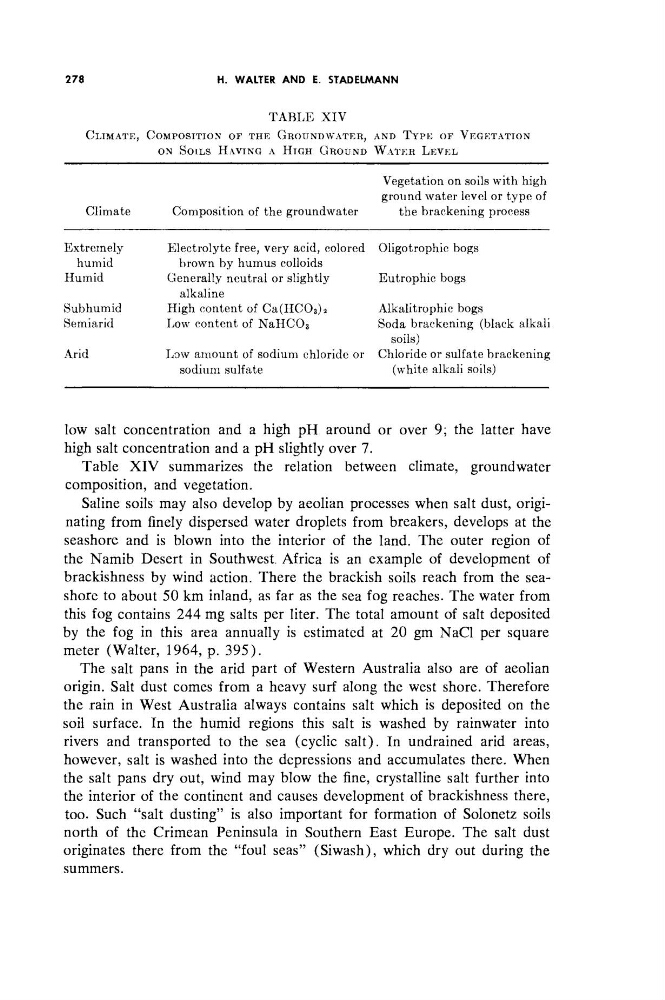
Table XIV summarizes the relation between climate, groundwater
composition, and vegetation.
Saline soils may also develop by aeolian processes when salt dust, originating from finely dispersed water droplets from breakers, develops at the
seashore and is blown into the interior of the land. The outer region of
the Namib Desert in Southwest Africa is an example of development of
brackishness by wind action. There the brackish soils reach from the seashore to about 50 km inland, as far as the sea fog reaches. The water from
this fog contains 244 mg salts per liter. The total amount of salt deposited
by the fog in this area annually is estimated at 20 gm NaCl per square
meter (Walter, 1964, p. 395).
The salt pans in the arid part of Western Australia also are of aeolian
origin. Salt dust comes from a heavy surf along the west shore. Therefore
the rain in West Australia always contains salt which is deposited on the
soil surface. In the humid regions this salt is washed by rainwater into
rivers and transported to the sea (cyclic salt). In undrained arid areas,
however, salt is washed into the depressions and accumulates there. When
the salt pans dry out, wind may blow the fine, crystalline salt further into
the interior of the continent and causes development of brackishness there,
too. Such "salt dusting" is also important for formation of Solonetz soils
north of the Crimean Peninsula in Southern East Europe. The salt dust
originates there from the "foul seas" (Siwash), which dry out during the
summers.
H. WALTER AND E. STADELMANN
TABLE X I V
CLIMATE, COMPOSITION OF THE GROUNDWATER, AND T Y P E OF VEGETATION
ON SOILS HAVING A H I G H GROUND W A T E R L E V E L
Vegetation on soils with high
ground water level or type of
Climate
Composition of the groundwater
the brackening process
Extremely
Electrolyte free, very acid, colored Oligotrophic bogs
humid
brown by humus colloids
Humid
Generally neutral or slightly
Eutrophic bogs
alkaline
Subhumid
High content of Ca(HC0 3 )2
Alkalitrophic bogs
Semiarid
Low content of N a H C 0 3
Soda brackening (black alkali
soils)
Arid
Low amount of sodium chloride or Chloride or sulfate brackening
sodium sulfate
(white alkali soils)
low salt concentration and a high pH around or over 9; the latter have
high salt concentration and a pH slightly over 7.
Table XIV summarizes the relation between climate, groundwater
composition, and vegetation.
Saline soils may also develop by aeolian processes when salt dust, originating from finely dispersed water droplets from breakers, develops at the
seashore and is blown into the interior of the land. The outer region of
the Namib Desert in Southwest Africa is an example of development of
brackishness by wind action. There the brackish soils reach from the seashore to about 50 km inland, as far as the sea fog reaches. The water from
this fog contains 244 mg salts per liter. The total amount of salt deposited
by the fog in this area annually is estimated at 20 gm NaCl per square
meter (Walter, 1964, p. 395).
The salt pans in the arid part of Western Australia also are of aeolian
origin. Salt dust comes from a heavy surf along the west shore. Therefore
the rain in West Australia always contains salt which is deposited on the
soil surface. In the humid regions this salt is washed by rainwater into
rivers and transported to the sea (cyclic salt). In undrained arid areas,
however, salt is washed into the depressions and accumulates there. When
the salt pans dry out, wind may blow the fine, crystalline salt further into
the interior of the continent and causes development of brackishness there,
too. Such "salt dusting" is also important for formation of Solonetz soils
north of the Crimean Peninsula in Southern East Europe. The salt dust
originates there from the "foul seas" (Siwash), which dry out during the
summers.