

V. NEW APPROACH TO WATER RELATIONS OF DESERT PLANTS
277
Stream bed
Recent river terrace
with nonbrackisn
.
Valley floor with moist surface
flowing water
«il
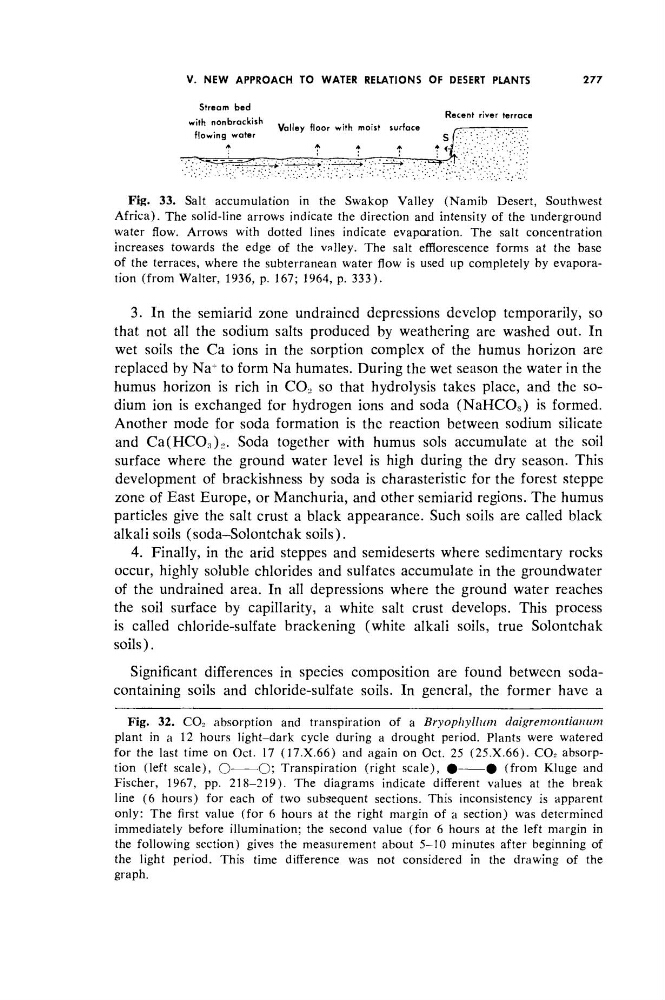
Fig. 33. Salt accumulation in the Swakop Valley (Namib Desert, Southwest
Africa). The solid-line arrows indicate the direction and intensity of the underground
water flow. Arrows with dotted lines indicate evaporation. The salt concentration
increases towards the edge of the valley. The salt efflorescence forms at the base
of the terraces, where the subterranean water flow is used up completely by evaporation (from Walter, 1936, p. 167; 1964, p. 333).
3. In the semiarid zone undrained depressions develop temporarily, so
that not all the sodium salts produced by weathering are washed out. In
wet soils the Ca ions in the sorption complex of the humus horizon are
replaced by Na
+
to form Na humâtes. During the wet season the water in the
humus horizon is rich in CO. so that hydrolysis takes place, and the sodium ion is exchanged for hydrogen ions and soda (NaHC0 3 ) is formed.
Another mode for soda formation is the reaction between sodium silicate
and Ca(HCO.02- Soda together with humus sols accumulate at the soil
surface where the ground water level is high during the dry season. This
development of brackishness by soda is charasteristic for the forest steppe
zone of East Europe, or Manchuria, and other semiarid regions. The humus
particles give the salt crust a black appearance. Such soils are called black
alkali soils (soda-Solontchak soils).
4. Finally, in the arid steppes and semideserts where sedimentary rocks
occur, highly soluble chlorides and sulfates accumulate in the groundwater
of the undrained area. In all depressions where the ground water reaches
the soil surface by capillarity, a white salt crust develops. This process
is called chloride-sulfate brackening (white alkali soils, true Solontchak
soils).
Significant differences in species composition are found between sodacontaining soils and chloride-sulfate soils. In general, the former have a
Fig. 32. C0 2 absorption and transpiration of a Bryophylhim daigremontiamtm
plant in a 12 hours light-dark cycle during a drought period. Plants were watered
for the last time on Oct. 17 (17.X.66) and again on Oct. 25 (25.X.66). CO.» absorption (left scale), O
O; Transpiration (right scale), #
φ (from Kluge and
Fischer, 1967, pp. 218-219). The diagrams indicate different values at the break
line (6 hours) for each of two subsequent sections. This inconsistency is apparent
only: The first value (for 6 hours at the right margin of a section) was determined
immediately before illumination; the second value (for 6 hours at the left margin in
the following section) gives the measurement about 5-10 minutes after beginning of
the light period. This time difference was not considered in the drawing of the
graph.
277
Stream bed
Recent river terrace
with nonbrackisn
.
Valley floor with moist surface
flowing water
«il
Fig. 33. Salt accumulation in the Swakop Valley (Namib Desert, Southwest
Africa). The solid-line arrows indicate the direction and intensity of the underground
water flow. Arrows with dotted lines indicate evaporation. The salt concentration
increases towards the edge of the valley. The salt efflorescence forms at the base
of the terraces, where the subterranean water flow is used up completely by evaporation (from Walter, 1936, p. 167; 1964, p. 333).
3. In the semiarid zone undrained depressions develop temporarily, so
that not all the sodium salts produced by weathering are washed out. In
wet soils the Ca ions in the sorption complex of the humus horizon are
replaced by Na
+
to form Na humâtes. During the wet season the water in the
humus horizon is rich in CO. so that hydrolysis takes place, and the sodium ion is exchanged for hydrogen ions and soda (NaHC0 3 ) is formed.
Another mode for soda formation is the reaction between sodium silicate
and Ca(HCO.02- Soda together with humus sols accumulate at the soil
surface where the ground water level is high during the dry season. This
development of brackishness by soda is charasteristic for the forest steppe
zone of East Europe, or Manchuria, and other semiarid regions. The humus
particles give the salt crust a black appearance. Such soils are called black
alkali soils (soda-Solontchak soils).
4. Finally, in the arid steppes and semideserts where sedimentary rocks
occur, highly soluble chlorides and sulfates accumulate in the groundwater
of the undrained area. In all depressions where the ground water reaches
the soil surface by capillarity, a white salt crust develops. This process
is called chloride-sulfate brackening (white alkali soils, true Solontchak
soils).
Significant differences in species composition are found between sodacontaining soils and chloride-sulfate soils. In general, the former have a
Fig. 32. C0 2 absorption and transpiration of a Bryophylhim daigremontiamtm
plant in a 12 hours light-dark cycle during a drought period. Plants were watered
for the last time on Oct. 17 (17.X.66) and again on Oct. 25 (25.X.66). CO.» absorption (left scale), O
O; Transpiration (right scale), #
φ (from Kluge and
Fischer, 1967, pp. 218-219). The diagrams indicate different values at the break
line (6 hours) for each of two subsequent sections. This inconsistency is apparent
only: The first value (for 6 hours at the right margin of a section) was determined
immediately before illumination; the second value (for 6 hours at the left margin in
the following section) gives the measurement about 5-10 minutes after beginning of
the light period. This time difference was not considered in the drawing of the
graph.