

V. NEW APPROACH TO WATER RELATIONS OF DESERT PLANTS
239
0
- 5
-10
-15
- 2 0
- 2 5
- 3 0
0
- 5
I -10
o
_ -15
o
|
- 2 0
"o
o- - 2 5
o
£
S °
- 5
.-10
-15
-20
- 2 5
- 3 0
- 3 5
- 4 0
- 4 5
° Ouercus ilex, sun leaves
— |
• Ouercus ilex, shade leaves
Δ Ouercus coccifera
1
•v.
\
s _ _ *-·——
-·
o
o
•
— o —
Pistaciu lemiscus
Pistacia terebinthus
o
I
i^
~""}J
s^
""^.
v \
\
v
^ Λ
sX
^
/J
//
J /
I
1
/
- - A — -
— o
•
Δ
.— Δ—^.
■
·
-
~ — — i .
Viburnum tinus
Cistus albidus
Thymus vulgaris
A
April
May June July Aug. Sept. Oct.
Month
Nov. Dec. Jan. Feb. Mar.
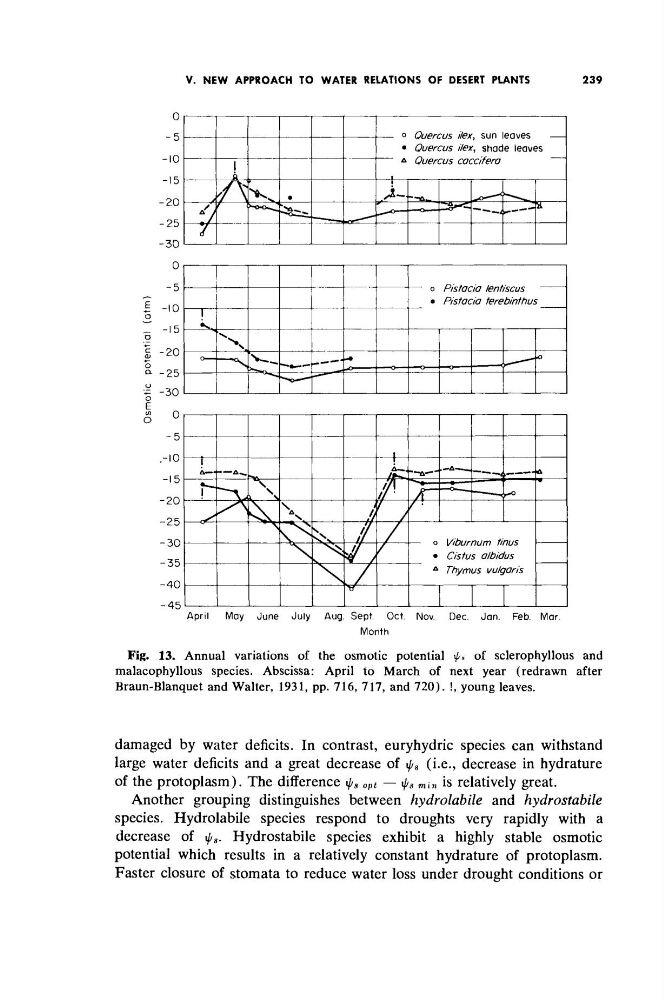
Fig. 13. Annual variations of the osmotic potential φ, of sclerophyllous and
malacophyllous species. Abscissa: April to March of next year (redrawn after
Braun-Blanquet and Walter, 1931, pp. 716, 717, and 720). !, young leaves.
damaged by water deficits. In contrast, euryhydric species can withstand
large water deficits and a great decrease of ψ 8 (i.e., decrease in hydrature
of the protoplasm). The difference φ 8 op t — ψ 8 min is relatively great.
Another grouping distinguishes between hydrolabile and hydrostabile
species. Hydrolabile species respond to droughts very rapidly with a
decrease of φ 8 . Hydrostabile species exhibit a highly stable osmotic
potential which results in a relatively constant hydrature of protoplasm.
Faster closure of stomata to reduce water loss under drought conditions or
239
0
- 5
-10
-15
- 2 0
- 2 5
- 3 0
0
- 5
I -10
o
_ -15
o
|
- 2 0
"o
o- - 2 5
o
£
S °
- 5
.-10
-15
-20
- 2 5
- 3 0
- 3 5
- 4 0
- 4 5
° Ouercus ilex, sun leaves
— |
• Ouercus ilex, shade leaves
Δ Ouercus coccifera
1
•v.
\
s _ _ *-·——
-·
o
o
•
— o —
Pistaciu lemiscus
Pistacia terebinthus
o
I
i^
~""}J
s^
""^.
v \
\
v
^ Λ
sX
^
/J
//
J /
I
1
/
- - A — -
— o
•
Δ
.— Δ—^.
■
·
-
~ — — i .
Viburnum tinus
Cistus albidus
Thymus vulgaris
A
April
May June July Aug. Sept. Oct.
Month
Nov. Dec. Jan. Feb. Mar.
Fig. 13. Annual variations of the osmotic potential φ, of sclerophyllous and
malacophyllous species. Abscissa: April to March of next year (redrawn after
Braun-Blanquet and Walter, 1931, pp. 716, 717, and 720). !, young leaves.
damaged by water deficits. In contrast, euryhydric species can withstand
large water deficits and a great decrease of ψ 8 (i.e., decrease in hydrature
of the protoplasm). The difference φ 8 op t — ψ 8 min is relatively great.
Another grouping distinguishes between hydrolabile and hydrostabile
species. Hydrolabile species respond to droughts very rapidly with a
decrease of φ 8 . Hydrostabile species exhibit a highly stable osmotic
potential which results in a relatively constant hydrature of protoplasm.
Faster closure of stomata to reduce water loss under drought conditions or