

198
E. IMRE FRIEDMANN AND MARGALITH GALUN
0.3
0.2
0.1
H
j
j 31%H20 /
A.
1 i n 40C1
_ J
ΙΛ
L. o . ism
/ \
Rama/ma
128% Η 2 θ \
\ 13% H20
°CoU"
O C .
ZO'
zU"
10*
1
|
Lichen temperature .^s^*
/Q\X temperature
in
/ *'
x
I
i
I
t
1 A*
J i
S i
[ i
I 9
1 i
I 1
/
1
s'
Γ
/ / >^
Li ght
1
u : — , — ^ +
,
1
\
100
h 75
50
6
7
8
Time (hours)
10
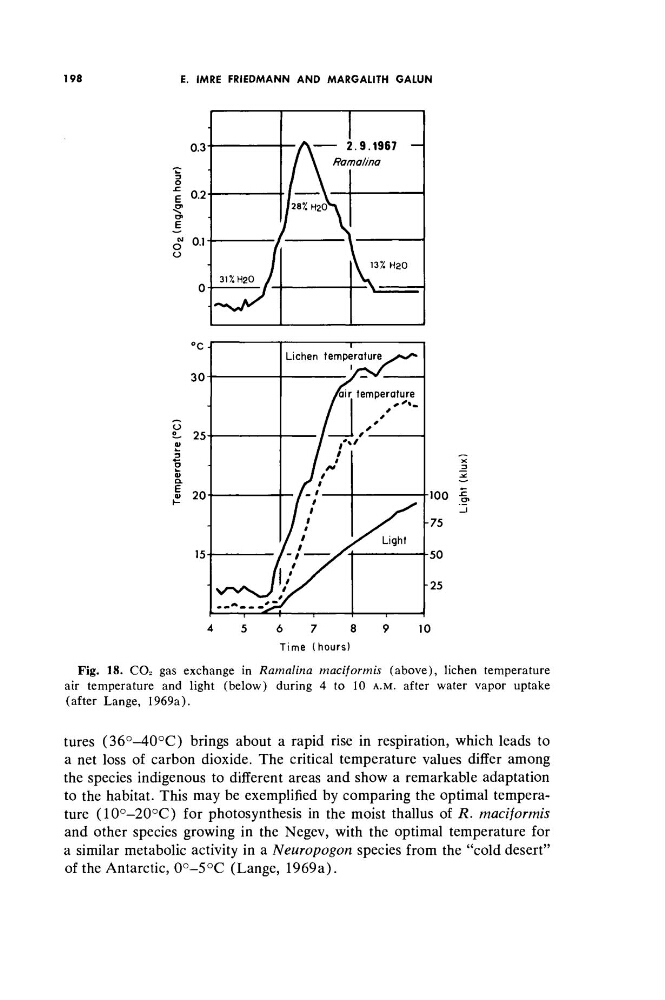
Fig. 18. C0 2 gas exchange in Ramalina maciformis (above), lichen temperature
air temperature and light (below) during 4 to 10 A.M. after water vapor uptake
(after Lange, 1969a).
tures (36°-40°C) brings about a rapid rise in respiration, which leads to
a net loss of carbon dioxide. The critical temperature values differ among
the species indigenous to different areas and show a remarkable adaptation
to the habitat. This may be exemplified by comparing the optimal temperature (10°-20°C) for photosynthesis in the moist thallus of R. maciformis
and other species growing in the Negev, with the optimal temperature for
a similar metabolic activity in a Neuropogon species from the "cold desert"
of the Antarctic, 0°-5°C (Lange, 1969a).
E. IMRE FRIEDMANN AND MARGALITH GALUN
0.3
0.2
0.1
H
j
j 31%H20 /
A.
1 i n 40C1
_ J
ΙΛ
L. o . ism
/ \
Rama/ma
128% Η 2 θ \
\ 13% H20
°CoU"
O C .
ZO'
zU"
10*
1
|
Lichen temperature .^s^*
/Q\X temperature
in
/ *'
x
I
i
I
t
1 A*
J i
S i
[ i
I 9
1 i
I 1
/
1
s'
Γ
/ / >^
Li ght
1
u : — , — ^ +
,
1
\
100
h 75
50
6
7
8
Time (hours)
10
Fig. 18. C0 2 gas exchange in Ramalina maciformis (above), lichen temperature
air temperature and light (below) during 4 to 10 A.M. after water vapor uptake
(after Lange, 1969a).
tures (36°-40°C) brings about a rapid rise in respiration, which leads to
a net loss of carbon dioxide. The critical temperature values differ among
the species indigenous to different areas and show a remarkable adaptation
to the habitat. This may be exemplified by comparing the optimal temperature (10°-20°C) for photosynthesis in the moist thallus of R. maciformis
and other species growing in the Negev, with the optimal temperature for
a similar metabolic activity in a Neuropogon species from the "cold desert"
of the Antarctic, 0°-5°C (Lange, 1969a).