

IV. DESERT ALGAE, LICHENS, AND FUNGI
195
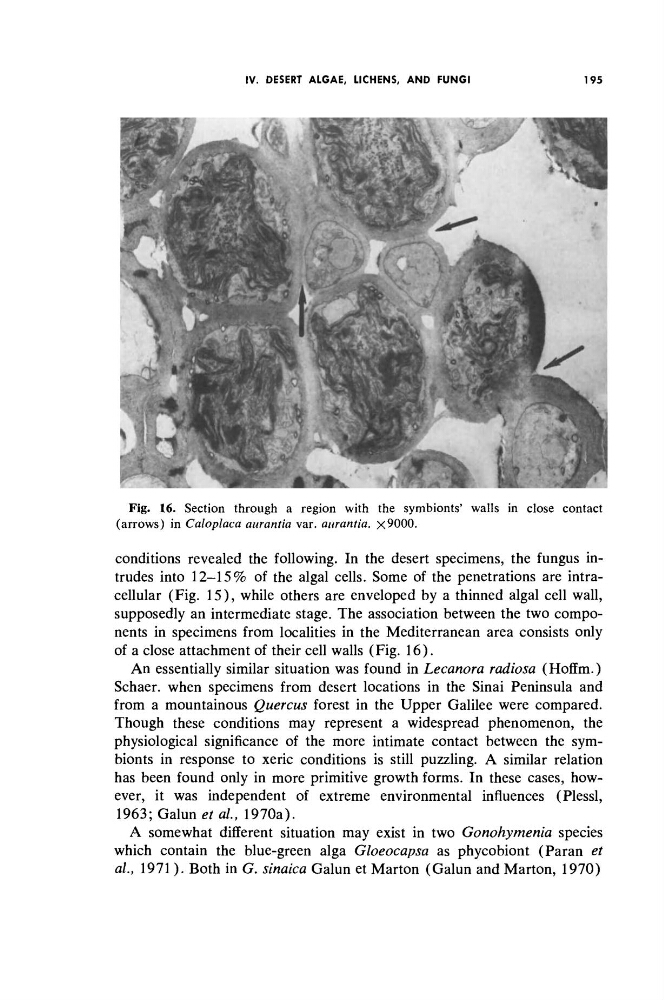
Fig. 16. Section through a region with the symbionts' walls in close contact
(arrows) in Caloplaca aurantia var. aurantia. χ9000.
conditions revealed the following. In the desert specimens, the fungus intrudes into 12-15% of the algal cells. Some of the penetrations are intracellular (Fig. 15), while others are enveloped by a thinned algal cell wall,
supposedly an intermediate stage. The association between the two components in specimens from localities in the Mediterranean area consists only
of a close attachment of their cell walls (Fig. 16).
An essentially similar situation was found in Lecanora radiosa (Hoffm.)
Schaer. when specimens from desert locations in the Sinai Peninsula and
from a mountainous Querem forest in the Upper Galilee were compared.
Though these conditions may represent a widespread phenomenon, the
physiological significance of the more intimate contact between the symbionts in response to xeric conditions is still puzzling. A similar relation
has been found only in more primitive growth forms. In these cases, however, it was independent of extreme environmental influences (Plessl,
1963;Galunei a/., 1970a).
A somewhat different situation may exist in two Gonohymenia species
which contain the blue-green alga Gloeocapsa as phycobiont (Paran et
al., 1971 ). Both in G. sinaica Galun et Marton (Galun and Marton, 1970)
195
Fig. 16. Section through a region with the symbionts' walls in close contact
(arrows) in Caloplaca aurantia var. aurantia. χ9000.
conditions revealed the following. In the desert specimens, the fungus intrudes into 12-15% of the algal cells. Some of the penetrations are intracellular (Fig. 15), while others are enveloped by a thinned algal cell wall,
supposedly an intermediate stage. The association between the two components in specimens from localities in the Mediterranean area consists only
of a close attachment of their cell walls (Fig. 16).
An essentially similar situation was found in Lecanora radiosa (Hoffm.)
Schaer. when specimens from desert locations in the Sinai Peninsula and
from a mountainous Querem forest in the Upper Galilee were compared.
Though these conditions may represent a widespread phenomenon, the
physiological significance of the more intimate contact between the symbionts in response to xeric conditions is still puzzling. A similar relation
has been found only in more primitive growth forms. In these cases, however, it was independent of extreme environmental influences (Plessl,
1963;Galunei a/., 1970a).
A somewhat different situation may exist in two Gonohymenia species
which contain the blue-green alga Gloeocapsa as phycobiont (Paran et
al., 1971 ). Both in G. sinaica Galun et Marton (Galun and Marton, 1970)