

176
E. IMRE FRIEDMANN AND MARGALITH GALUN
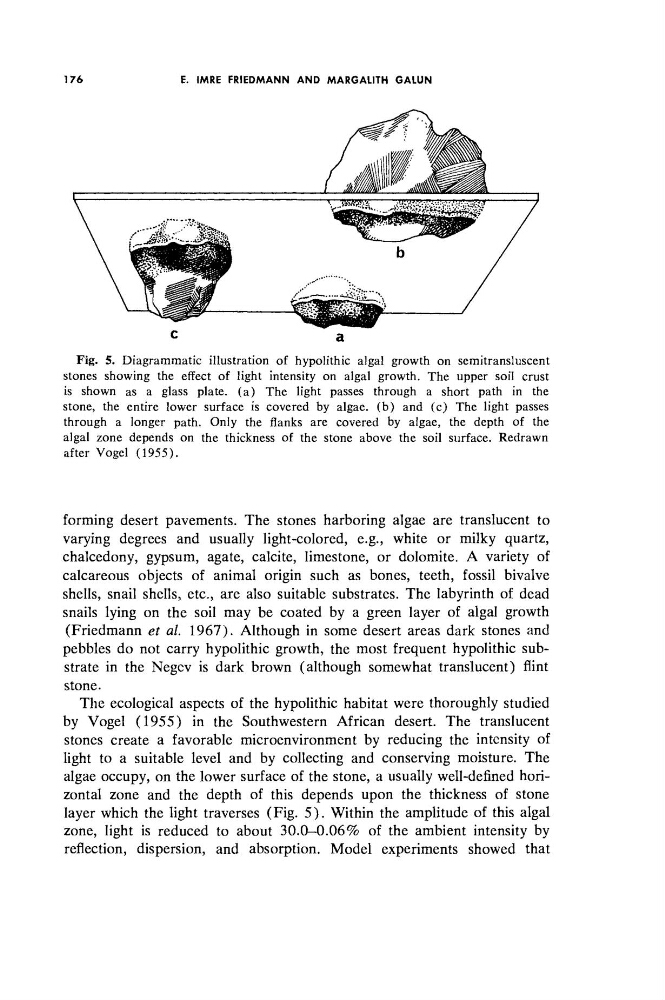
Fig. 5. Diagrammatic illustration of hypolithic algal growth on semitransluscent
stones showing the effect of light intensity on algal growth. The upper soil crust
is shown as a glass plate, (a) The light passes through a short path in the
stone, the entire lower surface is covered by algae, (b) and (c) The light passes
through a longer path. Only the flanks are covered by algae, the depth of the
algal zone depends on the thickness of the stone above the soil surface. Redrawn
after Vogel (1955).
forming desert pavements. The stones harboring algae are translucent to
varying degrees and usually light-colored, e.g., white or milky quartz,
chalcedony, gypsum, agate, calcite, limestone, or dolomite. A variety of
calcareous objects of animal origin such as bones, teeth, fossil bivalve
shells, snail shells, etc., are also suitable substrates. The labyrinth of dead
snails lying on the soil may be coated by a green layer of algal growth
(Friedmann et al. 1967). Although in some desert areas dark stones and
pebbles do not carry hypolithic growth, the most frequent hypolithic substrate in the Negev is dark brown (although somewhat translucent) flint
stone.
The ecological aspects of the hypolithic habitat were thoroughly studied
by Vogel (1955) in the Southwestern African desert. The translucent
stones create a favorable microenvironment by reducing the intensity of
light to a suitable level and by collecting and conserving moisture. The
algae occupy, on the lower surface of the stone, a usually well-defined horizontal zone and the depth of this depends upon the thickness of stone
layer which the light traverses (Fig. 5). Within the amplitude of this algal
zone, light is reduced to about 30.0-0.06% of the ambient intensity by
reflection, dispersion, and absorption. Model experiments showed that
E. IMRE FRIEDMANN AND MARGALITH GALUN
Fig. 5. Diagrammatic illustration of hypolithic algal growth on semitransluscent
stones showing the effect of light intensity on algal growth. The upper soil crust
is shown as a glass plate, (a) The light passes through a short path in the
stone, the entire lower surface is covered by algae, (b) and (c) The light passes
through a longer path. Only the flanks are covered by algae, the depth of the
algal zone depends on the thickness of the stone above the soil surface. Redrawn
after Vogel (1955).
forming desert pavements. The stones harboring algae are translucent to
varying degrees and usually light-colored, e.g., white or milky quartz,
chalcedony, gypsum, agate, calcite, limestone, or dolomite. A variety of
calcareous objects of animal origin such as bones, teeth, fossil bivalve
shells, snail shells, etc., are also suitable substrates. The labyrinth of dead
snails lying on the soil may be coated by a green layer of algal growth
(Friedmann et al. 1967). Although in some desert areas dark stones and
pebbles do not carry hypolithic growth, the most frequent hypolithic substrate in the Negev is dark brown (although somewhat translucent) flint
stone.
The ecological aspects of the hypolithic habitat were thoroughly studied
by Vogel (1955) in the Southwestern African desert. The translucent
stones create a favorable microenvironment by reducing the intensity of
light to a suitable level and by collecting and conserving moisture. The
algae occupy, on the lower surface of the stone, a usually well-defined horizontal zone and the depth of this depends upon the thickness of stone
layer which the light traverses (Fig. 5). Within the amplitude of this algal
zone, light is reduced to about 30.0-0.06% of the ambient intensity by
reflection, dispersion, and absorption. Model experiments showed that