

IV. DESERT ALGAE, LICHENS, AND FUNGI
175
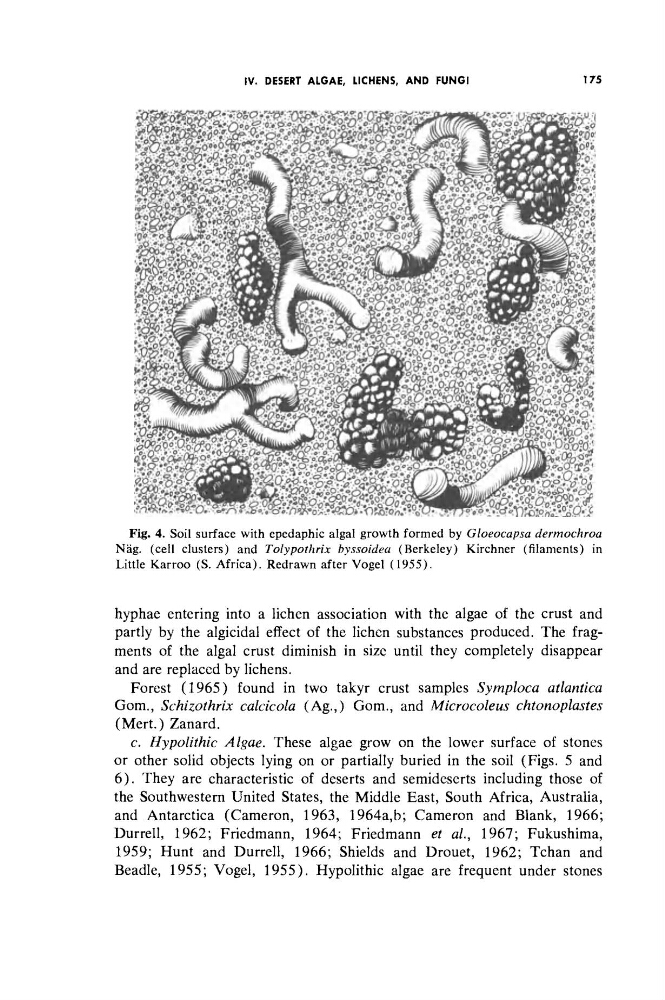
Fig. 4. Soil surface with epedaphic algal growth formed by Gloeocapsa dermochroa
Nag. (cell clusters) and Tolypothrix byssoidea (Berkeley) Kirchner (filaments) in
Little Karroo (S. Africa). Redrawn after Vogel (1955).
hyphae entering into a lichen association with the algae of the crust and
partly by the algicidal effect of the lichen substances produced. The fragments of the algal crust diminish in size until they completely disappear
and are replaced by lichens.
Forest (1965) found in two takyr crust samples Symploca atlantica
Gom., Schizothrix calcicola (Ag.,) Gom., and Microcoleus chtonoplastes
(Mert.) Zanard.
c. Hypolithic Algae. These algae grow on the lower surface of stones
or other solid objects lying on or partially buried in the soil (Figs. 5 and
6). They are characteristic of deserts and semideserts including those of
the Southwestern United States, the Middle East, South Africa, Australia,
and Antarctica (Cameron, 1963, 1964a,b; Cameron and Blank, 1966;
Durrell, 1962; Friedmann, 1964; Friedmann et al, 1967; Fukushima,
1959; Hunt and Durrell, 1966; Shields and Drouet, 1962; Tchan and
Beadle, 1955; Vogel, 1955). Hypolithic algae are frequent under stones
175
Fig. 4. Soil surface with epedaphic algal growth formed by Gloeocapsa dermochroa
Nag. (cell clusters) and Tolypothrix byssoidea (Berkeley) Kirchner (filaments) in
Little Karroo (S. Africa). Redrawn after Vogel (1955).
hyphae entering into a lichen association with the algae of the crust and
partly by the algicidal effect of the lichen substances produced. The fragments of the algal crust diminish in size until they completely disappear
and are replaced by lichens.
Forest (1965) found in two takyr crust samples Symploca atlantica
Gom., Schizothrix calcicola (Ag.,) Gom., and Microcoleus chtonoplastes
(Mert.) Zanard.
c. Hypolithic Algae. These algae grow on the lower surface of stones
or other solid objects lying on or partially buried in the soil (Figs. 5 and
6). They are characteristic of deserts and semideserts including those of
the Southwestern United States, the Middle East, South Africa, Australia,
and Antarctica (Cameron, 1963, 1964a,b; Cameron and Blank, 1966;
Durrell, 1962; Friedmann, 1964; Friedmann et al, 1967; Fukushima,
1959; Hunt and Durrell, 1966; Shields and Drouet, 1962; Tchan and
Beadle, 1955; Vogel, 1955). Hypolithic algae are frequent under stones