

144
CLAUDE J. GRENOT
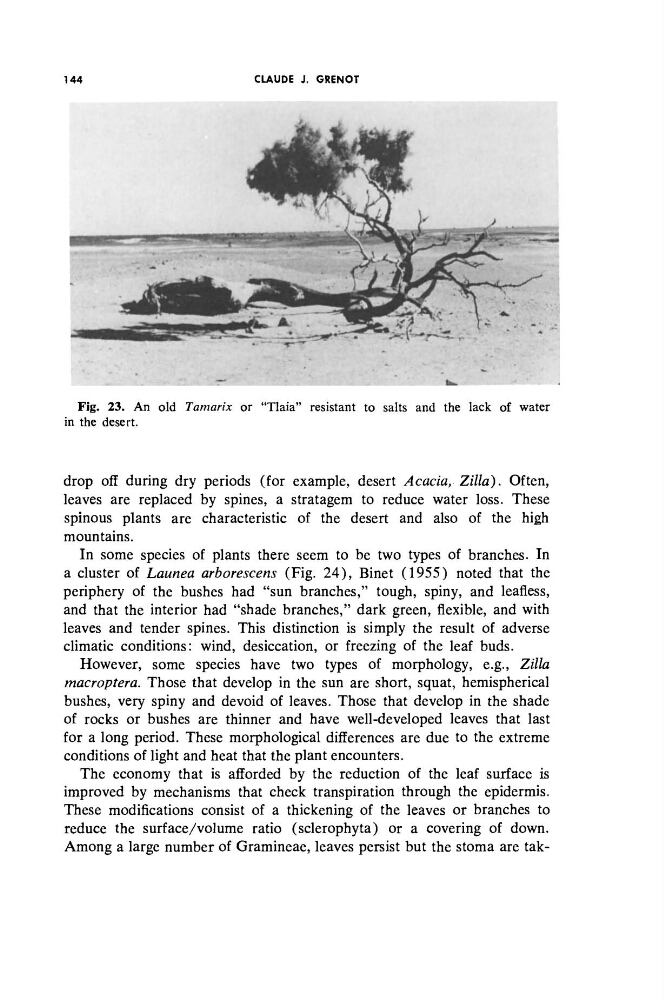
Fig. 23. An old Tamarix or "Tlaia" resistant to salts and the lack of water
in the desert.
drop off during dry periods (for example, desert Acacia, Zilla). Often,
leaves are replaced by spines, a stratagem to reduce water loss. These
spinous plants are characteristic of the desert and also of the high
mountains.
In some species of plants there seem to be two types of branches. In
a cluster of Launea arborescens (Fig. 24), Binet (1955) noted that the
periphery of the bushes had "sun branches," tough, spiny, and leafless,
and that the interior had "shade branches," dark green, flexible, and with
leaves and tender spines. This distinction is simply the result of adverse
climatic conditions: wind, desiccation, or freezing of the leaf buds.
However, some species have two types of morphology, e.g., Zilla
macroptera. Those that develop in the sun are short, squat, hemispherical
bushes, very spiny and devoid of leaves. Those that develop in the shade
of rocks or bushes are thinner and have well-developed leaves that last
for a long period. These morphological differences are due to the extreme
conditions of light and heat that the plant encounters.
The economy that is afforded by the reduction of the leaf surface is
improved by mechanisms that check transpiration through the epidermis.
These modifications consist of a thickening of the leaves or branches to
reduce the surface/volume ratio (sclerophyta) or a covering of down.
Among a large number of Gramineae, leaves persist but the stoma are tak-
CLAUDE J. GRENOT
Fig. 23. An old Tamarix or "Tlaia" resistant to salts and the lack of water
in the desert.
drop off during dry periods (for example, desert Acacia, Zilla). Often,
leaves are replaced by spines, a stratagem to reduce water loss. These
spinous plants are characteristic of the desert and also of the high
mountains.
In some species of plants there seem to be two types of branches. In
a cluster of Launea arborescens (Fig. 24), Binet (1955) noted that the
periphery of the bushes had "sun branches," tough, spiny, and leafless,
and that the interior had "shade branches," dark green, flexible, and with
leaves and tender spines. This distinction is simply the result of adverse
climatic conditions: wind, desiccation, or freezing of the leaf buds.
However, some species have two types of morphology, e.g., Zilla
macroptera. Those that develop in the sun are short, squat, hemispherical
bushes, very spiny and devoid of leaves. Those that develop in the shade
of rocks or bushes are thinner and have well-developed leaves that last
for a long period. These morphological differences are due to the extreme
conditions of light and heat that the plant encounters.
The economy that is afforded by the reduction of the leaf surface is
improved by mechanisms that check transpiration through the epidermis.
These modifications consist of a thickening of the leaves or branches to
reduce the surface/volume ratio (sclerophyta) or a covering of down.
Among a large number of Gramineae, leaves persist but the stoma are tak-