

III. PHYSICAL AND VEGETATIONAL ASPECTS OF THE SAHARA
139
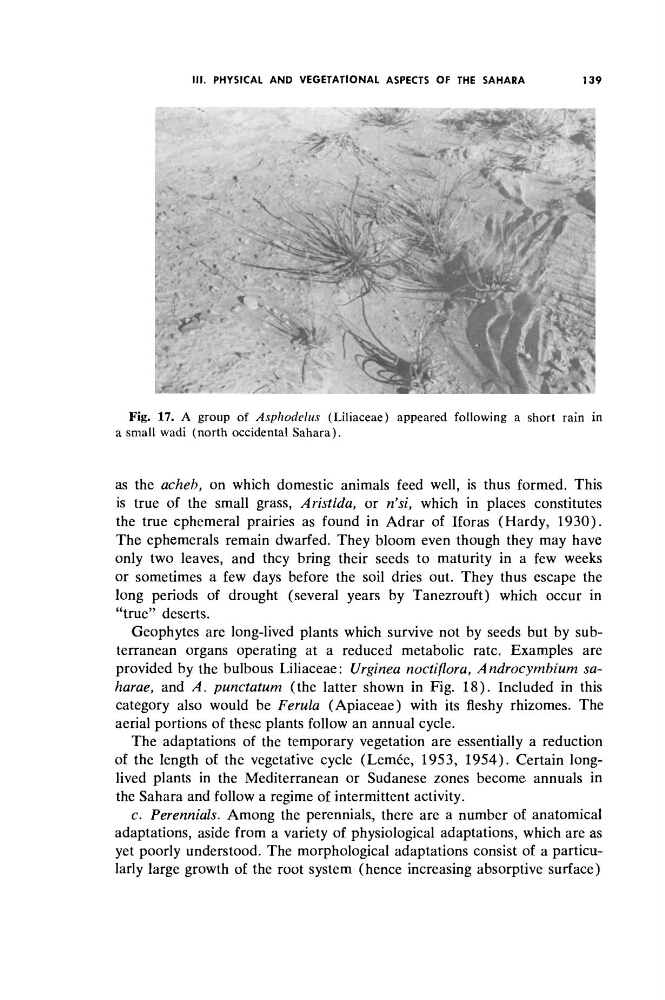
Fig. 17. A group of Asphodelus (Liliaceae) appeared following a short rain in
a small wadi (north occidental Sahara).
as the acheb, on which domestic animals feed well, is thus formed. This
is true of the small grass, Aristida, or n'si, which in places constitutes
the true ephemeral prairies as found in Adrar of Iforas (Hardy, 1930).
The ephemerals remain dwarfed. They bloom even though they may have
only two leaves, and they bring their seeds to maturity in a few weeks
or sometimes a few days before the soil dries out. They thus escape the
long periods of drought (several years by Tanezrouft) which occur in
"true" deserts.
Geophytes are long-lived plants which survive not by seeds but by subterranean organs operating at a reduced metabolic rate. Examples are
provided by the bulbous Liliaceae: Urginea noctiflora, Androcymbium saharae, and A. punctatum (the latter shown in Fig. 18). Included in this
category also would be Ferula (Apiaceae) with its fleshy rhizomes. The
aerial portions of these plants follow an annual cycle.
The adaptations of the temporary vegetation are essentially a reduction
of the length of the vegetative cycle (Lemée, 1953, 1954). Certain longlived plants in the Mediterranean or Sudanese zones become annuals in
the Sahara and follow a regime of intermittent activity.
c. Perennials. Among the perennials, there are a number of anatomical
adaptations, aside from a variety of physiological adaptations, which are as
yet poorly understood. The morphological adaptations consist of a particularly large growth of the root system (hence increasing absorptive surface)
139
Fig. 17. A group of Asphodelus (Liliaceae) appeared following a short rain in
a small wadi (north occidental Sahara).
as the acheb, on which domestic animals feed well, is thus formed. This
is true of the small grass, Aristida, or n'si, which in places constitutes
the true ephemeral prairies as found in Adrar of Iforas (Hardy, 1930).
The ephemerals remain dwarfed. They bloom even though they may have
only two leaves, and they bring their seeds to maturity in a few weeks
or sometimes a few days before the soil dries out. They thus escape the
long periods of drought (several years by Tanezrouft) which occur in
"true" deserts.
Geophytes are long-lived plants which survive not by seeds but by subterranean organs operating at a reduced metabolic rate. Examples are
provided by the bulbous Liliaceae: Urginea noctiflora, Androcymbium saharae, and A. punctatum (the latter shown in Fig. 18). Included in this
category also would be Ferula (Apiaceae) with its fleshy rhizomes. The
aerial portions of these plants follow an annual cycle.
The adaptations of the temporary vegetation are essentially a reduction
of the length of the vegetative cycle (Lemée, 1953, 1954). Certain longlived plants in the Mediterranean or Sudanese zones become annuals in
the Sahara and follow a regime of intermittent activity.
c. Perennials. Among the perennials, there are a number of anatomical
adaptations, aside from a variety of physiological adaptations, which are as
yet poorly understood. The morphological adaptations consist of a particularly large growth of the root system (hence increasing absorptive surface)