

356
CARI. 11. (iIHSON ET .\I..
shapes o f the universal spectra have been determined by laboratory tests
(Gibson and Schwarz, 1963). Because of the various features and interdependence of the normalized temperature and velocity spectra, it is possible to
make a variety of tests for internal consistency in attempting to extract E and
)I values.
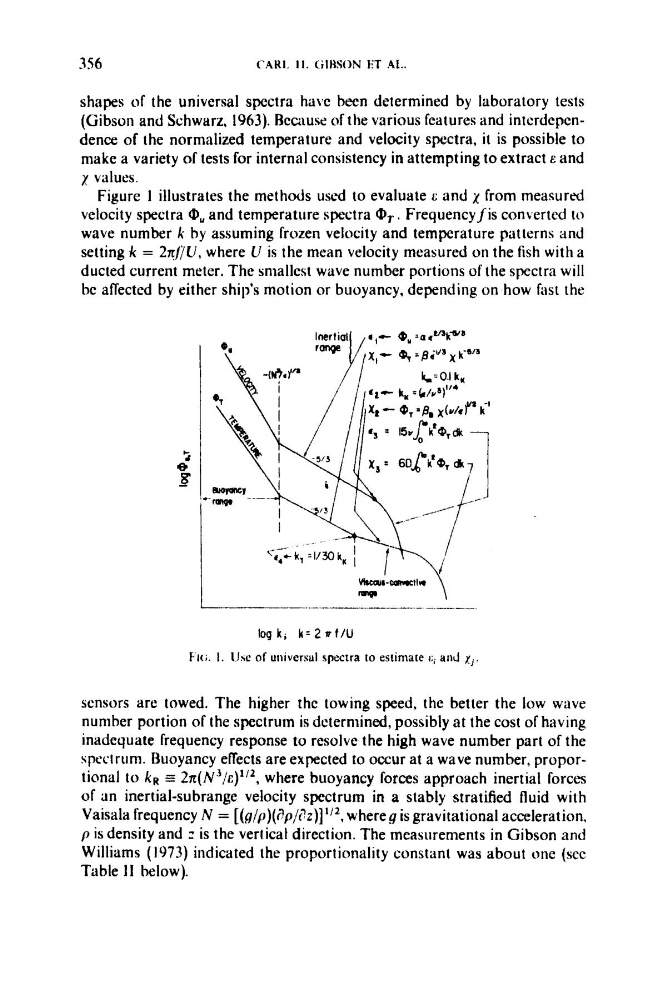
Figure 1 illustrates the methods used to evaluate I: and x from measured
velocity spectra @, , and temperature spectra 4T. Frequencyfis conkerted to
wave number k by assuming frozen velocity and temperature patterns and
setting k = 27$/Li, where U is the mean velocity measured on the fish with a
ducted current meter. The sniallest wave number portions of the spectra will
be affected by either ship’s motion or buoyancy, depending on how fast the
Q s
\
WIcauS--!l*
rmg,
___
.
__
log k; k = 2 7 f/U
L
FK;. I . Llsc of utiivcrsul spectra 10 estimate tii and xI
scnsors are towed. The higher the towing speed. the better the low wave
number portion of the spectrum is determined, possibly at the cost of having
inadequate frequency response to resolve the high wave number part of the
spectrum. Uuoyancy erects are expected to occur at a wave number, proportional to k~ = 27r(N’/~)”’, where buoyancy forces approach inertial forces
of an inertial-subrange velocity spectrum in a stably stratified fluid with
Vaisala frequency N = [ ( ~ / p ) ( d p / & ) ] ” ~ ,
where g is gravitational acceleration,
p is density and 2 is the vertical direction. The mcasiirements in Gibson and
Williams (1973) indicated the proportionality constant was about one (scc
Table I I below).
CARI. 11. (iIHSON ET .\I..
shapes o f the universal spectra have been determined by laboratory tests
(Gibson and Schwarz, 1963). Because of the various features and interdependence of the normalized temperature and velocity spectra, it is possible to
make a variety of tests for internal consistency in attempting to extract E and
)I values.
Figure 1 illustrates the methods used to evaluate I: and x from measured
velocity spectra @, , and temperature spectra 4T. Frequencyfis conkerted to
wave number k by assuming frozen velocity and temperature patterns and
setting k = 27$/Li, where U is the mean velocity measured on the fish with a
ducted current meter. The sniallest wave number portions of the spectra will
be affected by either ship’s motion or buoyancy, depending on how fast the
Q s
\
WIcauS--!l*
rmg,
___
.
__
log k; k = 2 7 f/U
L
FK;. I . Llsc of utiivcrsul spectra 10 estimate tii and xI
scnsors are towed. The higher the towing speed. the better the low wave
number portion of the spectrum is determined, possibly at the cost of having
inadequate frequency response to resolve the high wave number part of the
spectrum. Uuoyancy erects are expected to occur at a wave number, proportional to k~ = 27r(N’/~)”’, where buoyancy forces approach inertial forces
of an inertial-subrange velocity spectrum in a stably stratified fluid with
Vaisala frequency N = [ ( ~ / p ) ( d p / & ) ] ” ~ ,
where g is gravitational acceleration,
p is density and 2 is the vertical direction. The mcasiirements in Gibson and
Williams (1973) indicated the proportionality constant was about one (scc
Table I I below).