

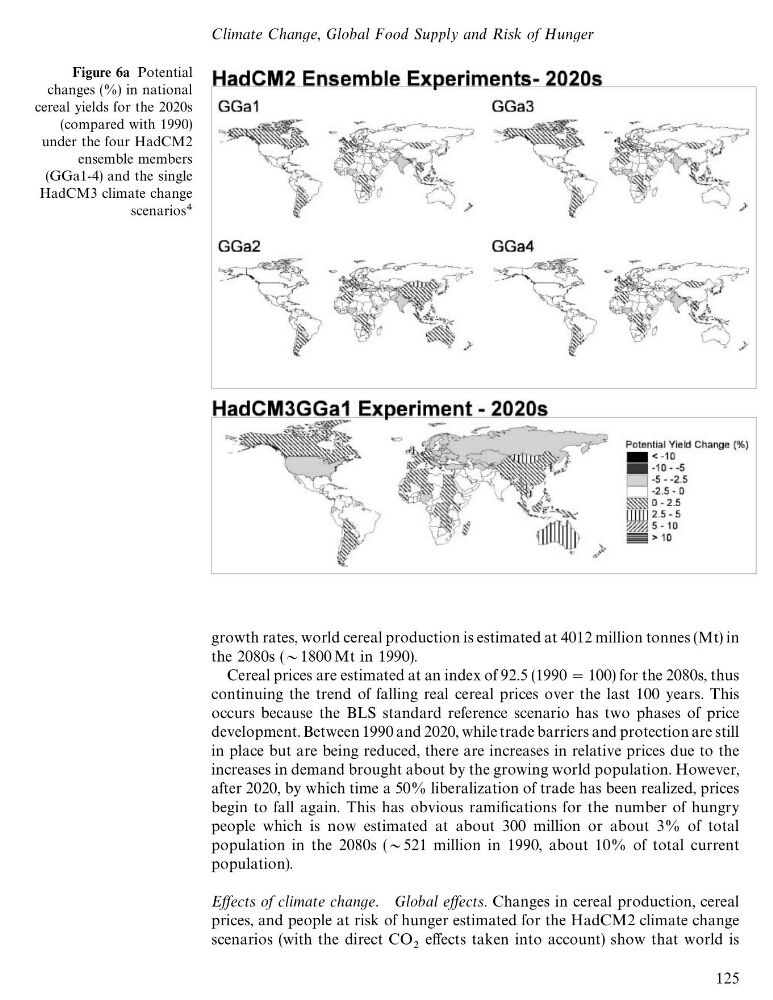
Figure 6a Potential
changes (%) in national
cereal yields for the 2020s
(compared with 1990)
under the four HadCM2
ensemble members
(GGa1-4) and the single
HadCM3 climate change
scenarios
growth rates, world cereal production is estimated at 4012 million tonnes (Mt) in
the 2080s (:1800 Mt in 1990).
Cereal prices are estimated at an index of 92.5 (1990 : 100) for the 2080s, thus
continuing the trend of falling real cereal prices over the last 100 years. This
occurs because the BLS standard reference scenario has two phases of price
development. Between 1990 and 2020, while trade barriers and protection are still
in place but are being reduced, there are increases in relative prices due to the
increases in demand brought about by the growing world population. However,
after 2020, by which time a 50% liberalization of trade has been realized, prices
begin to fall again. This has obvious ramifications for the number of hungry
people which is now estimated at about 300 million or about 3% of total
population in the 2080s (:521 million in 1990, about 10% of total current
population).
Effects of climate change. Global effects. Changes in cereal production, cereal
prices, and people at risk of hunger estimated for the HadCM2 climate change
scenarios (with the direct CO
effects taken into account) show that world is
Climate Change, Global Food Supply and Risk of Hunger
125
changes (%) in national
cereal yields for the 2020s
(compared with 1990)
under the four HadCM2
ensemble members
(GGa1-4) and the single
HadCM3 climate change
scenarios
growth rates, world cereal production is estimated at 4012 million tonnes (Mt) in
the 2080s (:1800 Mt in 1990).
Cereal prices are estimated at an index of 92.5 (1990 : 100) for the 2080s, thus
continuing the trend of falling real cereal prices over the last 100 years. This
occurs because the BLS standard reference scenario has two phases of price
development. Between 1990 and 2020, while trade barriers and protection are still
in place but are being reduced, there are increases in relative prices due to the
increases in demand brought about by the growing world population. However,
after 2020, by which time a 50% liberalization of trade has been realized, prices
begin to fall again. This has obvious ramifications for the number of hungry
people which is now estimated at about 300 million or about 3% of total
population in the 2080s (:521 million in 1990, about 10% of total current
population).
Effects of climate change. Global effects. Changes in cereal production, cereal
prices, and people at risk of hunger estimated for the HadCM2 climate change
scenarios (with the direct CO
effects taken into account) show that world is
Climate Change, Global Food Supply and Risk of Hunger
125