

CHAPTER 3 Igneous Rocks and Intrusive Activity
66
Rhyolite
Potassium
feldspar
Plagioclase
feldspar
Komatiite
(Rare)
Percent
by
volume
80
60
40
20
100
Quartz
S o d iu m -r ic h
C a lc iu m -r ic h
Pyroxene
Olivine
Biotite
Amphibole
Muscovite
Phaneritic
(Coarse-grained)
Aphanitic
(Fine-grained)
Composition
Basalt
Andesite
Granite
Peridotite
Gabbro
Diorite
Felsic
Intermediate
(Granitic)
(Andesitic)
Ultramafic
(Basaltic)
Mafic
Increasing silica (SiO2)
Increasing iron, magnesium and calcium
Temperature at which melting begins
Increasing potassium and sodium
75%
40%
1200°C
700°C
L i g h t - c o l o r e d m i n e r a l s
D a r k - c o l o
r e d
m
i n e r a l s
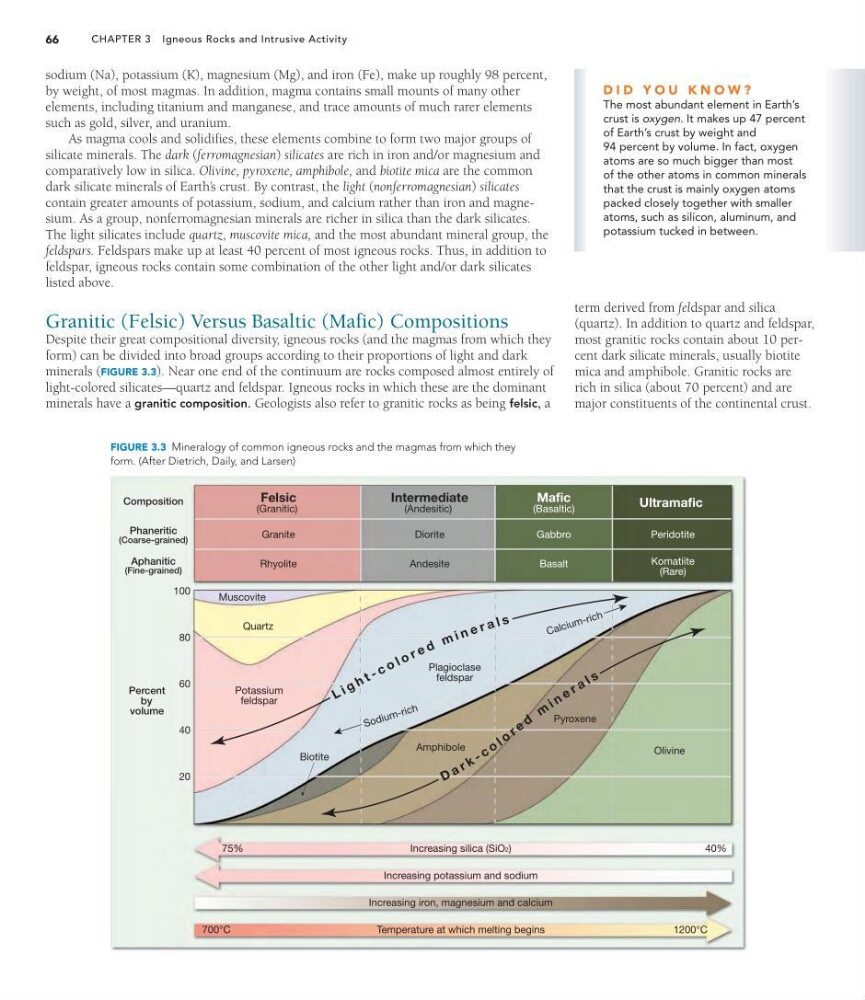
FIGURE 3.3 Mineralogy of common igneous rocks and the magmas from which they
form. (After Dietrich, Daily, and Larsen)
sodium (Na), potassium (K), magnesium (Mg), and iron (Fe), make up roughly 98 percent,
by weight, of most magmas. In addition, magma contains small mounts of many other
elements, including titanium and manganese, and trace amounts of much rarer elements
such as gold, silver, and uranium.
As magma cools and solidifies, these elements combine to form two major groups of
silicate minerals. The dark (ferromagnesian) silicates are rich in iron and/or magnesium and
comparatively low in silica. Olivine, pyroxene, amphibole, and biotite mica are the common
dark silicate minerals of Earth’ s crust. By contrast, the light (nonferromagnesian) silicates
contain greater amounts of potassium, sodium, and calcium rather than iron and magnesium. As a group, nonferromagnesian minerals are richer in silica than the dark silicates.
The light silicates include quartz, muscovite mica, and the most abundant mineral group, the
feldspars. Feldspars make up at least 40 percent of most igneous rocks. Thus, in addition to
feldspar, igneous rocks contain some combination of the other light and/or dark silicates
listed above.
Granitic (Felsic) Versus Basaltic (Mafic) Compositions
Despite their great compositional diversity, igneous rocks (and the magmas from which they
form) can be divided into broad groups according to their proportions of light and dark
minerals (FIGURE 3.3). Near one end of the continuum are rocks composed almost entirely of
light-colored silicates—quartz and feldspar. Igneous rocks in which these are the dominant
minerals have a granitic composition. Geologists also refer to granitic rocks as being felsic, a
term derived from feldspar and silica
(quartz). In addition to quartz and feldspar,
most granitic rocks contain about 10 percent dark silicate minerals, usually biotite
mica and amphibole. Granitic rocks are
rich in silica (about 70 percent) and are
major constituents of the continental crust.
D I D Y O U K N O W ?
The most abundant element in Earth’s
crust is oxygen. It makes up 47 percent
of Earth’s crust by weight and
94 percent by volume. In fact, oxygen
atoms are so much bigger than most
of the other atoms in common minerals
that the crust is mainly oxygen atoms
packed closely together with smaller
atoms, such as silicon, aluminum, and
potassium tucked in between.
66
Rhyolite
Potassium
feldspar
Plagioclase
feldspar
Komatiite
(Rare)
Percent
by
volume
80
60
40
20
100
Quartz
S o d iu m -r ic h
C a lc iu m -r ic h
Pyroxene
Olivine
Biotite
Amphibole
Muscovite
Phaneritic
(Coarse-grained)
Aphanitic
(Fine-grained)
Composition
Basalt
Andesite
Granite
Peridotite
Gabbro
Diorite
Felsic
Intermediate
(Granitic)
(Andesitic)
Ultramafic
(Basaltic)
Mafic
Increasing silica (SiO2)
Increasing iron, magnesium and calcium
Temperature at which melting begins
Increasing potassium and sodium
75%
40%
1200°C
700°C
L i g h t - c o l o r e d m i n e r a l s
D a r k - c o l o
r e d
m
i n e r a l s
FIGURE 3.3 Mineralogy of common igneous rocks and the magmas from which they
form. (After Dietrich, Daily, and Larsen)
sodium (Na), potassium (K), magnesium (Mg), and iron (Fe), make up roughly 98 percent,
by weight, of most magmas. In addition, magma contains small mounts of many other
elements, including titanium and manganese, and trace amounts of much rarer elements
such as gold, silver, and uranium.
As magma cools and solidifies, these elements combine to form two major groups of
silicate minerals. The dark (ferromagnesian) silicates are rich in iron and/or magnesium and
comparatively low in silica. Olivine, pyroxene, amphibole, and biotite mica are the common
dark silicate minerals of Earth’ s crust. By contrast, the light (nonferromagnesian) silicates
contain greater amounts of potassium, sodium, and calcium rather than iron and magnesium. As a group, nonferromagnesian minerals are richer in silica than the dark silicates.
The light silicates include quartz, muscovite mica, and the most abundant mineral group, the
feldspars. Feldspars make up at least 40 percent of most igneous rocks. Thus, in addition to
feldspar, igneous rocks contain some combination of the other light and/or dark silicates
listed above.
Granitic (Felsic) Versus Basaltic (Mafic) Compositions
Despite their great compositional diversity, igneous rocks (and the magmas from which they
form) can be divided into broad groups according to their proportions of light and dark
minerals (FIGURE 3.3). Near one end of the continuum are rocks composed almost entirely of
light-colored silicates—quartz and feldspar. Igneous rocks in which these are the dominant
minerals have a granitic composition. Geologists also refer to granitic rocks as being felsic, a
term derived from feldspar and silica
(quartz). In addition to quartz and feldspar,
most granitic rocks contain about 10 percent dark silicate minerals, usually biotite
mica and amphibole. Granitic rocks are
rich in silica (about 70 percent) and are
major constituents of the continental crust.
D I D Y O U K N O W ?
The most abundant element in Earth’s
crust is oxygen. It makes up 47 percent
of Earth’s crust by weight and
94 percent by volume. In fact, oxygen
atoms are so much bigger than most
of the other atoms in common minerals
that the crust is mainly oxygen atoms
packed closely together with smaller
atoms, such as silicon, aluminum, and
potassium tucked in between.