

Protons (charge +1)
Neutrons (charge 0)
Electrons (charge –1)
Nucleus
Nucleus
Electron
A.
B.
Electron cloud
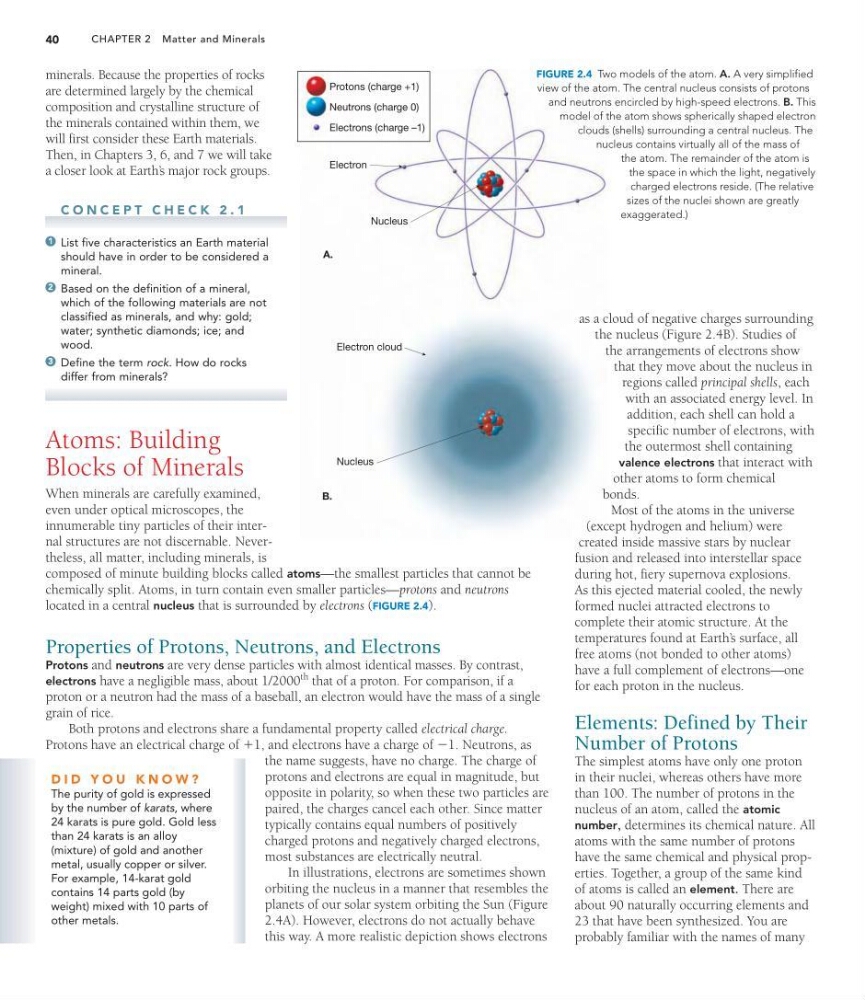
FIGURE 2.4 Two models of the atom. A. A very simplified
view of the atom. The central nucleus consists of protons
and neutrons encircled by high-speed electrons. B. This
model of the atom shows spherically shaped electron
clouds (shells) surrounding a central nucleus. The
nucleus contains virtually all of the mass of
the atom. The remainder of the atom is
the space in which the light, negatively
charged electrons reside. (The relative
sizes of the nuclei shown are greatly
exaggerated.)
minerals. Because the properties of rocks
are determined largely by the chemical
composition and crystalline structure of
the minerals contained within them, we
will first consider these Earth materials.
Then, in Chapters 3, 6, and 7 we will take
a closer look at Earth’ s major rock groups.
C O N C E P T C H E C K 2 . 1
List five characteristics an Earth material
should have in order to be considered a
mineral.
Based on the definition of a mineral,
which of the following materials are not
classified as minerals, and why: gold;
water; synthetic diamonds; ice; and
wood.
Define the term rock. How do rocks
differ from minerals?
Atoms: Building
Blocks of Minerals
When minerals are carefully examined,
even under optical microscopes, the
innumerable tiny particles of their internal structures are not discernable. Nevertheless, all matter, including minerals, is
composed of minute building blocks called atoms—the smallest particles that cannot be
chemically split. Atoms, in turn contain even smaller particles—protons and neutrons
located in a central nucleus that is surrounded by electrons (FIGURE 2.4).
Properties of Protons, Neutrons, and Electrons
Protons and neutrons are very dense particles with almost identical masses. By contrast,
electrons have a negligible mass, about 1/2000
th that of a proton. For comparison, if a
proton or a neutron had the mass of a baseball, an electron would have the mass of a single
grain of rice.
Both protons and electrons share a fundamental property called electrical charge.
Protons have an electrical charge of
, and electrons have a charge of
. Neutrons, as
the name suggests, have no charge. The charge of
protons and electrons are equal in magnitude, but
opposite in polarity, so when these two particles are
paired, the charges cancel each other. Since matter
typically contains equal numbers of positively
charged protons and negatively charged electrons,
most substances are electrically neutral.
In illustrations, electrons are sometimes shown
orbiting the nucleus in a manner that resembles the
planets of our solar system orbiting the Sun (Figure
2.4A). However, electrons do not actually behave
this way. A more realistic depiction shows electrons
-1
+1
3
2
1
D I D Y O U K N O W ?
The purity of gold is expressed
by the number of karats, where
24 karats is pure gold. Gold less
than 24 karats is an alloy
(mixture) of gold and another
metal, usually copper or silver.
For example, 14-karat gold
contains 14 parts gold (by
weight) mixed with 10 parts of
other metals.
as a cloud of negative charges surrounding
the nucleus (Figure 2.4B). Studies of
the arrangements of electrons show
that they move about the nucleus in
regions called principal shells, each
with an associated energy level. In
addition, each shell can hold a
specific number of electrons, with
the outermost shell containing
valence electrons that interact with
other atoms to form chemical
bonds.
Most of the atoms in the universe
(except hydrogen and helium) were
created inside massive stars by nuclear
fusion and released into interstellar space
during hot, fiery supernova explosions.
As this ejected material cooled, the newly
formed nuclei attracted electrons to
complete their atomic structure. At the
temperatures found at Earth’ s surface, all
free atoms (not bonded to other atoms)
have a full complement of electrons—one
for each proton in the nucleus.
Elements: Defined by Their
Number of Protons
The simplest atoms have only one proton
in their nuclei, whereas others have more
than 100. The number of protons in the
nucleus of an atom, called the atomic
number, determines its chemical nature. All
atoms with the same number of protons
have the same chemical and physical properties. Together, a group of the same kind
of atoms is called an element. There are
about 90 naturally occurring elements and
23 that have been synthesized. You are
probably familiar with the names of many
CHAPTER 2 Matter and Minerals
40
Neutrons (charge 0)
Electrons (charge –1)
Nucleus
Nucleus
Electron
A.
B.
Electron cloud
FIGURE 2.4 Two models of the atom. A. A very simplified
view of the atom. The central nucleus consists of protons
and neutrons encircled by high-speed electrons. B. This
model of the atom shows spherically shaped electron
clouds (shells) surrounding a central nucleus. The
nucleus contains virtually all of the mass of
the atom. The remainder of the atom is
the space in which the light, negatively
charged electrons reside. (The relative
sizes of the nuclei shown are greatly
exaggerated.)
minerals. Because the properties of rocks
are determined largely by the chemical
composition and crystalline structure of
the minerals contained within them, we
will first consider these Earth materials.
Then, in Chapters 3, 6, and 7 we will take
a closer look at Earth’ s major rock groups.
C O N C E P T C H E C K 2 . 1
List five characteristics an Earth material
should have in order to be considered a
mineral.
Based on the definition of a mineral,
which of the following materials are not
classified as minerals, and why: gold;
water; synthetic diamonds; ice; and
wood.
Define the term rock. How do rocks
differ from minerals?
Atoms: Building
Blocks of Minerals
When minerals are carefully examined,
even under optical microscopes, the
innumerable tiny particles of their internal structures are not discernable. Nevertheless, all matter, including minerals, is
composed of minute building blocks called atoms—the smallest particles that cannot be
chemically split. Atoms, in turn contain even smaller particles—protons and neutrons
located in a central nucleus that is surrounded by electrons (FIGURE 2.4).
Properties of Protons, Neutrons, and Electrons
Protons and neutrons are very dense particles with almost identical masses. By contrast,
electrons have a negligible mass, about 1/2000
th that of a proton. For comparison, if a
proton or a neutron had the mass of a baseball, an electron would have the mass of a single
grain of rice.
Both protons and electrons share a fundamental property called electrical charge.
Protons have an electrical charge of
, and electrons have a charge of
. Neutrons, as
the name suggests, have no charge. The charge of
protons and electrons are equal in magnitude, but
opposite in polarity, so when these two particles are
paired, the charges cancel each other. Since matter
typically contains equal numbers of positively
charged protons and negatively charged electrons,
most substances are electrically neutral.
In illustrations, electrons are sometimes shown
orbiting the nucleus in a manner that resembles the
planets of our solar system orbiting the Sun (Figure
2.4A). However, electrons do not actually behave
this way. A more realistic depiction shows electrons
-1
+1
3
2
1
D I D Y O U K N O W ?
The purity of gold is expressed
by the number of karats, where
24 karats is pure gold. Gold less
than 24 karats is an alloy
(mixture) of gold and another
metal, usually copper or silver.
For example, 14-karat gold
contains 14 parts gold (by
weight) mixed with 10 parts of
other metals.
as a cloud of negative charges surrounding
the nucleus (Figure 2.4B). Studies of
the arrangements of electrons show
that they move about the nucleus in
regions called principal shells, each
with an associated energy level. In
addition, each shell can hold a
specific number of electrons, with
the outermost shell containing
valence electrons that interact with
other atoms to form chemical
bonds.
Most of the atoms in the universe
(except hydrogen and helium) were
created inside massive stars by nuclear
fusion and released into interstellar space
during hot, fiery supernova explosions.
As this ejected material cooled, the newly
formed nuclei attracted electrons to
complete their atomic structure. At the
temperatures found at Earth’ s surface, all
free atoms (not bonded to other atoms)
have a full complement of electrons—one
for each proton in the nucleus.
Elements: Defined by Their
Number of Protons
The simplest atoms have only one proton
in their nuclei, whereas others have more
than 100. The number of protons in the
nucleus of an atom, called the atomic
number, determines its chemical nature. All
atoms with the same number of protons
have the same chemical and physical properties. Together, a group of the same kind
of atoms is called an element. There are
about 90 naturally occurring elements and
23 that have been synthesized. You are
probably familiar with the names of many
CHAPTER 2 Matter and Minerals
40