

521
Chapter in Review
The climate system includes the atmosphere, hydrosphere,
geosphere, biosphere, and cryosphere (the ice and snow that
exists at Earth’ s surface). The system involves the exchanges of
energy and moisture that occur among the five spheres.
Techniques for analyzing Earth’ s climate history on a scale of
hundreds to thousands of years include evidence from seafloor
sediments and oxygen isotope analysis. Seafloor sediments are
useful recorders of worldwide climate change because the numbers and types of organic remains included in the sediment are
indicative of past sea-surface temperatures. Using oxygen-isotope
analysis, scientists can use the
18 O/
16 O ratio found in the shells
of microorganisms in sediment and layers of ice and snow to
detect past temperatures. Other sources of data used for the
study of past climates (called proxy data) include the growth
rings of trees, pollen contained in sediments, coral reefs, and
information contained in historical documents.
Air is a mixture of many discrete gases, and its composition
varies from time to time and place to place. After water vapor,
dust, and other variable components are removed, two gases,
nitrogen and oxygen, make up 99 percent of the volume of the
remaining clean, dry air. Carbon dioxide, although present in only
minute amounts (0.0389 percent or 389 parts per million), is an
efficient absorber of energy emitted by Earth and thus influences
the heating of the atmosphere.
Two important variable components of air are water vapor and
aerosols. Like carbon dioxide, water vapor can absorb heat given
off by Earth. Aerosols (tiny solid and liquid particles) are important because these often invisible particles act as surfaces on
which water vapor can condense and are also good absorbers
and reflectors (depending on the particles) of incoming solar
radiation.
Electromagnetic radiation is energy emitted in the form of rays,
or waves, called electromagnetic waves. All radiation is capable
of transmitting energy through the vacuum of space. One of the
most important differences among electromagnetic waves is their
wavelengths, which range from very long radio waves to very short
gamma rays. Visible light is the only portion of the electromagnetic spectrum we can see. Some of the basic laws that govern
radiation as it heats the atmosphere are (1) all objects emit
radiant energy, (2) hotter objects radiate more total energy than
do colder objects, (3) the hotter the radiating body, the shorter
the wavelengths of maximum radiation, and (4) objects that are
good absorbers of radiation are good emitters as well. Gases are
selective absorbers, meaning that they absorb and emit certain
wavelengths but not others.
Because the atmosphere gradually thins with increasing altitude, it has no sharp upper boundary but simply blends into
outer space. Based on temperature, the atmosphere is divided
vertically into four layers. The troposphere is the lowermost layer.
In the troposphere, temperature usually decreases with increasing altitude. This environmental lapse rate is variable, but averages
about 6.5 °C per kilometer (3.5 °F per 1000 feet). Essentially all
important weather phenomena occur in the troposphere. Above
the troposphere is the stratosphere, which exhibits warming
because of absorption of ultraviolet radiation by ozone. In the
mesosphere, temperatures again decrease. Upward from the
mesosphere, is the thermosphere, a layer with only a tiny fraction
of the atmosphere’ s mass, and no well-defined upper limit.
Approximately 50 percent of the solar energy that strikes the
top of the atmosphere reaches Earth’ s surface. About 30 percent
is reflected back to space. The remaining 20 percent of the
energy is absorbed by clouds and the atmosphere’ s gases. The
C H A P T E R
T W E N T Y
Global Climate Change
in Review
More strongly acidic
More strongly alkaline
Stomach
acid
Lemon
juice
Carbonated
soft drink
Tomatoes
Distilled
water
Baking
soda
Ammonia
Lye
0
1
2
3
4
5
6
7
8
9
1 0
1 1
1 2
1 3
14
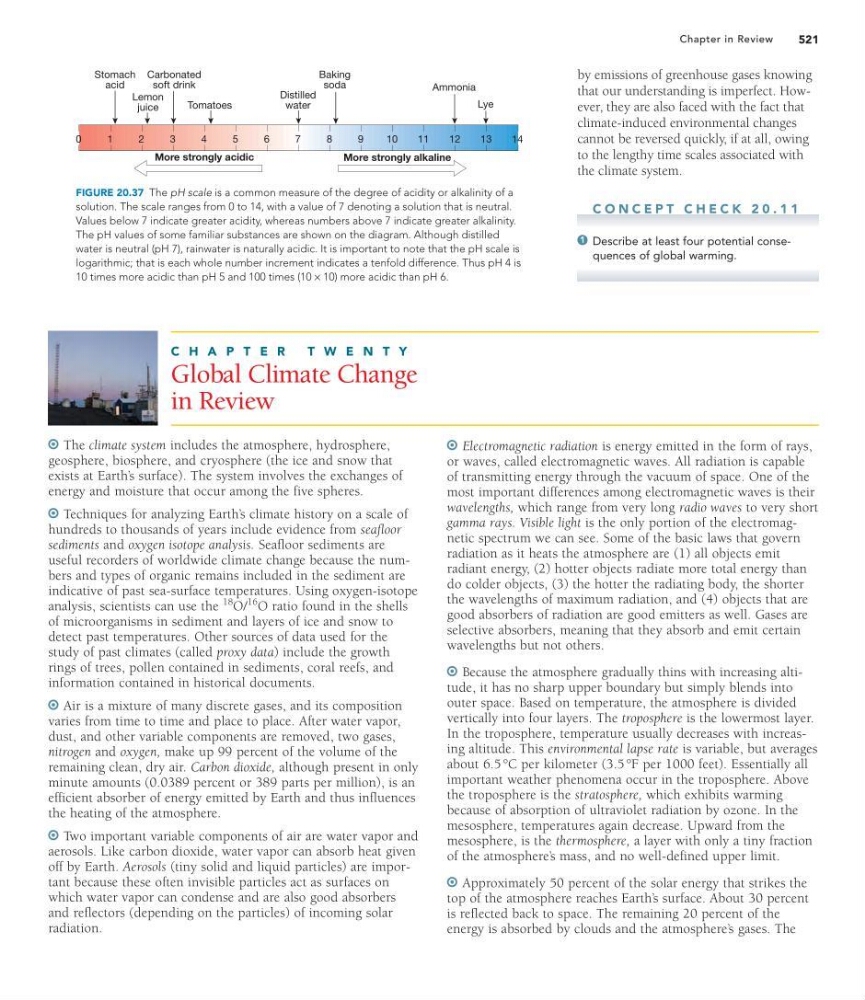
FIGURE 20.37 The pH scale is a common measure of the degree of acidity or alkalinity of a
solution. The scale ranges from 0 to 14, with a value of 7 denoting a solution that is neutral.
Values below 7 indicate greater acidity, whereas numbers above 7 indicate greater alkalinity.
The pH values of some familiar substances are shown on the diagram. Although distilled
water is neutral (pH 7), rainwater is naturally acidic. It is important to note that the pH scale is
logarithmic; that is each whole number increment indicates a tenfold difference. Thus pH 4 is
10 times more acidic than pH 5 and 100 times (10 × 10) more acidic than pH 6.
by emissions of greenhouse gases knowing
that our understanding is imperfect. However, they are also faced with the fact that
climate-induced environmental changes
cannot be reversed quickly, if at all, owing
to the lengthy time scales associated with
the climate system.
C O N C E P T C H E C K 2 0 . 1 1
Describe at least four potential consequences of global warming.
1
Chapter in Review
The climate system includes the atmosphere, hydrosphere,
geosphere, biosphere, and cryosphere (the ice and snow that
exists at Earth’ s surface). The system involves the exchanges of
energy and moisture that occur among the five spheres.
Techniques for analyzing Earth’ s climate history on a scale of
hundreds to thousands of years include evidence from seafloor
sediments and oxygen isotope analysis. Seafloor sediments are
useful recorders of worldwide climate change because the numbers and types of organic remains included in the sediment are
indicative of past sea-surface temperatures. Using oxygen-isotope
analysis, scientists can use the
18 O/
16 O ratio found in the shells
of microorganisms in sediment and layers of ice and snow to
detect past temperatures. Other sources of data used for the
study of past climates (called proxy data) include the growth
rings of trees, pollen contained in sediments, coral reefs, and
information contained in historical documents.
Air is a mixture of many discrete gases, and its composition
varies from time to time and place to place. After water vapor,
dust, and other variable components are removed, two gases,
nitrogen and oxygen, make up 99 percent of the volume of the
remaining clean, dry air. Carbon dioxide, although present in only
minute amounts (0.0389 percent or 389 parts per million), is an
efficient absorber of energy emitted by Earth and thus influences
the heating of the atmosphere.
Two important variable components of air are water vapor and
aerosols. Like carbon dioxide, water vapor can absorb heat given
off by Earth. Aerosols (tiny solid and liquid particles) are important because these often invisible particles act as surfaces on
which water vapor can condense and are also good absorbers
and reflectors (depending on the particles) of incoming solar
radiation.
Electromagnetic radiation is energy emitted in the form of rays,
or waves, called electromagnetic waves. All radiation is capable
of transmitting energy through the vacuum of space. One of the
most important differences among electromagnetic waves is their
wavelengths, which range from very long radio waves to very short
gamma rays. Visible light is the only portion of the electromagnetic spectrum we can see. Some of the basic laws that govern
radiation as it heats the atmosphere are (1) all objects emit
radiant energy, (2) hotter objects radiate more total energy than
do colder objects, (3) the hotter the radiating body, the shorter
the wavelengths of maximum radiation, and (4) objects that are
good absorbers of radiation are good emitters as well. Gases are
selective absorbers, meaning that they absorb and emit certain
wavelengths but not others.
Because the atmosphere gradually thins with increasing altitude, it has no sharp upper boundary but simply blends into
outer space. Based on temperature, the atmosphere is divided
vertically into four layers. The troposphere is the lowermost layer.
In the troposphere, temperature usually decreases with increasing altitude. This environmental lapse rate is variable, but averages
about 6.5 °C per kilometer (3.5 °F per 1000 feet). Essentially all
important weather phenomena occur in the troposphere. Above
the troposphere is the stratosphere, which exhibits warming
because of absorption of ultraviolet radiation by ozone. In the
mesosphere, temperatures again decrease. Upward from the
mesosphere, is the thermosphere, a layer with only a tiny fraction
of the atmosphere’ s mass, and no well-defined upper limit.
Approximately 50 percent of the solar energy that strikes the
top of the atmosphere reaches Earth’ s surface. About 30 percent
is reflected back to space. The remaining 20 percent of the
energy is absorbed by clouds and the atmosphere’ s gases. The
C H A P T E R
T W E N T Y
Global Climate Change
in Review
More strongly acidic
More strongly alkaline
Stomach
acid
Lemon
juice
Carbonated
soft drink
Tomatoes
Distilled
water
Baking
soda
Ammonia
Lye
0
1
2
3
4
5
6
7
8
9
1 0
1 1
1 2
1 3
14
FIGURE 20.37 The pH scale is a common measure of the degree of acidity or alkalinity of a
solution. The scale ranges from 0 to 14, with a value of 7 denoting a solution that is neutral.
Values below 7 indicate greater acidity, whereas numbers above 7 indicate greater alkalinity.
The pH values of some familiar substances are shown on the diagram. Although distilled
water is neutral (pH 7), rainwater is naturally acidic. It is important to note that the pH scale is
logarithmic; that is each whole number increment indicates a tenfold difference. Thus pH 4 is
10 times more acidic than pH 5 and 100 times (10 × 10) more acidic than pH 6.
by emissions of greenhouse gases knowing
that our understanding is imperfect. However, they are also faced with the fact that
climate-induced environmental changes
cannot be reversed quickly, if at all, owing
to the lengthy time scales associated with
the climate system.
C O N C E P T C H E C K 2 0 . 1 1
Describe at least four potential consequences of global warming.
1