

CHAPTER 19 Earth’s Evolution through Geologic Time
464
Era
Period
Epoch
Cenozoic
Mesozoic
Paleozoic
Quaternary
Tertiary
Cretaceous
Jurassic
Triassic
Permian
Carboniferous
Pennsylvanian
Mississippian
Devonian
Silurian
Ordovician
Cambrian
145.5
199.6
251
299
318
359
416
444
488
542
Holocene
Pleistocene
Pliocene
Miocene
Oligocene
Eocene
Paleocene
0.01
2.6
5.3
23.0
33.9
55.8
65.5
~4600
Cenozoic
Mesozoic
Paleozoic
Precambrian
Eon
Phanerozoic
Proterozoic
Archean
Hadean*
Hadean*
2500
~4000
The Precambrian
comprises about
88% of the geologic
time scale
* Hadean is the informal name for the span that begins at Earth’s formation and ends with Earth’s earliest-known rocks.
"Age
of
Reptiles"
"Age
of
Amphibians"
"Age
of
Fishes"
"Age
of
Invertebrates"
Development of
Plants and Animals
Extinction of
dinosaurs and many
other species
Extinction of trilobites
and many other
marine animals
Humans develop
"Age of Mammals"
First flowering plants
First birds
Dinosaurs dominant
First reptiles
Large coal swamps
Amphibians abundant
First insect fossils
Fishes dominant
First land plants
First fishes
Trilobites dominant
First organisms
with shells
First multicelled
organisms
Origin of Earth
First one-celled
organisms
Relative Time
Span
Precambrian
Phanerozoic
Cephalopods dominant
Proterozoic
Archean
Neogene
Paleogene
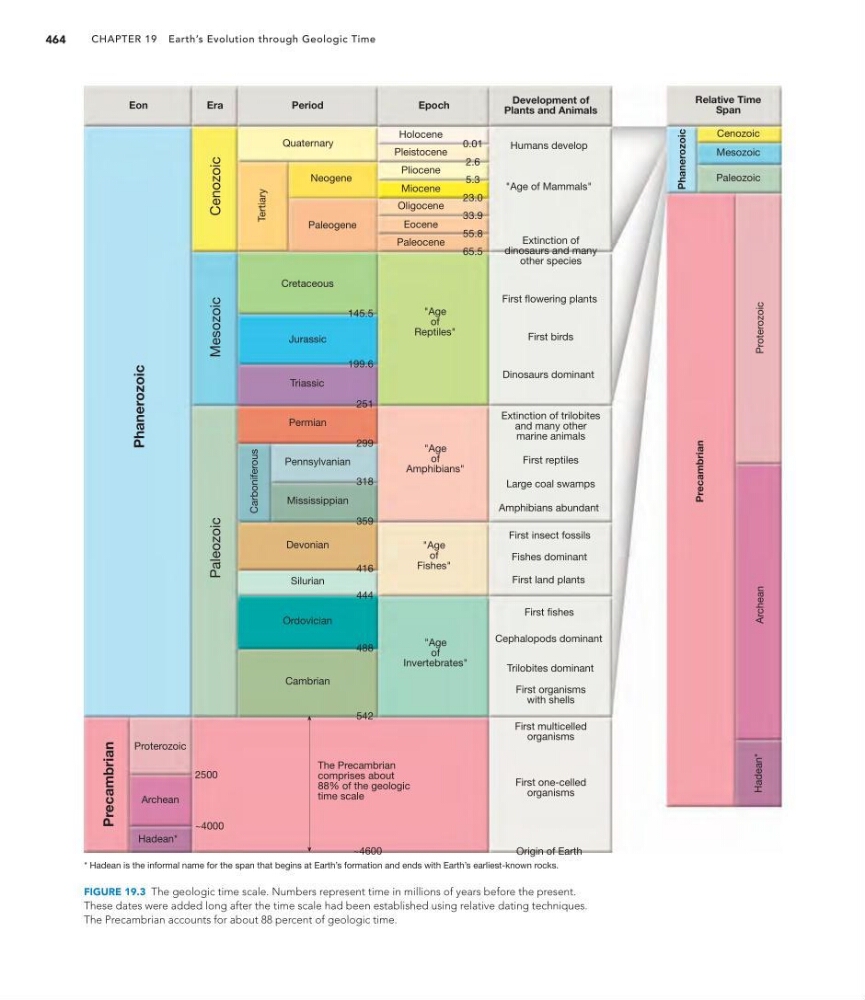
FIGURE 19.3 The geologic time scale. Numbers represent time in millions of years before the present.
These dates were added long after the time scale had been established using relative dating techniques.
The Precambrian accounts for about 88 percent of geologic time.
464
Era
Period
Epoch
Cenozoic
Mesozoic
Paleozoic
Quaternary
Tertiary
Cretaceous
Jurassic
Triassic
Permian
Carboniferous
Pennsylvanian
Mississippian
Devonian
Silurian
Ordovician
Cambrian
145.5
199.6
251
299
318
359
416
444
488
542
Holocene
Pleistocene
Pliocene
Miocene
Oligocene
Eocene
Paleocene
0.01
2.6
5.3
23.0
33.9
55.8
65.5
~4600
Cenozoic
Mesozoic
Paleozoic
Precambrian
Eon
Phanerozoic
Proterozoic
Archean
Hadean*
Hadean*
2500
~4000
The Precambrian
comprises about
88% of the geologic
time scale
* Hadean is the informal name for the span that begins at Earth’s formation and ends with Earth’s earliest-known rocks.
"Age
of
Reptiles"
"Age
of
Amphibians"
"Age
of
Fishes"
"Age
of
Invertebrates"
Development of
Plants and Animals
Extinction of
dinosaurs and many
other species
Extinction of trilobites
and many other
marine animals
Humans develop
"Age of Mammals"
First flowering plants
First birds
Dinosaurs dominant
First reptiles
Large coal swamps
Amphibians abundant
First insect fossils
Fishes dominant
First land plants
First fishes
Trilobites dominant
First organisms
with shells
First multicelled
organisms
Origin of Earth
First one-celled
organisms
Relative Time
Span
Precambrian
Phanerozoic
Cephalopods dominant
Proterozoic
Archean
Neogene
Paleogene
FIGURE 19.3 The geologic time scale. Numbers represent time in millions of years before the present.
These dates were added long after the time scale had been established using relative dating techniques.
The Precambrian accounts for about 88 percent of geologic time.