

451
Dating with Radioactivity
the physical conditions that exist in Earth’ s outer layers. Therefore,
each radioactive isotope used for dating has been decaying at a
fixed rate ever since the formation of the rocks in which it occurs,
and the products of decay have been accumulating at a corresponding rate. For example, when uranium is incorporated into a mineral that crystallizes from magma, there is no lead (the stable
daughter product) from previous decay. The radiometric “clock”
starts at this point. As the uranium in this newly formed mineral
disintegrates, atoms of the daughter product are trapped, and
measurable amounts of lead gradually accumulate.
Half-Life
The time required for half of the nuclei in a sample to decay is
called the half-life of the isotope. Half-life is a common way of
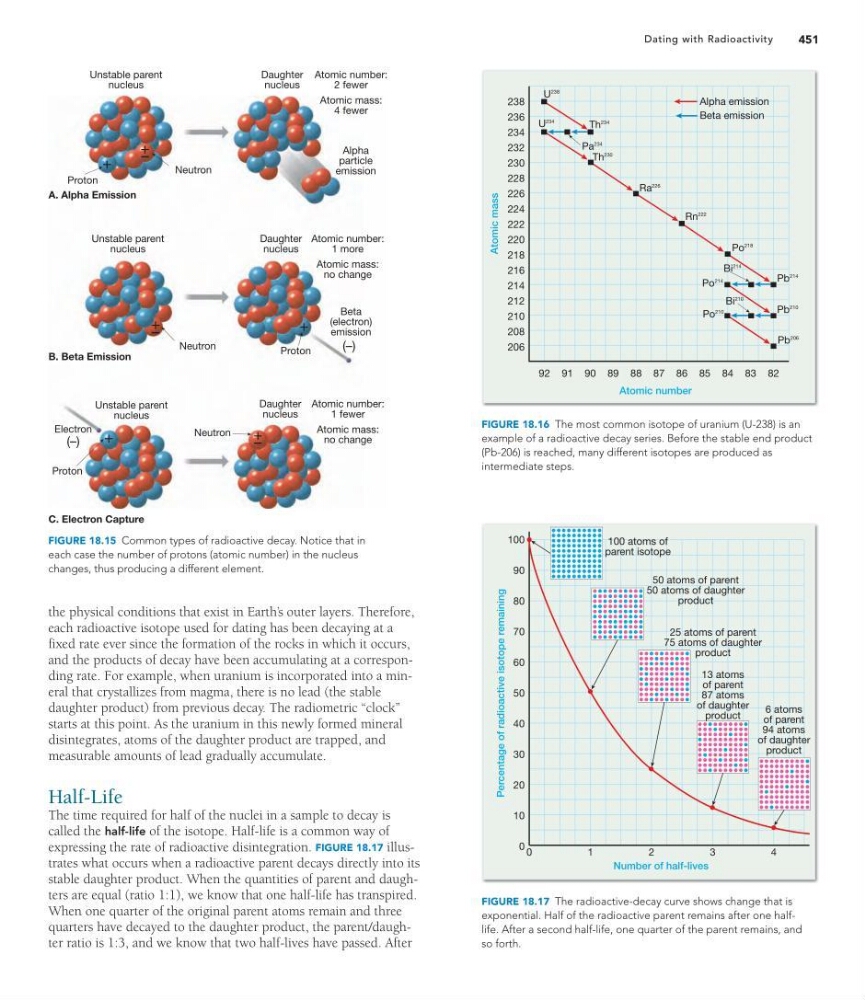
expressing the rate of radioactive disintegration. FIGURE 18.17 illustrates what occurs when a radioactive parent decays directly into its
stable daughter product. When the quantities of parent and daughters are equal (ratio 1:1), we know that one half-life has transpired.
When one quarter of the original parent atoms remain and three
quarters have decayed to the daughter product, the parent/daughter ratio is 1:3, and we know that two half-lives have passed. After
A. Alpha Emission
B. Beta Emission
C. Electron Capture
Neutron
Proton
Neutron
Proton
Neutron
Proton
Unstable parent
nucleus
Daughter
nucleus
Alpha
particle
emission
Atomic number:
2 fewer
Atomic mass:
4 fewer
Atomic number:
1 more
Atomic mass:
no change
Beta
(electron)
emission
Electron
Atomic number:
1 fewer
Atomic mass:
no change
Unstable parent
nucleus
Daughter
nucleus
(–)
+ –
+
+
+
+ –
+ –
(–)
Unstable parent
nucleus
Daughter
nucleus
FIGURE 18.15 Common types of radioactive decay. Notice that in
each case the number of protons (atomic number) in the nucleus
changes, thus producing a different element.
•••••••••• •••••••••• •••••••••• •••••••••• •••••••••• •••••••••• •••••••••• •••••••••• •••••••••• ••••••••••
•••••••••• •••••••••• •••••••••• •••••••••• •••••••••• •••••••••• •••••••••• •••••••••• •••••••••• ••••••••••
•••••••••• •••••••••• •••••••••• •••••••••• •••••••••• •••••••••• •••••••••• •••••••••• •••••••••• ••••••••••
•••••••••• •••••••••• •••••••••• •••••••••• •••••••••• •••••••••• •••••••••• •••••••••• •••••••••• ••••••••••
•••••••••• •••••••••• •••••••••• •••••••••• •••••••••• •••••••••• •••••••••• •••••••••• •••••••••• ••••••••••
100
90
80
70
60
50
40
30
20
10
0
Percentage of radioactive isotope remaining
0
1
2
3
4
Number of half-lives
100 atoms of
parent isotope
50 atoms of parent
50 atoms of daughter
product
25 atoms of parent
75 atoms of daughter
product
13 atoms
of parent
87 atoms
of daughter
product
6 atoms
of parent
94 atoms
of daughter
product
Alpha emission
Beta emission
U
234
U
238
Th
234
Pa
234
Th
230
Ra
226
Rn
222
Po
218
Bi
214
Po
214
Pb
214
Bi
210
Po
210
Pb
210
Pb
206
92
90
91
89 88 87 86 85 84 83 82
Atomic number
Atomic mass
238
236
234
232
230
228
226
224
222
220
218
216
214
212
210
208
206
FIGURE 18.16 The most common isotope of uranium (U-238) is an
example of a radioactive decay series. Before the stable end product
(Pb-206) is reached, many different isotopes are produced as
intermediate steps.
FIGURE 18.17 The radioactive-decay curve shows change that is
exponential. Half of the radioactive parent remains after one halflife. After a second half-life, one quarter of the parent remains, and
so forth.
Dating with Radioactivity
the physical conditions that exist in Earth’ s outer layers. Therefore,
each radioactive isotope used for dating has been decaying at a
fixed rate ever since the formation of the rocks in which it occurs,
and the products of decay have been accumulating at a corresponding rate. For example, when uranium is incorporated into a mineral that crystallizes from magma, there is no lead (the stable
daughter product) from previous decay. The radiometric “clock”
starts at this point. As the uranium in this newly formed mineral
disintegrates, atoms of the daughter product are trapped, and
measurable amounts of lead gradually accumulate.
Half-Life
The time required for half of the nuclei in a sample to decay is
called the half-life of the isotope. Half-life is a common way of
expressing the rate of radioactive disintegration. FIGURE 18.17 illustrates what occurs when a radioactive parent decays directly into its
stable daughter product. When the quantities of parent and daughters are equal (ratio 1:1), we know that one half-life has transpired.
When one quarter of the original parent atoms remain and three
quarters have decayed to the daughter product, the parent/daughter ratio is 1:3, and we know that two half-lives have passed. After
A. Alpha Emission
B. Beta Emission
C. Electron Capture
Neutron
Proton
Neutron
Proton
Neutron
Proton
Unstable parent
nucleus
Daughter
nucleus
Alpha
particle
emission
Atomic number:
2 fewer
Atomic mass:
4 fewer
Atomic number:
1 more
Atomic mass:
no change
Beta
(electron)
emission
Electron
Atomic number:
1 fewer
Atomic mass:
no change
Unstable parent
nucleus
Daughter
nucleus
(–)
+ –
+
+
+
+ –
+ –
(–)
Unstable parent
nucleus
Daughter
nucleus
FIGURE 18.15 Common types of radioactive decay. Notice that in
each case the number of protons (atomic number) in the nucleus
changes, thus producing a different element.
•••••••••• •••••••••• •••••••••• •••••••••• •••••••••• •••••••••• •••••••••• •••••••••• •••••••••• ••••••••••
•••••••••• •••••••••• •••••••••• •••••••••• •••••••••• •••••••••• •••••••••• •••••••••• •••••••••• ••••••••••
•••••••••• •••••••••• •••••••••• •••••••••• •••••••••• •••••••••• •••••••••• •••••••••• •••••••••• ••••••••••
•••••••••• •••••••••• •••••••••• •••••••••• •••••••••• •••••••••• •••••••••• •••••••••• •••••••••• ••••••••••
•••••••••• •••••••••• •••••••••• •••••••••• •••••••••• •••••••••• •••••••••• •••••••••• •••••••••• ••••••••••
100
90
80
70
60
50
40
30
20
10
0
Percentage of radioactive isotope remaining
0
1
2
3
4
Number of half-lives
100 atoms of
parent isotope
50 atoms of parent
50 atoms of daughter
product
25 atoms of parent
75 atoms of daughter
product
13 atoms
of parent
87 atoms
of daughter
product
6 atoms
of parent
94 atoms
of daughter
product
Alpha emission
Beta emission
U
234
U
238
Th
234
Pa
234
Th
230
Ra
226
Rn
222
Po
218
Bi
214
Po
214
Pb
214
Bi
210
Po
210
Pb
210
Pb
206
92
90
91
89 88 87 86 85 84 83 82
Atomic number
Atomic mass
238
236
234
232
230
228
226
224
222
220
218
216
214
212
210
208
206
FIGURE 18.16 The most common isotope of uranium (U-238) is an
example of a radioactive decay series. Before the stable end product
(Pb-206) is reached, many different isotopes are produced as
intermediate steps.
FIGURE 18.17 The radioactive-decay curve shows change that is
exponential. Half of the radioactive parent remains after one halflife. After a second half-life, one quarter of the parent remains, and
so forth.