

Trench
Accretionary
wedge
Asthenosphere
100 km
Continental
volcanic arc
Subductin g o c e a n ic li t h o s p h e r e
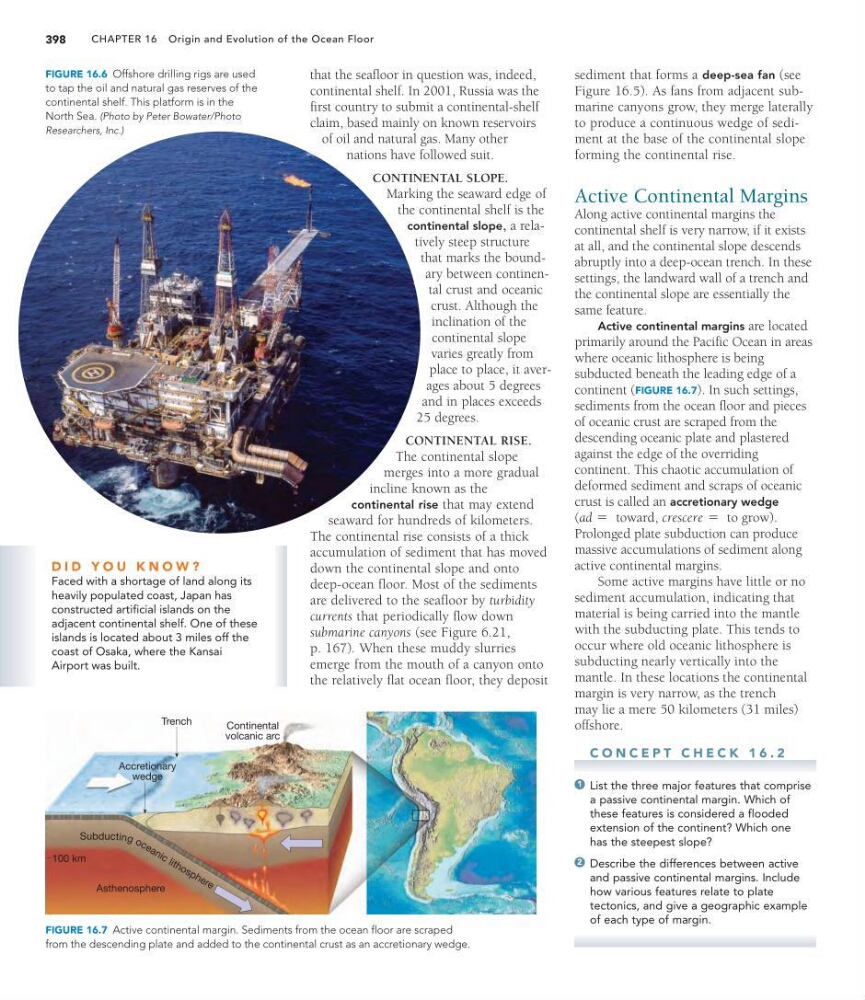
FIGURE 16.7 Active continental margin. Sediments from the ocean floor are scraped
from the descending plate and added to the continental crust as an accretionary wedge.
CHAPTER 16 Origin and Evolution of the Ocean Floor
398
D I D Y O U K N O W ?
Faced with a shortage of land along its
heavily populated coast, Japan has
constructed artificial islands on the
adjacent continental shelf. One of these
islands is located about 3 miles off the
coast of Osaka, where the Kansai
Airport was built.
that the seafloor in question was, indeed,
continental shelf. In 2001, Russia was the
first country to submit a continental-shelf
claim, based mainly on known reservoirs
of oil and natural gas. Many other
nations have followed suit.
CONTINENTAL SLOPE.
Marking the seaward edge of
the continental shelf is the
continental slope, a relatively steep structure
that marks the boundary between continental crust and oceanic
crust. Although the
inclination of the
continental slope
varies greatly from
place to place, it averages about 5 degrees
and in places exceeds
25 degrees.
CONTINENTAL RISE.
The continental slope
merges into a more gradual
incline known as the
continental rise that may extend
seaward for hundreds of kilometers.
The continental rise consists of a thick
accumulation of sediment that has moved
down the continental slope and onto
deep-ocean floor. Most of the sediments
are delivered to the seafloor by turbidity
currents that periodically flow down
submarine canyons (see Figure 6.21,
p. 167). When these muddy slurries
emerge from the mouth of a canyon onto
the relatively flat ocean floor, they deposit
FIGURE 16.6 Offshore drilling rigs are used
to tap the oil and natural gas reserves of the
continental shelf. This platform is in the
North Sea. (Photo by Peter Bowater/Photo
Researchers, Inc.)
sediment that forms a deep-sea fan (see
Figure 16.5). As fans from adjacent submarine canyons grow, they merge laterally
to produce a continuous wedge of sediment at the base of the continental slope
forming the continental rise.
Active Continental Margins
Along active continental margins the
continental shelf is very narrow, if it exists
at all, and the continental slope descends
abruptly into a deep-ocean trench. In these
settings, the landward wall of a trench and
the continental slope are essentially the
same feature.
Active continental margins are located
primarily around the Pacific Ocean in areas
where oceanic lithosphere is being
subducted beneath the leading edge of a
continent (FIGURE 16.7). In such settings,
sediments from the ocean floor and pieces
of oceanic crust are scraped from the
descending oceanic plate and plastered
against the edge of the overriding
continent. This chaotic accumulation of
deformed sediment and scraps of oceanic
crust is called an accretionary wedge
(
,
) .
Prolonged plate subduction can produce
massive accumulations of sediment along
active continental margins.
Some active margins have little or no
sediment accumulation, indicating that
material is being carried into the mantle
with the subducting plate. This tends to
occur where old oceanic lithosphere is
subducting nearly vertically into the
mantle. In these locations the continental
margin is very narrow, as the trench
may lie a mere 50 kilometers (31 miles)
offshore.
C O N C E P T C H E C K 1 6 . 2
List the three major features that comprise
a passive continental margin. Which of
these features is considered a flooded
extension of the continent? Which one
has the steepest slope?
Describe the differences between active
and passive continental margins. Include
how various features relate to plate
tectonics, and give a geographic example
of each type of margin.
2
1
crescere = to grow
ad = toward
Accretionary
wedge
Asthenosphere
100 km
Continental
volcanic arc
Subductin g o c e a n ic li t h o s p h e r e
FIGURE 16.7 Active continental margin. Sediments from the ocean floor are scraped
from the descending plate and added to the continental crust as an accretionary wedge.
CHAPTER 16 Origin and Evolution of the Ocean Floor
398
D I D Y O U K N O W ?
Faced with a shortage of land along its
heavily populated coast, Japan has
constructed artificial islands on the
adjacent continental shelf. One of these
islands is located about 3 miles off the
coast of Osaka, where the Kansai
Airport was built.
that the seafloor in question was, indeed,
continental shelf. In 2001, Russia was the
first country to submit a continental-shelf
claim, based mainly on known reservoirs
of oil and natural gas. Many other
nations have followed suit.
CONTINENTAL SLOPE.
Marking the seaward edge of
the continental shelf is the
continental slope, a relatively steep structure
that marks the boundary between continental crust and oceanic
crust. Although the
inclination of the
continental slope
varies greatly from
place to place, it averages about 5 degrees
and in places exceeds
25 degrees.
CONTINENTAL RISE.
The continental slope
merges into a more gradual
incline known as the
continental rise that may extend
seaward for hundreds of kilometers.
The continental rise consists of a thick
accumulation of sediment that has moved
down the continental slope and onto
deep-ocean floor. Most of the sediments
are delivered to the seafloor by turbidity
currents that periodically flow down
submarine canyons (see Figure 6.21,
p. 167). When these muddy slurries
emerge from the mouth of a canyon onto
the relatively flat ocean floor, they deposit
FIGURE 16.6 Offshore drilling rigs are used
to tap the oil and natural gas reserves of the
continental shelf. This platform is in the
North Sea. (Photo by Peter Bowater/Photo
Researchers, Inc.)
sediment that forms a deep-sea fan (see
Figure 16.5). As fans from adjacent submarine canyons grow, they merge laterally
to produce a continuous wedge of sediment at the base of the continental slope
forming the continental rise.
Active Continental Margins
Along active continental margins the
continental shelf is very narrow, if it exists
at all, and the continental slope descends
abruptly into a deep-ocean trench. In these
settings, the landward wall of a trench and
the continental slope are essentially the
same feature.
Active continental margins are located
primarily around the Pacific Ocean in areas
where oceanic lithosphere is being
subducted beneath the leading edge of a
continent (FIGURE 16.7). In such settings,
sediments from the ocean floor and pieces
of oceanic crust are scraped from the
descending oceanic plate and plastered
against the edge of the overriding
continent. This chaotic accumulation of
deformed sediment and scraps of oceanic
crust is called an accretionary wedge
(
,
) .
Prolonged plate subduction can produce
massive accumulations of sediment along
active continental margins.
Some active margins have little or no
sediment accumulation, indicating that
material is being carried into the mantle
with the subducting plate. This tends to
occur where old oceanic lithosphere is
subducting nearly vertically into the
mantle. In these locations the continental
margin is very narrow, as the trench
may lie a mere 50 kilometers (31 miles)
offshore.
C O N C E P T C H E C K 1 6 . 2
List the three major features that comprise
a passive continental margin. Which of
these features is considered a flooded
extension of the continent? Which one
has the steepest slope?
Describe the differences between active
and passive continental margins. Include
how various features relate to plate
tectonics, and give a geographic example
of each type of margin.
2
1
crescere = to grow
ad = toward