

397
Continental Margins
By contrast, active continental margins
occur where oceanic lithosphere subducts
into the mantle beneath the edge of a continent. As a result, active margins are narrow
and consist of highly deformed sediments
that were scraped from the descending
lithospheric slab and plastered against the
margin of the overriding continent. Active
continental margins are common around
the Pacific Rim, where they parallel deepocean trenches.
Passive Continental Margins
The features comprising passive continental margins include the continental shelf,
the continental slope, and the continental
rise (FIGURE 16.5).
CONTINENTAL SHELF. The continental
shelf is a gently sloping, submerged surface
extending from the shoreline toward the
deep-ocean basin. Because it is underlain
by continental crust, it is clearly a flooded
extension of the continents.
The continental shelf varies greatly in
width. Although almost nonexistent along
some continents, the shelf extends seaward
more than 1500 kilometers (930 miles)
along others. On average, the continental
shelf is about 80 kilometers (50 miles)
wide, and its seaward edge is about 130
meters (425 feet) deep. As a result, the
C O N C E P T C H E C K 1 6 . 1
Define bathymetry.
Assuming that the average speed of sound
waves in water is 1500 meters per second,
determine the water depth if the signal
sent out by an echo sounder requires
6 seconds to strike bottom and return
to the recorder.
Describe how satellites orbiting Earth can
determine features on the seafloor without
being able to directly observe them
beneath several kilometers of seawater.
What are the three major topographic
provinces of the ocean floor?
Continental Margins
Divergent Boundaries
Features of the Ocean Floor
Two types of continental margins have been
identified—passive and active. Passive margins are found along most of the coastal
areas that surround the Atlantic and Indian
oceans, including the east coasts of North
and South America, as well as the coastal
areas of Europe and Africa. Passive margins
consist of continental crust capped with
weathered materials eroded from adjacent
landmasses.
GEODe
ESSENTIALS
OF GEOLOGY
4
3
2
1
Continental shelf
Submarine
canyons
Continental crust
Continental slope
Shelf break
Abyssal plain
Oceanic crust
Deep-sea fan
Continental rise
Continental margin
Coastal
plain
Deep-ocean
basin
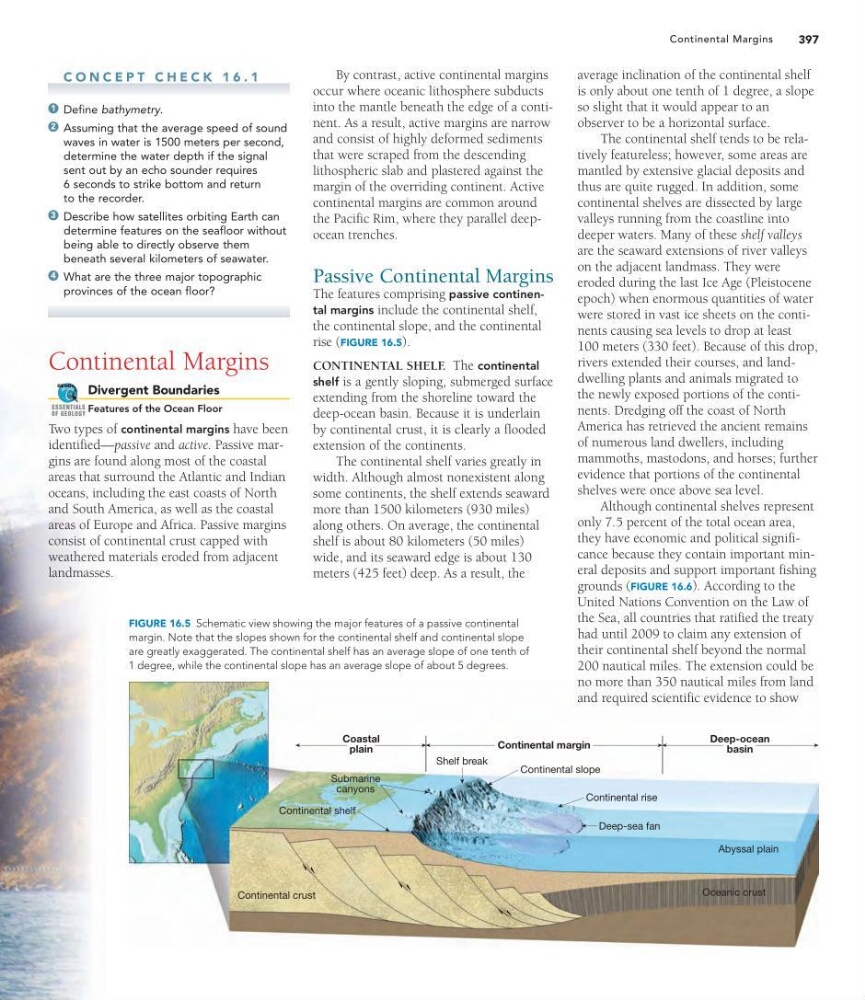
FIGURE 16.5 Schematic view showing the major features of a passive continental
margin. Note that the slopes shown for the continental shelf and continental slope
are greatly exaggerated. The continental shelf has an average slope of one tenth of
1 degree, while the continental slope has an average slope of about 5 degrees.
average inclination of the continental shelf
is only about one tenth of 1 degree, a slope
so slight that it would appear to an
observer to be a horizontal surface.
The continental shelf tends to be relatively featureless; however, some areas are
mantled by extensive glacial deposits and
thus are quite rugged. In addition, some
continental shelves are dissected by large
valleys running from the coastline into
deeper waters. Many of these shelf valleys
are the seaward extensions of river valleys
on the adjacent landmass. They were
eroded during the last Ice Age (Pleistocene
epoch) when enormous quantities of water
were stored in vast ice sheets on the continents causing sea levels to drop at least
100 meters (330 feet). Because of this drop,
rivers extended their courses, and landdwelling plants and animals migrated to
the newly exposed portions of the continents. Dredging off the coast of North
America has retrieved the ancient remains
of numerous land dwellers, including
mammoths, mastodons, and horses; further
evidence that portions of the continental
shelves were once above sea level.
Although continental shelves represent
only 7.5 percent of the total ocean area,
they have economic and political significance because they contain important mineral deposits and support important fishing
grounds (FIGURE 16.6). According to the
United Nations Convention on the Law of
the Sea, all countries that ratified the treaty
had until 2009 to claim any extension of
their continental shelf beyond the normal
200 nautical miles. The extension could be
no more than 350 nautical miles from land
and required scientific evidence to show
Continental Margins
By contrast, active continental margins
occur where oceanic lithosphere subducts
into the mantle beneath the edge of a continent. As a result, active margins are narrow
and consist of highly deformed sediments
that were scraped from the descending
lithospheric slab and plastered against the
margin of the overriding continent. Active
continental margins are common around
the Pacific Rim, where they parallel deepocean trenches.
Passive Continental Margins
The features comprising passive continental margins include the continental shelf,
the continental slope, and the continental
rise (FIGURE 16.5).
CONTINENTAL SHELF. The continental
shelf is a gently sloping, submerged surface
extending from the shoreline toward the
deep-ocean basin. Because it is underlain
by continental crust, it is clearly a flooded
extension of the continents.
The continental shelf varies greatly in
width. Although almost nonexistent along
some continents, the shelf extends seaward
more than 1500 kilometers (930 miles)
along others. On average, the continental
shelf is about 80 kilometers (50 miles)
wide, and its seaward edge is about 130
meters (425 feet) deep. As a result, the
C O N C E P T C H E C K 1 6 . 1
Define bathymetry.
Assuming that the average speed of sound
waves in water is 1500 meters per second,
determine the water depth if the signal
sent out by an echo sounder requires
6 seconds to strike bottom and return
to the recorder.
Describe how satellites orbiting Earth can
determine features on the seafloor without
being able to directly observe them
beneath several kilometers of seawater.
What are the three major topographic
provinces of the ocean floor?
Continental Margins
Divergent Boundaries
Features of the Ocean Floor
Two types of continental margins have been
identified—passive and active. Passive margins are found along most of the coastal
areas that surround the Atlantic and Indian
oceans, including the east coasts of North
and South America, as well as the coastal
areas of Europe and Africa. Passive margins
consist of continental crust capped with
weathered materials eroded from adjacent
landmasses.
GEODe
ESSENTIALS
OF GEOLOGY
4
3
2
1
Continental shelf
Submarine
canyons
Continental crust
Continental slope
Shelf break
Abyssal plain
Oceanic crust
Deep-sea fan
Continental rise
Continental margin
Coastal
plain
Deep-ocean
basin
FIGURE 16.5 Schematic view showing the major features of a passive continental
margin. Note that the slopes shown for the continental shelf and continental slope
are greatly exaggerated. The continental shelf has an average slope of one tenth of
1 degree, while the continental slope has an average slope of about 5 degrees.
average inclination of the continental shelf
is only about one tenth of 1 degree, a slope
so slight that it would appear to an
observer to be a horizontal surface.
The continental shelf tends to be relatively featureless; however, some areas are
mantled by extensive glacial deposits and
thus are quite rugged. In addition, some
continental shelves are dissected by large
valleys running from the coastline into
deeper waters. Many of these shelf valleys
are the seaward extensions of river valleys
on the adjacent landmass. They were
eroded during the last Ice Age (Pleistocene
epoch) when enormous quantities of water
were stored in vast ice sheets on the continents causing sea levels to drop at least
100 meters (330 feet). Because of this drop,
rivers extended their courses, and landdwelling plants and animals migrated to
the newly exposed portions of the continents. Dredging off the coast of North
America has retrieved the ancient remains
of numerous land dwellers, including
mammoths, mastodons, and horses; further
evidence that portions of the continental
shelves were once above sea level.
Although continental shelves represent
only 7.5 percent of the total ocean area,
they have economic and political significance because they contain important mineral deposits and support important fishing
grounds (FIGURE 16.6). According to the
United Nations Convention on the Law of
the Sea, all countries that ratified the treaty
had until 2009 to claim any extension of
their continental shelf beyond the normal
200 nautical miles. The extension could be
no more than 350 nautical miles from land
and required scientific evidence to show