

CHAPTER 15 Plate Tectonics: A Scientific Revolution Unfolds
362
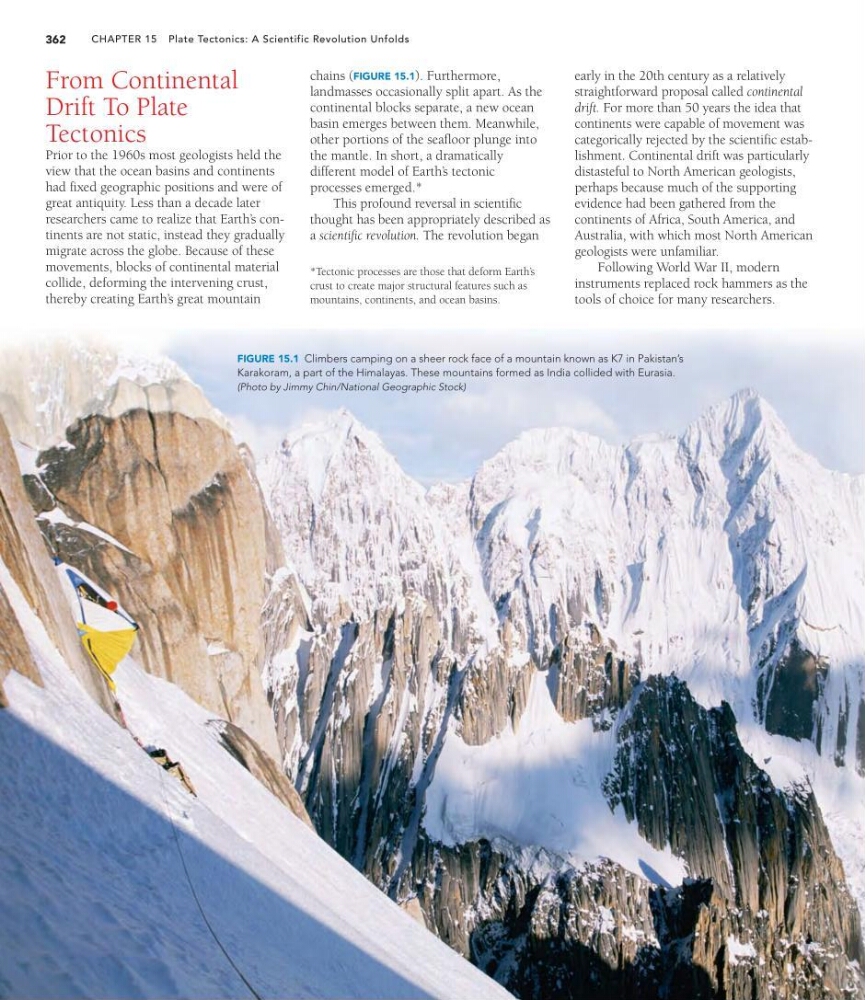
FIGURE 15.1 Climbers camping on a sheer rock face of a mountain known as K7 in Pakistan’s
Karakoram, a part of the Himalayas. These mountains formed as India collided with Eurasia.
(Photo by Jimmy Chin/National Geographic Stock)
From Continental
Drift To Plate
Tectonics
Prior to the 1960s most geologists held the
view that the ocean basins and continents
had fixed geographic positions and were of
great antiquity. Less than a decade later
researchers came to realize that Earth’ s continents are not static, instead they gradually
migrate across the globe. Because of these
movements, blocks of continental material
collide, deforming the intervening crust,
thereby creating Earth’ s great mountain
early in the 20th century as a relatively
straightforward proposal called continental
drift. For more than 50 years the idea that
continents were capable of movement was
categorically rejected by the scientific establishment. Continental drift was particularly
distasteful to North American geologists,
perhaps because much of the supporting
evidence had been gathered from the
continents of Africa, South America, and
Australia, with which most North American
geologists were unfamiliar.
Following World War II, modern
instruments replaced rock hammers as the
tools of choice for many researchers.
*Tectonic processes are those that deform Earth’ s
crust to create major structural features such as
mountains, continents, and ocean basins.
chains (FIGURE 15.1). Furthermore,
landmasses occasionally split apart. As the
continental blocks separate, a new ocean
basin emerges between them. Meanwhile,
other portions of the seafloor plunge into
the mantle. In short, a dramatically
different model of Earth’ s tectonic
processes emerged.*
This profound reversal in scientific
thought has been appropriately described as
a scientific revolution. The revolution began
362
FIGURE 15.1 Climbers camping on a sheer rock face of a mountain known as K7 in Pakistan’s
Karakoram, a part of the Himalayas. These mountains formed as India collided with Eurasia.
(Photo by Jimmy Chin/National Geographic Stock)
From Continental
Drift To Plate
Tectonics
Prior to the 1960s most geologists held the
view that the ocean basins and continents
had fixed geographic positions and were of
great antiquity. Less than a decade later
researchers came to realize that Earth’ s continents are not static, instead they gradually
migrate across the globe. Because of these
movements, blocks of continental material
collide, deforming the intervening crust,
thereby creating Earth’ s great mountain
early in the 20th century as a relatively
straightforward proposal called continental
drift. For more than 50 years the idea that
continents were capable of movement was
categorically rejected by the scientific establishment. Continental drift was particularly
distasteful to North American geologists,
perhaps because much of the supporting
evidence had been gathered from the
continents of Africa, South America, and
Australia, with which most North American
geologists were unfamiliar.
Following World War II, modern
instruments replaced rock hammers as the
tools of choice for many researchers.
*Tectonic processes are those that deform Earth’ s
crust to create major structural features such as
mountains, continents, and ocean basins.
chains (FIGURE 15.1). Furthermore,
landmasses occasionally split apart. As the
continental blocks separate, a new ocean
basin emerges between them. Meanwhile,
other portions of the seafloor plunge into
the mantle. In short, a dramatically
different model of Earth’ s tectonic
processes emerged.*
This profound reversal in scientific
thought has been appropriately described as
a scientific revolution. The revolution began