

Outer core
(liquid iron)
Inner
core
(solid iron)
Continental
crust
Oceanic
crust
Moho
Upper
mantle
Lithosphere
(rigid, solid)
~100 km
Asthenosphere
(weak solid)
Lithospheric
mantle
Atmosphere
(gas)
Hydrosphere
(liquid)
Upper mantle
(rocky, includes weak
and strong layer)
600 km
6, 371 km
5150 km
2900 km
Lower mantle
(solid rocky layer)
Mantle
Crust
(low density rock
7–70 km thick)
357
Earth’s Interior
Continental rocks have an average density of about 2.7 grams per
cubic centimeter, and some are
4 billion years old. The rocks of the
oceanic crust are younger (180 million
years or less) and denser (about 3.0 grams
per cubic centimeter) than continental
rocks.*
EARTH’S MANTLE. More than 82 percent
of Earth’ s volume is contained in the
mantle, a solid, rocky shell that extends to
a depth of about 2900 kilometers (1800
miles). The boundary between the crust
and mantle represents a marked change in
chemical composition. The dominant rock
type in the uppermost mantle is peridotite,
which is richer in the metals magnesium
and iron than the minerals found in either
the continental or oceanic crust.
The upper mantle extends from the
crust–mantle boundary down to a depth of
about 660 kilometers (410 miles). The
upper mantle can be divided into two different parts. The top portion of the upper
mantle is part of the stiff lithosphere, and
beneath that is the weaker asthenosphere.
The lithosphere (sphere of rock) consists of
the entire crust and uppermost mantle and
forms Earth’ s relatively cool, rigid outer
shell. Averaging about 100 kilometers
(62 miles) in thickness, the lithosphere is
more than 250 kilometers (155 miles) thick
below the oldest portions of the continents
(see Figure 14.30). Beneath this stiff layer
to a depth of about 350 kilometers
(217 miles) lies a soft, comparatively weak
layer known as the asthenosphere (weak
sphere). The top portion of the asthenosphere has a temperature/pressure regime
that results in a small amount of melting.
Within this very weak zone, the lithosphere
is mechanically detached from the layer
below. The result is that the lithosphere is
able to move independently of the
asthenosphere, a fact we will consider in
the next chapter.
It is important to emphasize that the
strength of various Earth materials is a
function of both their composition and
the temperature and pressure of their
environment. The entire lithosphere does
not behave like a brittle solid similar to
rocks found on the surface. Rather, the
rocks of the lithosphere get progressively
hotter and weaker (more easily deformed)
with increasing depth. At the depth of the
uppermost asthenosphere, the rocks are
close enough to their melting temperature
that they are very easily deformed, and
some melting may actually occur. Thus, the
uppermost asthenosphere is weak because
it is near its melting point, just as hot wax
is weaker than cold wax.
From 660 kilometers (410 miles) deep
to the top of the core, at a depth of 2900
kilometers (1800 miles), is the lower
*Liquid water has a density of 1 gram per cubic
centimeter: therefore, the density of basalt is three
times that of water.
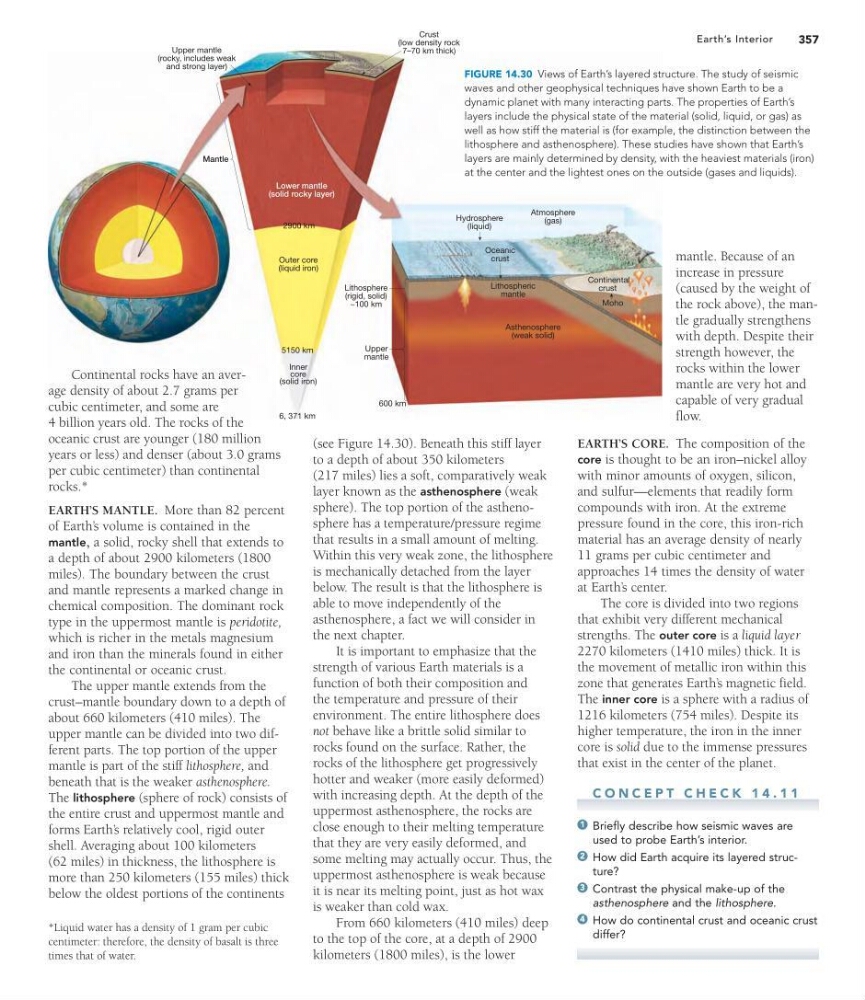
FIGURE 14.30 Views of Earth’s layered structure. The study of seismic
waves and other geophysical techniques have shown Earth to be a
dynamic planet with many interacting parts. The properties of Earth’s
layers include the physical state of the material (solid, liquid, or gas) as
well as how stiff the material is (for example, the distinction between the
lithosphere and asthenosphere). These studies have shown that Earth’s
layers are mainly determined by density, with the heaviest materials (iron)
at the center and the lightest ones on the outside (gases and liquids).
mantle. Because of an
increase in pressure
(caused by the weight of
the rock above), the mantle gradually strengthens
with depth. Despite their
strength however, the
rocks within the lower
mantle are very hot and
capable of very gradual
flow.
EARTH’S CORE. The composition of the
core is thought to be an iron–nickel alloy
with minor amounts of oxygen, silicon,
and sulfur—elements that readily form
compounds with iron. At the extreme
pressure found in the core, this iron-rich
material has an average density of nearly
11 grams per cubic centimeter and
approaches 14 times the density of water
at Earth’ s center.
The core is divided into two regions
that exhibit very different mechanical
strengths. The outer core is a liquid layer
2270 kilometers (1410 miles) thick. It is
the movement of metallic iron within this
zone that generates Earth’ s magnetic field.
The inner core is a sphere with a radius of
1216 kilometers (754 miles). Despite its
higher temperature, the iron in the inner
core is solid due to the immense pressures
that exist in the center of the planet.
C O N C E P T C H E C K 1 4 . 1 1
Briefly describe how seismic waves are
used to probe Earth’s interior.
How did Earth acquire its layered structure?
Contrast the physical make-up of the
asthenosphere and the lithosphere.
How do continental crust and oceanic crust
differ?
4
3
2
1
(liquid iron)
Inner
core
(solid iron)
Continental
crust
Oceanic
crust
Moho
Upper
mantle
Lithosphere
(rigid, solid)
~100 km
Asthenosphere
(weak solid)
Lithospheric
mantle
Atmosphere
(gas)
Hydrosphere
(liquid)
Upper mantle
(rocky, includes weak
and strong layer)
600 km
6, 371 km
5150 km
2900 km
Lower mantle
(solid rocky layer)
Mantle
Crust
(low density rock
7–70 km thick)
357
Earth’s Interior
Continental rocks have an average density of about 2.7 grams per
cubic centimeter, and some are
4 billion years old. The rocks of the
oceanic crust are younger (180 million
years or less) and denser (about 3.0 grams
per cubic centimeter) than continental
rocks.*
EARTH’S MANTLE. More than 82 percent
of Earth’ s volume is contained in the
mantle, a solid, rocky shell that extends to
a depth of about 2900 kilometers (1800
miles). The boundary between the crust
and mantle represents a marked change in
chemical composition. The dominant rock
type in the uppermost mantle is peridotite,
which is richer in the metals magnesium
and iron than the minerals found in either
the continental or oceanic crust.
The upper mantle extends from the
crust–mantle boundary down to a depth of
about 660 kilometers (410 miles). The
upper mantle can be divided into two different parts. The top portion of the upper
mantle is part of the stiff lithosphere, and
beneath that is the weaker asthenosphere.
The lithosphere (sphere of rock) consists of
the entire crust and uppermost mantle and
forms Earth’ s relatively cool, rigid outer
shell. Averaging about 100 kilometers
(62 miles) in thickness, the lithosphere is
more than 250 kilometers (155 miles) thick
below the oldest portions of the continents
(see Figure 14.30). Beneath this stiff layer
to a depth of about 350 kilometers
(217 miles) lies a soft, comparatively weak
layer known as the asthenosphere (weak
sphere). The top portion of the asthenosphere has a temperature/pressure regime
that results in a small amount of melting.
Within this very weak zone, the lithosphere
is mechanically detached from the layer
below. The result is that the lithosphere is
able to move independently of the
asthenosphere, a fact we will consider in
the next chapter.
It is important to emphasize that the
strength of various Earth materials is a
function of both their composition and
the temperature and pressure of their
environment. The entire lithosphere does
not behave like a brittle solid similar to
rocks found on the surface. Rather, the
rocks of the lithosphere get progressively
hotter and weaker (more easily deformed)
with increasing depth. At the depth of the
uppermost asthenosphere, the rocks are
close enough to their melting temperature
that they are very easily deformed, and
some melting may actually occur. Thus, the
uppermost asthenosphere is weak because
it is near its melting point, just as hot wax
is weaker than cold wax.
From 660 kilometers (410 miles) deep
to the top of the core, at a depth of 2900
kilometers (1800 miles), is the lower
*Liquid water has a density of 1 gram per cubic
centimeter: therefore, the density of basalt is three
times that of water.
FIGURE 14.30 Views of Earth’s layered structure. The study of seismic
waves and other geophysical techniques have shown Earth to be a
dynamic planet with many interacting parts. The properties of Earth’s
layers include the physical state of the material (solid, liquid, or gas) as
well as how stiff the material is (for example, the distinction between the
lithosphere and asthenosphere). These studies have shown that Earth’s
layers are mainly determined by density, with the heaviest materials (iron)
at the center and the lightest ones on the outside (gases and liquids).
mantle. Because of an
increase in pressure
(caused by the weight of
the rock above), the mantle gradually strengthens
with depth. Despite their
strength however, the
rocks within the lower
mantle are very hot and
capable of very gradual
flow.
EARTH’S CORE. The composition of the
core is thought to be an iron–nickel alloy
with minor amounts of oxygen, silicon,
and sulfur—elements that readily form
compounds with iron. At the extreme
pressure found in the core, this iron-rich
material has an average density of nearly
11 grams per cubic centimeter and
approaches 14 times the density of water
at Earth’ s center.
The core is divided into two regions
that exhibit very different mechanical
strengths. The outer core is a liquid layer
2270 kilometers (1410 miles) thick. It is
the movement of metallic iron within this
zone that generates Earth’ s magnetic field.
The inner core is a sphere with a radius of
1216 kilometers (754 miles). Despite its
higher temperature, the iron in the inner
core is solid due to the immense pressures
that exist in the center of the planet.
C O N C E P T C H E C K 1 4 . 1 1
Briefly describe how seismic waves are
used to probe Earth’s interior.
How did Earth acquire its layered structure?
Contrast the physical make-up of the
asthenosphere and the lithosphere.
How do continental crust and oceanic crust
differ?
4
3
2
1