

353
Can Earthquakes Be Predicted?
based on an increase in the frequency of
foreshocks that precede some, but not all,
earthquakes.
One claim of a successful short-range
prediction was made by the Chinese
government after the February 4, 1975,
earthquake in Liaoning Province. According
to reports, very few people were killed—
even though more than 1 million lived near
the epicenter—because the earthquake was
predicted and the residents were evacuated.
Some Western seismologists have questioned this claim and suggest instead that an
intense swarm of foreshocks, which began
24 hours before the main earthquake, may
have caused many people to evacuate on
their own accord.
One year after the Liaoning earthquake, an estimated 240,000 people died
in the Tangshan, China, earthquake, which
was not predicted (TABLE 14.2). There were
no foreshocks. Predictions can also lead to
false alarms. In a province near Hong Kong,
people reportedly evacuated their dwellings
for more than a month, but no earthquake
followed.
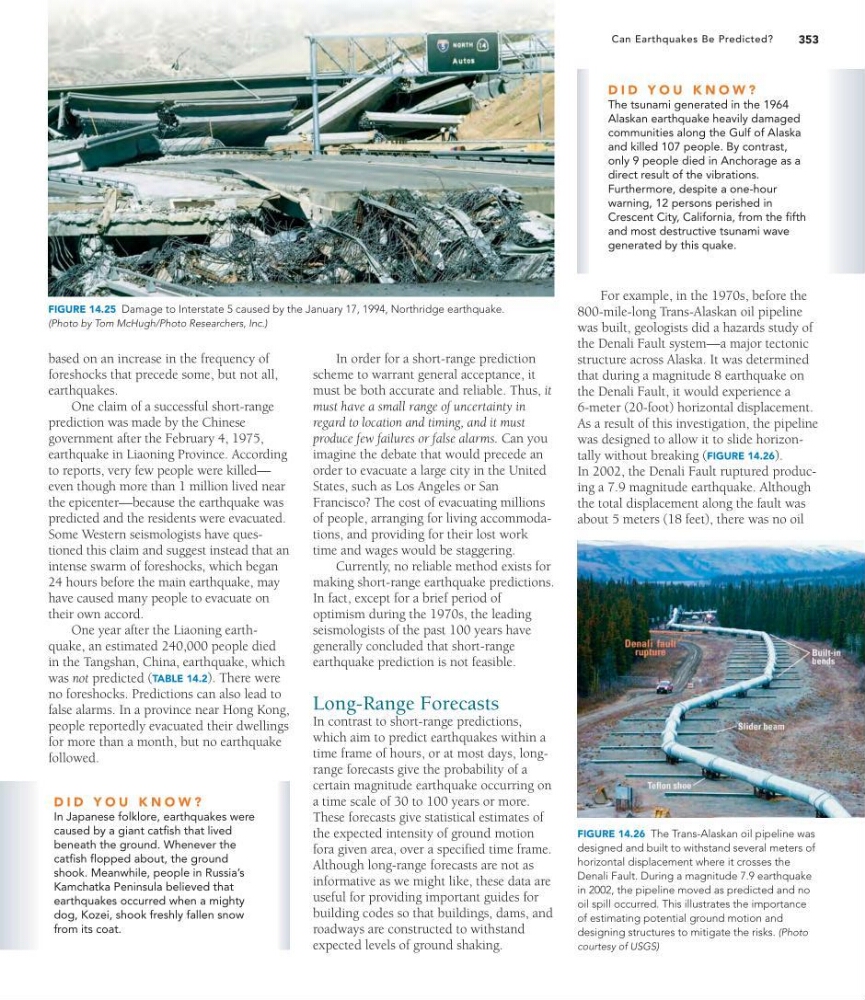
FIGURE 14.25 Damage to Interstate 5 caused by the January 17, 1994, Northridge earthquake.
(Photo by Tom McHugh/Photo Researchers, Inc.)
D I D Y O U K N O W ?
In Japanese folklore, earthquakes were
caused by a giant catfish that lived
beneath the ground. Whenever the
catfish flopped about, the ground
shook. Meanwhile, people in Russia’s
Kamchatka Peninsula believed that
earthquakes occurred when a mighty
dog, Kozei, shook freshly fallen snow
from its coat.
In order for a short-range prediction
scheme to warrant general acceptance, it
must be both accurate and reliable. Thus, it
must have a small range of uncertainty in
regard to location and timing, and it must
produce few failures or false alarms. Can you
imagine the debate that would precede an
order to evacuate a large city in the United
States, such as Los Angeles or San
Francisco? The cost of evacuating millions
of people, arranging for living accommodations, and providing for their lost work
time and wages would be staggering.
Currently, no reliable method exists for
making short-range earthquake predictions.
In fact, except for a brief period of
optimism during the 1970s, the leading
seismologists of the past 100 years have
generally concluded that short-range
earthquake prediction is not feasible.
Long-Range Forecasts
In contrast to short-range predictions,
which aim to predict earthquakes within a
time frame of hours, or at most days, longrange forecasts give the probability of a
certain magnitude earthquake occurring on
a time scale of 30 to 100 years or more.
These forecasts give statistical estimates of
the expected intensity of ground motion
fora given area, over a specified time frame.
Although long-range forecasts are not as
informative as we might like, these data are
useful for providing important guides for
building codes so that buildings, dams, and
roadways are constructed to withstand
expected levels of ground shaking.
FIGURE 14.26 The Trans-Alaskan oil pipeline was
designed and built to withstand several meters of
horizontal displacement where it crosses the
Denali Fault. During a magnitude 7.9 earthquake
in 2002, the pipeline moved as predicted and no
oil spill occurred. This illustrates the importance
of estimating potential ground motion and
designing structures to mitigate the risks. (Photo
courtesy of USGS)
For example, in the 1970s, before the
800-mile-long Trans-Alaskan oil pipeline
was built, geologists did a hazards study of
the Denali Fault system—a major tectonic
structure across Alaska. It was determined
that during a magnitude 8 earthquake on
the Denali Fault, it would experience a
6-meter (20-foot) horizontal displacement.
As a result of this investigation, the pipeline
was designed to allow it to slide horizontally without breaking (FIGURE 14.26).
In 2002, the Denali Fault ruptured producing a 7.9 magnitude earthquake. Although
the total displacement along the fault was
about 5 meters (18 feet), there was no oil
D I D Y O U K N O W ?
The tsunami generated in the 1964
Alaskan earthquake heavily damaged
communities along the Gulf of Alaska
and killed 107 people. By contrast,
only 9 people died in Anchorage as a
direct result of the vibrations.
Furthermore, despite a one-hour
warning, 12 persons perished in
Crescent City, California, from the fifth
and most destructive tsunami wave
generated by this quake.
Can Earthquakes Be Predicted?
based on an increase in the frequency of
foreshocks that precede some, but not all,
earthquakes.
One claim of a successful short-range
prediction was made by the Chinese
government after the February 4, 1975,
earthquake in Liaoning Province. According
to reports, very few people were killed—
even though more than 1 million lived near
the epicenter—because the earthquake was
predicted and the residents were evacuated.
Some Western seismologists have questioned this claim and suggest instead that an
intense swarm of foreshocks, which began
24 hours before the main earthquake, may
have caused many people to evacuate on
their own accord.
One year after the Liaoning earthquake, an estimated 240,000 people died
in the Tangshan, China, earthquake, which
was not predicted (TABLE 14.2). There were
no foreshocks. Predictions can also lead to
false alarms. In a province near Hong Kong,
people reportedly evacuated their dwellings
for more than a month, but no earthquake
followed.
FIGURE 14.25 Damage to Interstate 5 caused by the January 17, 1994, Northridge earthquake.
(Photo by Tom McHugh/Photo Researchers, Inc.)
D I D Y O U K N O W ?
In Japanese folklore, earthquakes were
caused by a giant catfish that lived
beneath the ground. Whenever the
catfish flopped about, the ground
shook. Meanwhile, people in Russia’s
Kamchatka Peninsula believed that
earthquakes occurred when a mighty
dog, Kozei, shook freshly fallen snow
from its coat.
In order for a short-range prediction
scheme to warrant general acceptance, it
must be both accurate and reliable. Thus, it
must have a small range of uncertainty in
regard to location and timing, and it must
produce few failures or false alarms. Can you
imagine the debate that would precede an
order to evacuate a large city in the United
States, such as Los Angeles or San
Francisco? The cost of evacuating millions
of people, arranging for living accommodations, and providing for their lost work
time and wages would be staggering.
Currently, no reliable method exists for
making short-range earthquake predictions.
In fact, except for a brief period of
optimism during the 1970s, the leading
seismologists of the past 100 years have
generally concluded that short-range
earthquake prediction is not feasible.
Long-Range Forecasts
In contrast to short-range predictions,
which aim to predict earthquakes within a
time frame of hours, or at most days, longrange forecasts give the probability of a
certain magnitude earthquake occurring on
a time scale of 30 to 100 years or more.
These forecasts give statistical estimates of
the expected intensity of ground motion
fora given area, over a specified time frame.
Although long-range forecasts are not as
informative as we might like, these data are
useful for providing important guides for
building codes so that buildings, dams, and
roadways are constructed to withstand
expected levels of ground shaking.
FIGURE 14.26 The Trans-Alaskan oil pipeline was
designed and built to withstand several meters of
horizontal displacement where it crosses the
Denali Fault. During a magnitude 7.9 earthquake
in 2002, the pipeline moved as predicted and no
oil spill occurred. This illustrates the importance
of estimating potential ground motion and
designing structures to mitigate the risks. (Photo
courtesy of USGS)
For example, in the 1970s, before the
800-mile-long Trans-Alaskan oil pipeline
was built, geologists did a hazards study of
the Denali Fault system—a major tectonic
structure across Alaska. It was determined
that during a magnitude 8 earthquake on
the Denali Fault, it would experience a
6-meter (20-foot) horizontal displacement.
As a result of this investigation, the pipeline
was designed to allow it to slide horizontally without breaking (FIGURE 14.26).
In 2002, the Denali Fault ruptured producing a 7.9 magnitude earthquake. Although
the total displacement along the fault was
about 5 meters (18 feet), there was no oil
D I D Y O U K N O W ?
The tsunami generated in the 1964
Alaskan earthquake heavily damaged
communities along the Gulf of Alaska
and killed 107 people. By contrast,
only 9 people died in Anchorage as a
direct result of the vibrations.
Furthermore, despite a one-hour
warning, 12 persons perished in
Crescent City, California, from the fifth
and most destructive tsunami wave
generated by this quake.