

299
Wind Deposits
Abrasion sometimes creates interestingly
shaped stones called ventifacts (FIGURE
12.16A). The side of the stone exposed to the
prevailing wind is abraded, leaving it
polished, pitted, and with sharp edges. If the
wind is not consistently from one direction,
or if the pebble becomes reoriented, it may
have several faceted surfaces.
Unfortunately, abrasion is often given
credit for accomplishments beyond its capabilities. Such features as balanced rocks that
stand high atop narrow pedestals, and intricate detailing on tall pinnacles, are not the
results of abrasion. Sand seldom travels
more than a meter above the surface, so the
wind’ s sandblasting effect is obviously limited in vertical extent.
In addition to ventifacts, wind erosion
is responsible for creating much larger
features, called yardangs (from the
Turkistani word yar meaning “steep bank”).
A yardang is a streamlined, wind-sculpted
landform that is oriented parallel to the
prevailing wind (FIGURE 12.16B). Individual
yardangs are generally small features that
stand less than 5 meters (16 feet) high and
no more than about 10 meters (32 feet)
long. Because the sandblasting effect of wind
is greatest near the ground, these abraded
bedrock remnants are usually narrower at
their base. Sometimes yardangs are large
features. Peru’ s lca Valley contains yardangs
that approach 100 meters (330 feet) in
height and several kilometers in length.
Some in the desert of Iran reach 150 meters
(nearly 500 feet) in height.
blanketlike layers over large areas, winds
commonly deposit sand in mounds or
ridges called dunes (FIGURE 12.17).
As moving air encounters an object,
such as a clump of vegetation or a rock, the
wind sweeps around and over it, leaving
a shadow of slower moving air behind the
obstacle as well as a smaller zone of quieter
air just in front of the obstacle. Some of the
saltating sand grains moving with the wind
come to rest in these wind shadows. As the
accumulation of sand continues, it becomes
a more imposing barrier to the wind and
thus a more efficient trap for even more
sand. If there is a sufficient supply of sand
and the wind blows steadily for a long
enough time, the mound of sand grows
into a dune.
Many dunes have an asymmetrical
profile with the leeward (sheltered) slope
being steep and the windward slope being
more gently inclined. The dunes in
Figure 12.17 are a good example. Sand
moves up the gentle slope on the windward
side by saltation. Just beyond the crest of
the dune, where the wind velocity is
reduced, the sand accumulates. As more
sand collects, the slope steepens, and
eventually some of it slides or slumps
under the pull of gravity. In this way, the
leeward slope of the dune, called the
slip face, maintains an angle of about
34 degrees, the angle of repose for loose
dry sand (Figure 12.17B). (Recall from
Chapter 8 that the angle of repose is the
steepest angle at which loose material
remains stable.) Continued sand accumulation, coupled with periodic slides down the
slip face, results in the slow migration of
the dune in the direction of air movement.
C O N C E P T C H E C K 1 2 . 5
Why is wind erosion relatively more important in arid regions than in humid areas?
What factor limits the depths of blowouts?
Briefly describe two hypotheses used to
explain the formation of desert pavement.
Wind Deposits
Deserts and Wind
Reviewing Landforms and Landscapes
Although wind is relatively unimportant in
producing erosional landforms, significant
depositional landforms are created by the
wind in some regions. Accumulations of
windblown sediment are particularly conspicuous in the world’ s dry lands and along
many sandy coasts. Wind deposits are of
two distinctive types: (1) mounds and
ridges of sand from the wind’ s bed load,
which we call dunes, and (2) extensive
blankets of silt, called loess, that once were
carried in suspension.
Sand Deposits
As is the case with running water, wind
drops its load of sediment when its velocity
falls and the energy available for transport
diminishes. Thus, sand begins to accumulate wherever an obstruction across the
path of the wind slows its movement.
Unlike many deposits of silt, which form
GEODe
ESSENTIALS
OF GEOLOGY
3
2
1
A.
B.
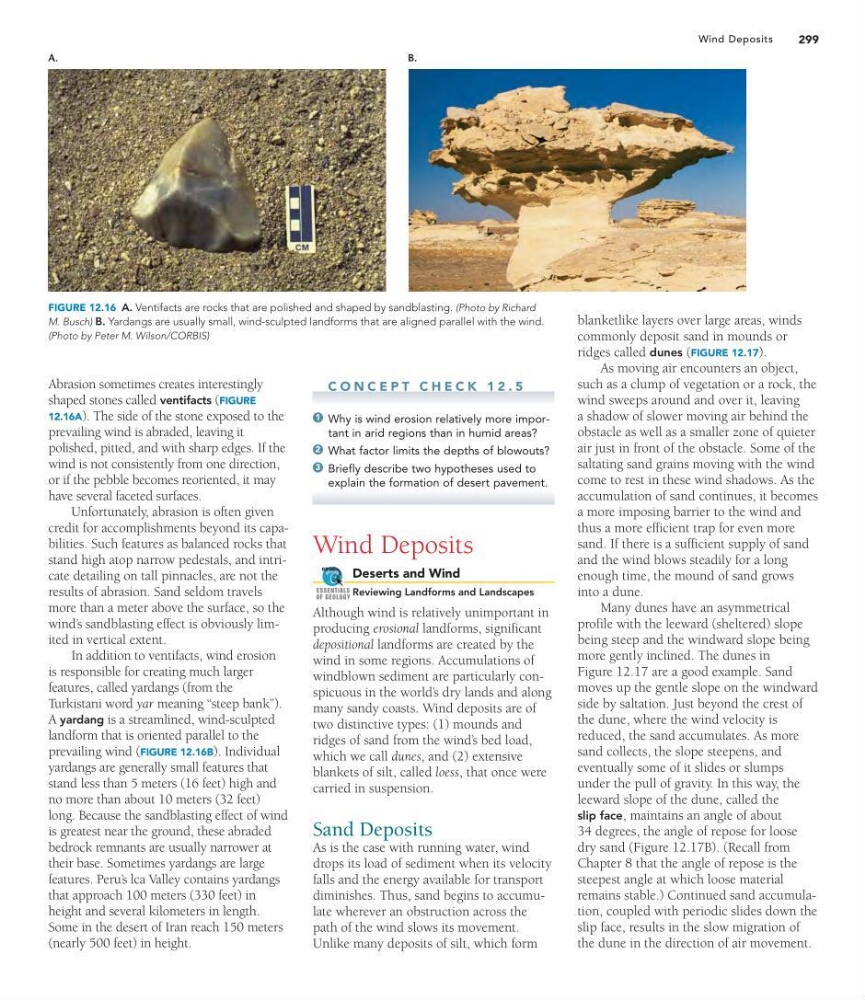
FIGURE 12.16 A. Ventifacts are rocks that are polished and shaped by sandblasting. (Photo by Richard
M. Busch) B. Yardangs are usually small, wind-sculpted landforms that are aligned parallel with the wind.
(Photo by Peter M. Wilson/CORBIS)
Wind Deposits
Abrasion sometimes creates interestingly
shaped stones called ventifacts (FIGURE
12.16A). The side of the stone exposed to the
prevailing wind is abraded, leaving it
polished, pitted, and with sharp edges. If the
wind is not consistently from one direction,
or if the pebble becomes reoriented, it may
have several faceted surfaces.
Unfortunately, abrasion is often given
credit for accomplishments beyond its capabilities. Such features as balanced rocks that
stand high atop narrow pedestals, and intricate detailing on tall pinnacles, are not the
results of abrasion. Sand seldom travels
more than a meter above the surface, so the
wind’ s sandblasting effect is obviously limited in vertical extent.
In addition to ventifacts, wind erosion
is responsible for creating much larger
features, called yardangs (from the
Turkistani word yar meaning “steep bank”).
A yardang is a streamlined, wind-sculpted
landform that is oriented parallel to the
prevailing wind (FIGURE 12.16B). Individual
yardangs are generally small features that
stand less than 5 meters (16 feet) high and
no more than about 10 meters (32 feet)
long. Because the sandblasting effect of wind
is greatest near the ground, these abraded
bedrock remnants are usually narrower at
their base. Sometimes yardangs are large
features. Peru’ s lca Valley contains yardangs
that approach 100 meters (330 feet) in
height and several kilometers in length.
Some in the desert of Iran reach 150 meters
(nearly 500 feet) in height.
blanketlike layers over large areas, winds
commonly deposit sand in mounds or
ridges called dunes (FIGURE 12.17).
As moving air encounters an object,
such as a clump of vegetation or a rock, the
wind sweeps around and over it, leaving
a shadow of slower moving air behind the
obstacle as well as a smaller zone of quieter
air just in front of the obstacle. Some of the
saltating sand grains moving with the wind
come to rest in these wind shadows. As the
accumulation of sand continues, it becomes
a more imposing barrier to the wind and
thus a more efficient trap for even more
sand. If there is a sufficient supply of sand
and the wind blows steadily for a long
enough time, the mound of sand grows
into a dune.
Many dunes have an asymmetrical
profile with the leeward (sheltered) slope
being steep and the windward slope being
more gently inclined. The dunes in
Figure 12.17 are a good example. Sand
moves up the gentle slope on the windward
side by saltation. Just beyond the crest of
the dune, where the wind velocity is
reduced, the sand accumulates. As more
sand collects, the slope steepens, and
eventually some of it slides or slumps
under the pull of gravity. In this way, the
leeward slope of the dune, called the
slip face, maintains an angle of about
34 degrees, the angle of repose for loose
dry sand (Figure 12.17B). (Recall from
Chapter 8 that the angle of repose is the
steepest angle at which loose material
remains stable.) Continued sand accumulation, coupled with periodic slides down the
slip face, results in the slow migration of
the dune in the direction of air movement.
C O N C E P T C H E C K 1 2 . 5
Why is wind erosion relatively more important in arid regions than in humid areas?
What factor limits the depths of blowouts?
Briefly describe two hypotheses used to
explain the formation of desert pavement.
Wind Deposits
Deserts and Wind
Reviewing Landforms and Landscapes
Although wind is relatively unimportant in
producing erosional landforms, significant
depositional landforms are created by the
wind in some regions. Accumulations of
windblown sediment are particularly conspicuous in the world’ s dry lands and along
many sandy coasts. Wind deposits are of
two distinctive types: (1) mounds and
ridges of sand from the wind’ s bed load,
which we call dunes, and (2) extensive
blankets of silt, called loess, that once were
carried in suspension.
Sand Deposits
As is the case with running water, wind
drops its load of sediment when its velocity
falls and the energy available for transport
diminishes. Thus, sand begins to accumulate wherever an obstruction across the
path of the wind slows its movement.
Unlike many deposits of silt, which form
GEODe
ESSENTIALS
OF GEOLOGY
3
2
1
A.
B.
FIGURE 12.16 A. Ventifacts are rocks that are polished and shaped by sandblasting. (Photo by Richard
M. Busch) B. Yardangs are usually small, wind-sculpted landforms that are aligned parallel with the wind.
(Photo by Peter M. Wilson/CORBIS)