

CHAPTER 12 Deserts and Wind
288
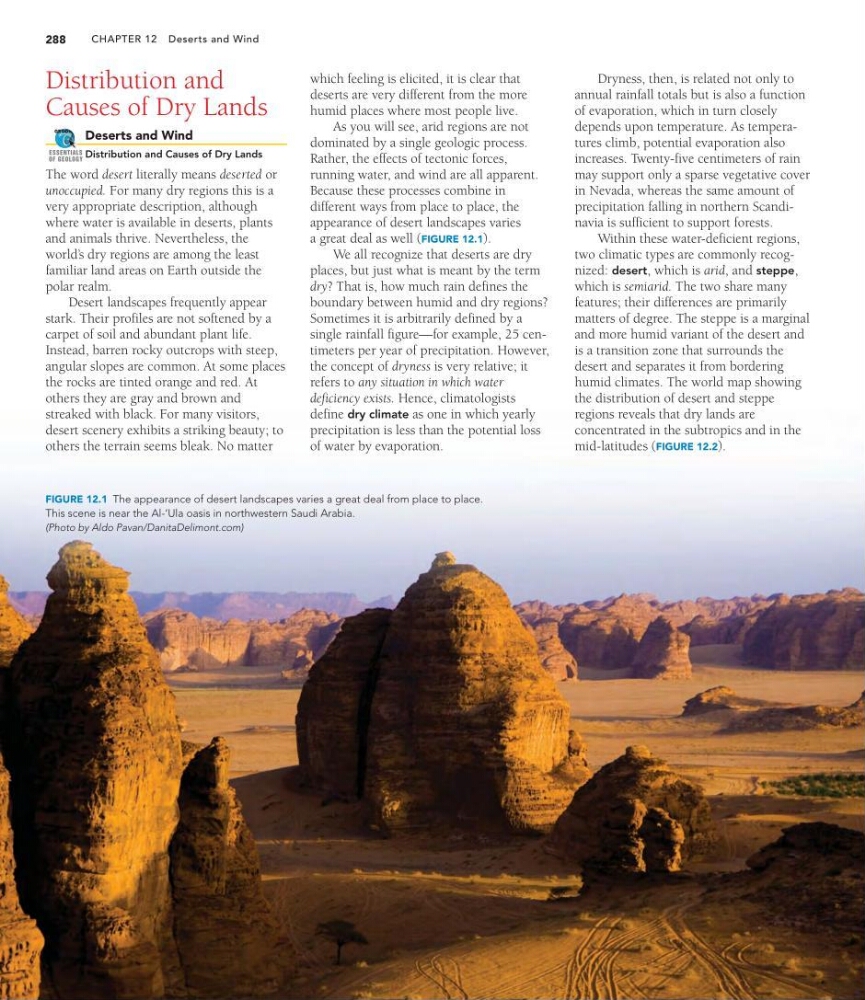
FIGURE 12.1 The appearance of desert landscapes varies a great deal from place to place.
This scene is near the Al-‘Ula oasis in northwestern Saudi Arabia.
(Photo by Aldo Pavan/DanitaDelimont.com)
Distribution and
Causes of Dry Lands
Deserts and Wind
Distribution and Causes of Dry Lands
The word desert literally means deserted or
unoccupied. For many dry regions this is a
very appropriate description, although
where water is available in deserts, plants
and animals thrive. Nevertheless, the
world’ s dry regions are among the least
familiar land areas on Earth outside the
polar realm.
Desert landscapes frequently appear
stark. Their profiles are not softened by a
carpet of soil and abundant plant life.
Instead, barren rocky outcrops with steep,
angular slopes are common. At some places
the rocks are tinted orange and red. At
others they are gray and brown and
streaked with black. For many visitors,
desert scenery exhibits a striking beauty; to
others the terrain seems bleak. No matter
GEODe
ESSENTIALS
OF GEOLOGY
which feeling is elicited, it is clear that
deserts are very different from the more
humid places where most people live.
As you will see, arid regions are not
dominated by a single geologic process.
Rather, the effects of tectonic forces,
running water, and wind are all apparent.
Because these processes combine in
different ways from place to place, the
appearance of desert landscapes varies
a great deal as well (FIGURE 12.1).
We all recognize that deserts are dry
places, but just what is meant by the term
dry? That is, how much rain defines the
boundary between humid and dry regions?
Sometimes it is arbitrarily defined by a
single rainfall figure—for example, 25 centimeters per year of precipitation. However,
the concept of dryness is very relative; it
refers to any situation in which water
deficiency exists. Hence, climatologists
define dry climate as one in which yearly
precipitation is less than the potential loss
of water by evaporation.
Dryness, then, is related not only to
annual rainfall totals but is also a function
of evaporation, which in turn closely
depends upon temperature. As temperatures climb, potential evaporation also
increases. Twenty-five centimeters of rain
may support only a sparse vegetative cover
in Nevada, whereas the same amount of
precipitation falling in northern Scandinavia is sufficient to support forests.
Within these water-deficient regions,
two climatic types are commonly recognized: desert, which is arid, and steppe,
which is semiarid. The two share many
features; their differences are primarily
matters of degree. The steppe is a marginal
and more humid variant of the desert and
is a transition zone that surrounds the
desert and separates it from bordering
humid climates. The world map showing
the distribution of desert and steppe
regions reveals that dry lands are
concentrated in the subtropics and in the
mid-latitudes (FIGURE 12.2).
288
FIGURE 12.1 The appearance of desert landscapes varies a great deal from place to place.
This scene is near the Al-‘Ula oasis in northwestern Saudi Arabia.
(Photo by Aldo Pavan/DanitaDelimont.com)
Distribution and
Causes of Dry Lands
Deserts and Wind
Distribution and Causes of Dry Lands
The word desert literally means deserted or
unoccupied. For many dry regions this is a
very appropriate description, although
where water is available in deserts, plants
and animals thrive. Nevertheless, the
world’ s dry regions are among the least
familiar land areas on Earth outside the
polar realm.
Desert landscapes frequently appear
stark. Their profiles are not softened by a
carpet of soil and abundant plant life.
Instead, barren rocky outcrops with steep,
angular slopes are common. At some places
the rocks are tinted orange and red. At
others they are gray and brown and
streaked with black. For many visitors,
desert scenery exhibits a striking beauty; to
others the terrain seems bleak. No matter
GEODe
ESSENTIALS
OF GEOLOGY
which feeling is elicited, it is clear that
deserts are very different from the more
humid places where most people live.
As you will see, arid regions are not
dominated by a single geologic process.
Rather, the effects of tectonic forces,
running water, and wind are all apparent.
Because these processes combine in
different ways from place to place, the
appearance of desert landscapes varies
a great deal as well (FIGURE 12.1).
We all recognize that deserts are dry
places, but just what is meant by the term
dry? That is, how much rain defines the
boundary between humid and dry regions?
Sometimes it is arbitrarily defined by a
single rainfall figure—for example, 25 centimeters per year of precipitation. However,
the concept of dryness is very relative; it
refers to any situation in which water
deficiency exists. Hence, climatologists
define dry climate as one in which yearly
precipitation is less than the potential loss
of water by evaporation.
Dryness, then, is related not only to
annual rainfall totals but is also a function
of evaporation, which in turn closely
depends upon temperature. As temperatures climb, potential evaporation also
increases. Twenty-five centimeters of rain
may support only a sparse vegetative cover
in Nevada, whereas the same amount of
precipitation falling in northern Scandinavia is sufficient to support forests.
Within these water-deficient regions,
two climatic types are commonly recognized: desert, which is arid, and steppe,
which is semiarid. The two share many
features; their differences are primarily
matters of degree. The steppe is a marginal
and more humid variant of the desert and
is a transition zone that surrounds the
desert and separates it from bordering
humid climates. The world map showing
the distribution of desert and steppe
regions reveals that dry lands are
concentrated in the subtropics and in the
mid-latitudes (FIGURE 12.2).