

ice cave
CHAPTER 11 Glaciers and Glaciation
272
and are termed hanging valleys (Figure 11.17C).
Rivers flowing through hanging valleys can produce
spectacular waterfalls, such as those in Yosemite
National Park.
As hikers walk up a glacial trough, they may pass
a series of bedrock depressions on the valley floor that
were probably formed by plucking and scoured by the
abrasive force of the ice. If these depressions are filled
with water, they are called pater noster lakes. The
Latin name means “our Father” and is a reference
to a string of rosary beads.
At the head of a glacial valley is a very characteristic and often imposing feature associated with an
alpine glacier called a cirque. As Figure 11.17 illustrates, this bowl-shaped depression has precipitous
walls on three sides but is open on the downvalley
side. The cirque is the focal point of the glacier’ s
growth, because it is the area of snow accumulation
and ice formation. It begins as an irregularity in the
mountainside that is subsequently enlarged by frost wedging and plucking along the
sides and bottom of the glacier. After the glacier has melted away, the cirque basin
is often occupied by a small lake called a tarn (Figure 11.17C).
Before leaving the topic of glacial troughs and their associated features, one
rather well-known feature should be discussed. Fiords are deep, often spectacular, steep-sided inlets of the sea that are present at high latitudes where
mountains are adjacent to the ocean (FIGURE 11.19). They are drowned
glacial troughs that became submerged as the ice left the valley and sea
level rose following the Ice Age.
The depths of fiords can exceed 1000 meters (3300 feet). However,
the great depths of these flooded troughs is only partly explained by the
post–Ice Age rise in sea level. Unlike the situation governing the downward erosional work of rivers, sea level does not act as base level for
glaciers. As a consequence, glaciers are capable of eroding their beds far
below the surface of the sea. For example, a 300-meter-thick alpine
glacier can carve its valley floor more than 250 meters below sea level
before downward erosion ceases and the ice begins to float. Norway,
British Columbia, Greenland, New Zealand, Chile, and Alaska all have
coastlines characterized by fiords.
Arêtes and Horns
A visit to the Alps, the Northern Rockies, or many other scenic
mountain landscapes carved by valley glaciers reveals not only glacial
troughs, cirques, pater noster lakes, and the other related features
just discussed. You are also likely to see sinuous, sharp-edged ridges
called arêtes (French for knife-edge) and sharp, pyramidlike peaks
called horns projecting above the surroundings. Both features can
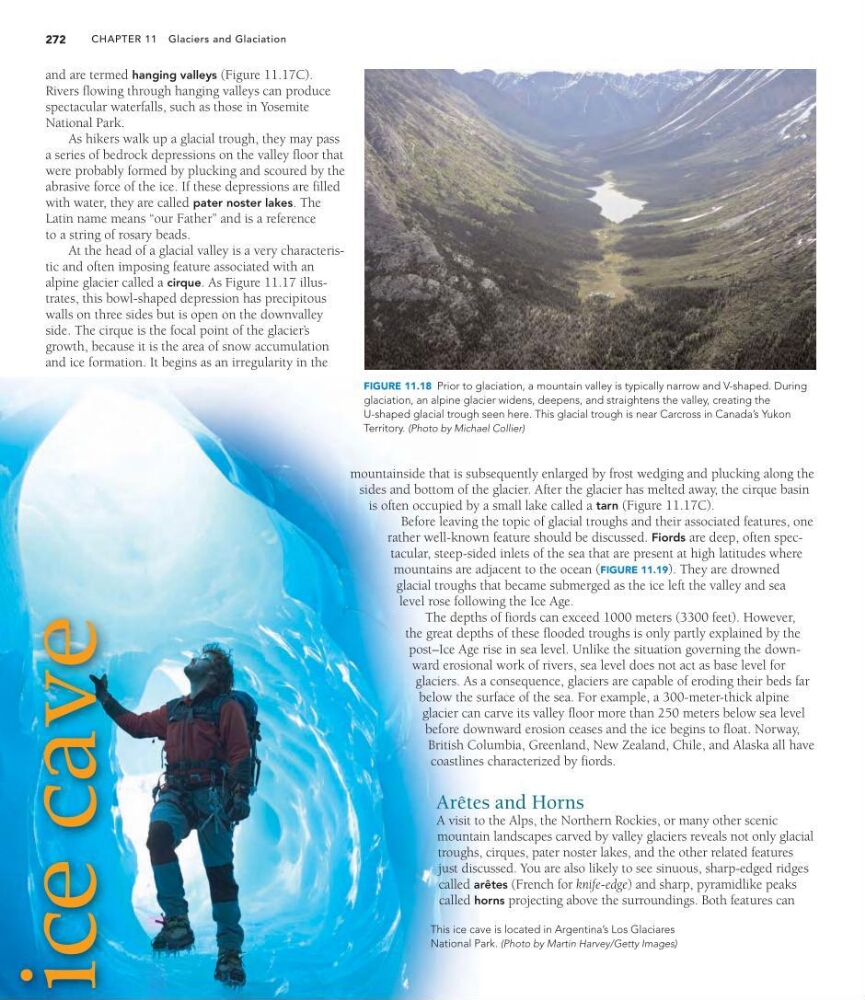
FIGURE 11.18 Prior to glaciation, a mountain valley is typically narrow and V-shaped. During
glaciation, an alpine glacier widens, deepens, and straightens the valley, creating the
U-shaped glacial trough seen here. This glacial trough is near Carcross in Canada’s Yukon
Territory. (Photo by Michael Collier)
This ice cave is located in Argentina’s Los Glaciares
National Park. (Photo by Martin Harvey/Getty Images)
CHAPTER 11 Glaciers and Glaciation
272
and are termed hanging valleys (Figure 11.17C).
Rivers flowing through hanging valleys can produce
spectacular waterfalls, such as those in Yosemite
National Park.
As hikers walk up a glacial trough, they may pass
a series of bedrock depressions on the valley floor that
were probably formed by plucking and scoured by the
abrasive force of the ice. If these depressions are filled
with water, they are called pater noster lakes. The
Latin name means “our Father” and is a reference
to a string of rosary beads.
At the head of a glacial valley is a very characteristic and often imposing feature associated with an
alpine glacier called a cirque. As Figure 11.17 illustrates, this bowl-shaped depression has precipitous
walls on three sides but is open on the downvalley
side. The cirque is the focal point of the glacier’ s
growth, because it is the area of snow accumulation
and ice formation. It begins as an irregularity in the
mountainside that is subsequently enlarged by frost wedging and plucking along the
sides and bottom of the glacier. After the glacier has melted away, the cirque basin
is often occupied by a small lake called a tarn (Figure 11.17C).
Before leaving the topic of glacial troughs and their associated features, one
rather well-known feature should be discussed. Fiords are deep, often spectacular, steep-sided inlets of the sea that are present at high latitudes where
mountains are adjacent to the ocean (FIGURE 11.19). They are drowned
glacial troughs that became submerged as the ice left the valley and sea
level rose following the Ice Age.
The depths of fiords can exceed 1000 meters (3300 feet). However,
the great depths of these flooded troughs is only partly explained by the
post–Ice Age rise in sea level. Unlike the situation governing the downward erosional work of rivers, sea level does not act as base level for
glaciers. As a consequence, glaciers are capable of eroding their beds far
below the surface of the sea. For example, a 300-meter-thick alpine
glacier can carve its valley floor more than 250 meters below sea level
before downward erosion ceases and the ice begins to float. Norway,
British Columbia, Greenland, New Zealand, Chile, and Alaska all have
coastlines characterized by fiords.
Arêtes and Horns
A visit to the Alps, the Northern Rockies, or many other scenic
mountain landscapes carved by valley glaciers reveals not only glacial
troughs, cirques, pater noster lakes, and the other related features
just discussed. You are also likely to see sinuous, sharp-edged ridges
called arêtes (French for knife-edge) and sharp, pyramidlike peaks
called horns projecting above the surroundings. Both features can
FIGURE 11.18 Prior to glaciation, a mountain valley is typically narrow and V-shaped. During
glaciation, an alpine glacier widens, deepens, and straightens the valley, creating the
U-shaped glacial trough seen here. This glacial trough is near Carcross in Canada’s Yukon
Territory. (Photo by Michael Collier)
This ice cave is located in Argentina’s Los Glaciares
National Park. (Photo by Martin Harvey/Getty Images)