

CHAPTER 10 Groundwater
240
A.
B.
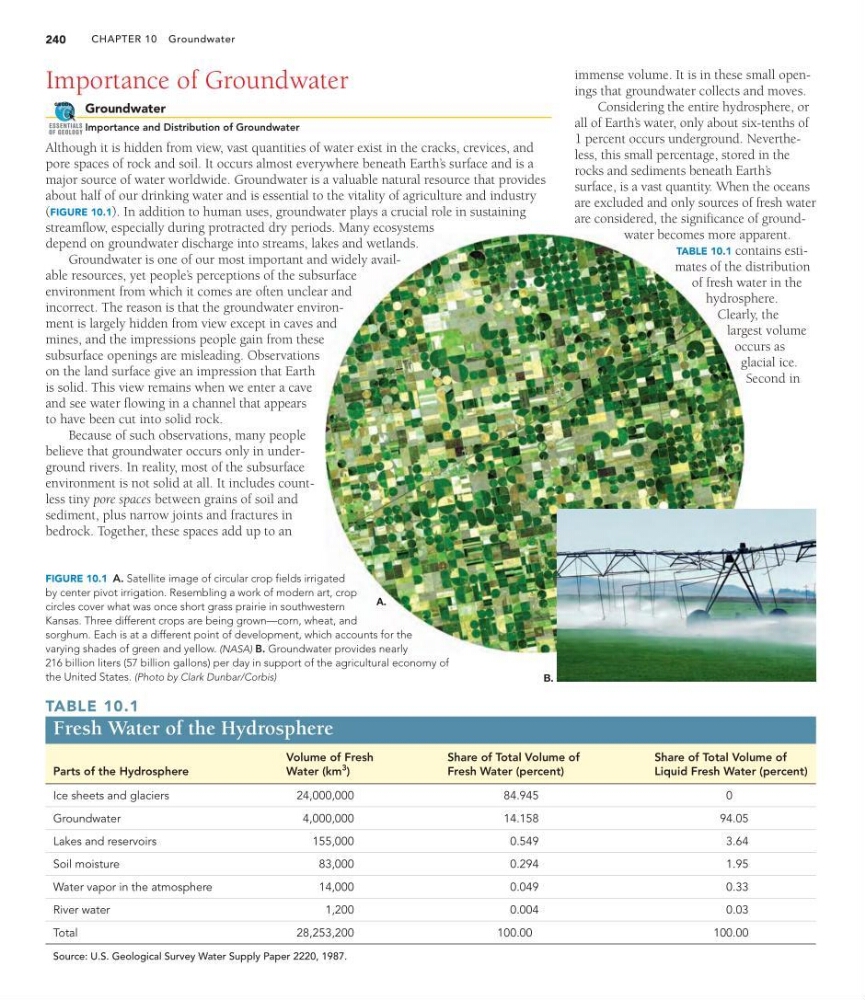
FIGURE 10.1 A. Satellite image of circular crop fields irrigated
by center pivot irrigation. Resembling a work of modern art, crop
circles cover what was once short grass prairie in southwestern
Kansas. Three different crops are being grown—corn, wheat, and
sorghum. Each is at a different point of development, which accounts for the
varying shades of green and yellow. (NASA) B. Groundwater provides nearly
216 billion liters (57 billion gallons) per day in support of the agricultural economy of
the United States. (Photo by Clark Dunbar/Corbis)
TABLE 10.1
Fresh Water of the Hydrosphere
Parts of the Hydrosphere
Volume of Fresh
Water (km
3
)
Share of Total Volume of
Fresh Water (percent)
Share of Total Volume of
Liquid Fresh Water (percent)
Ice sheets and glaciers
24,000,000
84.945
0
Groundwater
4,000,000
14.158
94.05
Lakes and reservoirs
155,000
0.549
3.64
Soil moisture
83,000
0.294
1.95
Water vapor in the atmosphere
14,000
0.049
0.33
River water
1,200
0.004
0.03
Total
28,253,200
100.00
100.00
Source: U.S. Geological Survey Water Supply Paper 2220, 1987.
Importance of Groundwater
Groundwater
Importance and Distribution of Groundwater
Although it is hidden from view, vast quantities of water exist in the cracks, crevices, and
pore spaces of rock and soil. It occurs almost everywhere beneath Earth’ s surface and is a
major source of water worldwide. Groundwater is a valuable natural resource that provides
about half of our drinking water and is essential to the vitality of agriculture and industry
(FIGURE 10.1). In addition to human uses, groundwater plays a crucial role in sustaining
streamflow, especially during protracted dry periods. Many ecosystems
depend on groundwater discharge into streams, lakes and wetlands.
Groundwater is one of our most important and widely available resources, yet people’ s perceptions of the subsurface
environment from which it comes are often unclear and
incorrect. The reason is that the groundwater environment is largely hidden from view except in caves and
mines, and the impressions people gain from these
subsurface openings are misleading. Observations
on the land surface give an impression that Earth
is solid. This view remains when we enter a cave
and see water flowing in a channel that appears
to have been cut into solid rock.
Because of such observations, many people
believe that groundwater occurs only in underground rivers. In reality, most of the subsurface
environment is not solid at all. It includes countless tiny pore spaces between grains of soil and
sediment, plus narrow joints and fractures in
bedrock. Together, these spaces add up to an
GEODe
ESSENTIALS
OF GEOLOGY
immense volume. It is in these small openings that groundwater collects and moves.
Considering the entire hydrosphere, or
all of Earth’ s water, only about six-tenths of
1 percent occurs underground. Nevertheless, this small percentage, stored in the
rocks and sediments beneath Earth’ s
surface, is a vast quantity. When the oceans
are excluded and only sources of fresh water
are considered, the significance of groundwater becomes more apparent.
TABLE 10.1 contains estimates of the distribution
of fresh water in the
hydrosphere.
Clearly, the
largest volume
occurs as
glacial ice.
Second in
240
A.
B.
FIGURE 10.1 A. Satellite image of circular crop fields irrigated
by center pivot irrigation. Resembling a work of modern art, crop
circles cover what was once short grass prairie in southwestern
Kansas. Three different crops are being grown—corn, wheat, and
sorghum. Each is at a different point of development, which accounts for the
varying shades of green and yellow. (NASA) B. Groundwater provides nearly
216 billion liters (57 billion gallons) per day in support of the agricultural economy of
the United States. (Photo by Clark Dunbar/Corbis)
TABLE 10.1
Fresh Water of the Hydrosphere
Parts of the Hydrosphere
Volume of Fresh
Water (km
3
)
Share of Total Volume of
Fresh Water (percent)
Share of Total Volume of
Liquid Fresh Water (percent)
Ice sheets and glaciers
24,000,000
84.945
0
Groundwater
4,000,000
14.158
94.05
Lakes and reservoirs
155,000
0.549
3.64
Soil moisture
83,000
0.294
1.95
Water vapor in the atmosphere
14,000
0.049
0.33
River water
1,200
0.004
0.03
Total
28,253,200
100.00
100.00
Source: U.S. Geological Survey Water Supply Paper 2220, 1987.
Importance of Groundwater
Groundwater
Importance and Distribution of Groundwater
Although it is hidden from view, vast quantities of water exist in the cracks, crevices, and
pore spaces of rock and soil. It occurs almost everywhere beneath Earth’ s surface and is a
major source of water worldwide. Groundwater is a valuable natural resource that provides
about half of our drinking water and is essential to the vitality of agriculture and industry
(FIGURE 10.1). In addition to human uses, groundwater plays a crucial role in sustaining
streamflow, especially during protracted dry periods. Many ecosystems
depend on groundwater discharge into streams, lakes and wetlands.
Groundwater is one of our most important and widely available resources, yet people’ s perceptions of the subsurface
environment from which it comes are often unclear and
incorrect. The reason is that the groundwater environment is largely hidden from view except in caves and
mines, and the impressions people gain from these
subsurface openings are misleading. Observations
on the land surface give an impression that Earth
is solid. This view remains when we enter a cave
and see water flowing in a channel that appears
to have been cut into solid rock.
Because of such observations, many people
believe that groundwater occurs only in underground rivers. In reality, most of the subsurface
environment is not solid at all. It includes countless tiny pore spaces between grains of soil and
sediment, plus narrow joints and fractures in
bedrock. Together, these spaces add up to an
GEODe
ESSENTIALS
OF GEOLOGY
immense volume. It is in these small openings that groundwater collects and moves.
Considering the entire hydrosphere, or
all of Earth’ s water, only about six-tenths of
1 percent occurs underground. Nevertheless, this small percentage, stored in the
rocks and sediments beneath Earth’ s
surface, is a vast quantity. When the oceans
are excluded and only sources of fresh water
are considered, the significance of groundwater becomes more apparent.
TABLE 10.1 contains estimates of the distribution
of fresh water in the
hydrosphere.
Clearly, the
largest volume
occurs as
glacial ice.
Second in