

193
Chapter in Review
Canada
United States
Vermont
New Hampshire
New York
Massachusets
Conneticut
Maine
N
Key
A
B
Low
grade
Medium
grade
High
grade
Rhode
Island
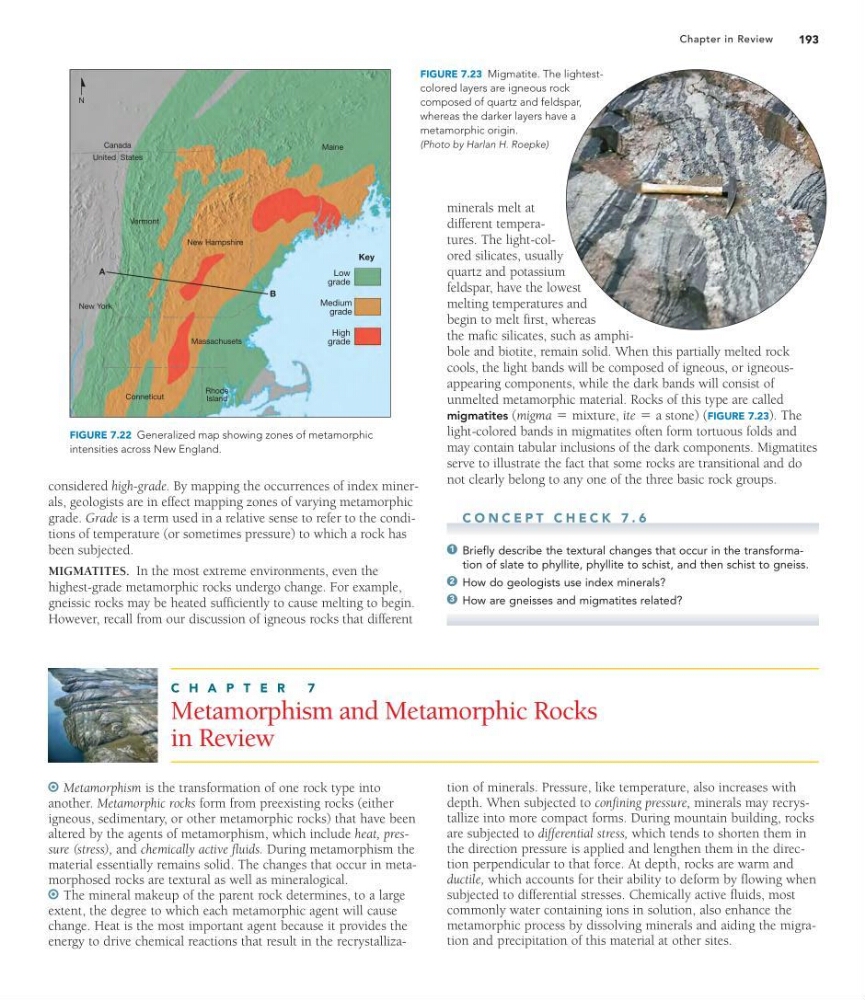
FIGURE 7.22 Generalized map showing zones of metamorphic
intensities across New England.
FIGURE 7.23 Migmatite. The lightestcolored layers are igneous rock
composed of quartz and feldspar,
whereas the darker layers have a
metamorphic origin.
(Photo by Harlan H. Roepke)
considered high-grade. By mapping the occurrences of index minerals, geologists are in effect mapping zones of varying metamorphic
grade. Grade is a term used in a relative sense to refer to the conditions of temperature (or sometimes pressure) to which a rock has
been subjected.
MIGMATITES. In the most extreme environments, even the
highest-grade metamorphic rocks undergo change. For example,
gneissic rocks may be heated sufficiently to cause melting to begin.
However, recall from our discussion of igneous rocks that different
minerals melt at
different temperatures. The light-colored silicates, usually
quartz and potassium
feldspar, have the lowest
melting temperatures and
begin to melt first, whereas
the mafic silicates, such as amphibole and biotite, remain solid. When this partially melted rock
cools, the light bands will be composed of igneous, or igneousappearing components, while the dark bands will consist of
unmelted metamorphic material. Rocks of this type are called
migmatites (
,
) ( FIGURE 7.23). The
light-colored bands in migmatites often form tortuous folds and
may contain tabular inclusions of the dark components. Migmatites
serve to illustrate the fact that some rocks are transitional and do
not clearly belong to any one of the three basic rock groups.
C O N C E P T C H E C K 7 . 6
Briefly describe the textural changes that occur in the transformation of slate to phyllite, phyllite to schist, and then schist to gneiss.
How do geologists use index minerals?
How are gneisses and migmatites related?
3
2
1
ite = a stone
migma = mixture
C H A P T E R
7
Metamorphism and Metamorphic Rocks
in Review
Metamorphism is the transformation of one rock type into
another. Metamorphic rocks form from preexisting rocks (either
igneous, sedimentary, or other metamorphic rocks) that have been
altered by the agents of metamorphism, which include heat, pressure (stress), and chemically active fluids. During metamorphism the
material essentially remains solid. The changes that occur in metamorphosed rocks are textural as well as mineralogical.
The mineral makeup of the parent rock determines, to a large
extent, the degree to which each metamorphic agent will cause
change. Heat is the most important agent because it provides the
energy to drive chemical reactions that result in the recrystallization of minerals. Pressure, like temperature, also increases with
depth. When subjected to confining pressure, minerals may recrystallize into more compact forms. During mountain building, rocks
are subjected to differential stress, which tends to shorten them in
the direction pressure is applied and lengthen them in the direction perpendicular to that force. At depth, rocks are warm and
ductile, which accounts for their ability to deform by flowing when
subjected to differential stresses. Chemically active fluids, most
commonly water containing ions in solution, also enhance the
metamorphic process by dissolving minerals and aiding the migration and precipitation of this material at other sites.
Chapter in Review
Canada
United States
Vermont
New Hampshire
New York
Massachusets
Conneticut
Maine
N
Key
A
B
Low
grade
Medium
grade
High
grade
Rhode
Island
FIGURE 7.22 Generalized map showing zones of metamorphic
intensities across New England.
FIGURE 7.23 Migmatite. The lightestcolored layers are igneous rock
composed of quartz and feldspar,
whereas the darker layers have a
metamorphic origin.
(Photo by Harlan H. Roepke)
considered high-grade. By mapping the occurrences of index minerals, geologists are in effect mapping zones of varying metamorphic
grade. Grade is a term used in a relative sense to refer to the conditions of temperature (or sometimes pressure) to which a rock has
been subjected.
MIGMATITES. In the most extreme environments, even the
highest-grade metamorphic rocks undergo change. For example,
gneissic rocks may be heated sufficiently to cause melting to begin.
However, recall from our discussion of igneous rocks that different
minerals melt at
different temperatures. The light-colored silicates, usually
quartz and potassium
feldspar, have the lowest
melting temperatures and
begin to melt first, whereas
the mafic silicates, such as amphibole and biotite, remain solid. When this partially melted rock
cools, the light bands will be composed of igneous, or igneousappearing components, while the dark bands will consist of
unmelted metamorphic material. Rocks of this type are called
migmatites (
,
) ( FIGURE 7.23). The
light-colored bands in migmatites often form tortuous folds and
may contain tabular inclusions of the dark components. Migmatites
serve to illustrate the fact that some rocks are transitional and do
not clearly belong to any one of the three basic rock groups.
C O N C E P T C H E C K 7 . 6
Briefly describe the textural changes that occur in the transformation of slate to phyllite, phyllite to schist, and then schist to gneiss.
How do geologists use index minerals?
How are gneisses and migmatites related?
3
2
1
ite = a stone
migma = mixture
C H A P T E R
7
Metamorphism and Metamorphic Rocks
in Review
Metamorphism is the transformation of one rock type into
another. Metamorphic rocks form from preexisting rocks (either
igneous, sedimentary, or other metamorphic rocks) that have been
altered by the agents of metamorphism, which include heat, pressure (stress), and chemically active fluids. During metamorphism the
material essentially remains solid. The changes that occur in metamorphosed rocks are textural as well as mineralogical.
The mineral makeup of the parent rock determines, to a large
extent, the degree to which each metamorphic agent will cause
change. Heat is the most important agent because it provides the
energy to drive chemical reactions that result in the recrystallization of minerals. Pressure, like temperature, also increases with
depth. When subjected to confining pressure, minerals may recrystallize into more compact forms. During mountain building, rocks
are subjected to differential stress, which tends to shorten them in
the direction pressure is applied and lengthen them in the direction perpendicular to that force. At depth, rocks are warm and
ductile, which accounts for their ability to deform by flowing when
subjected to differential stresses. Chemically active fluids, most
commonly water containing ions in solution, also enhance the
metamorphic process by dissolving minerals and aiding the migration and precipitation of this material at other sites.