

A. Scoria
B. Pumice
99
Volcanic Structures and Eruptive Styles
Volcanic Structures
and Eruptive Styles
Volcanoes
Volcanic Structures and Eruptive Styles
The popular image of a volcano is that of a solitary, graceful, snowcapped cone, such as Mount Hood in Oregon or Japan’ s Fujiyama.
These picturesque, conical mountains are produced by volcanic
activity that occurred intermittently over thousands, or even hundreds of thousands, of years. However, many volcanoes do not fit
this image. Cinder cones are quite small and form during a single
eruptive phase that lasts a few days to a few years. Other volcanic
landforms are not volcanoes at all. For example, Alaska’ s Valley of
Ten Thousand Smokes is a flat-topped deposit consisting of 15cubic
kilometers of ash that erupted in less than 60 hours and blanketed a
section of river valley to a depth of 200 meters (600 feet).
Volcanic landforms come in a wide variety of shapes and sizes,
and each structure has a unique eruptive history. Nevertheless,
volcanologists have been able to classify volcanic landforms and
determine their eruptive patterns. In this section we will consider
the general anatomy of a volcano and look at three major volcanic
types: shield volcanoes, cinder cones, and composite cones.
Anatomy of a Volcano
Volcanic activity frequently begins when a fissure (crack) develops
in the crust as magma moves forcefully toward the surface. As the
gas-rich magma moves up through a fissure, its path is usually
localized into a circular conduit, or pipe, that terminates at a surface
opening called a vent (FIGURE 4.11). Successive eruptions of lava,
pyroclastic material, or frequently a combination of both, often
separated by long periods of inactivity, eventually build the
cone-shaped structure we call a volcano.
GEODe
ESSENTIALS
OF GEOLOGY
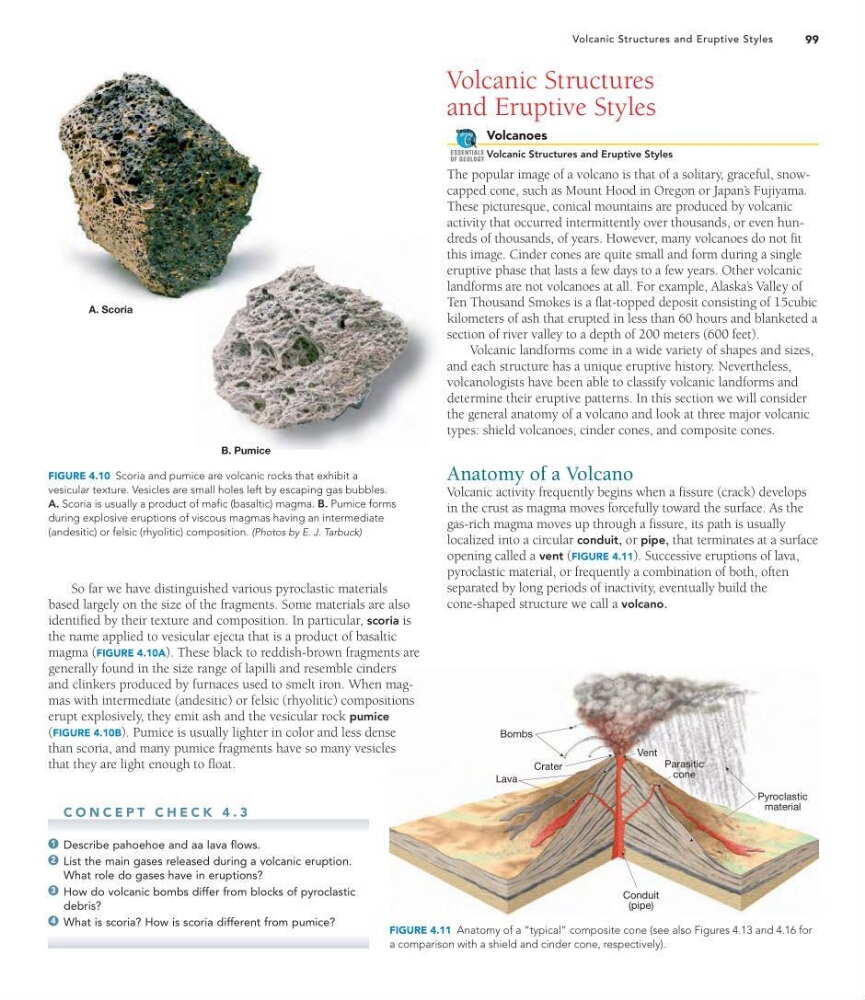
FIGURE 4.10 Scoria and pumice are volcanic rocks that exhibit a
vesicular texture. Vesicles are small holes left by escaping gas bubbles.
A. Scoria is usually a product of mafic (basaltic) magma. B. Pumice forms
during explosive eruptions of viscous magmas having an intermediate
(andesitic) or felsic (rhyolitic) composition. (Photos by E. J. Tarbuck)
Lava
Vent
Crater
Bombs
Parasitic
cone
Pyroclastic
material
Conduit
(pipe)
FIGURE 4.11 Anatomy of a “typical” composite cone (see also Figures 4.13 and 4.16 for
a comparison with a shield and cinder cone, respectively).
So far we have distinguished various pyroclastic materials
based largely on the size of the fragments. Some materials are also
identified by their texture and composition. In particular, scoria is
the name applied to vesicular ejecta that is a product of basaltic
magma (FIGURE 4.10A). These black to reddish-brown fragments are
generally found in the size range of lapilli and resemble cinders
and clinkers produced by furnaces used to smelt iron. When magmas with intermediate (andesitic) or felsic (rhyolitic) compositions
erupt explosively, they emit ash and the vesicular rock pumice
(FIGURE 4.10B). Pumice is usually lighter in color and less dense
than scoria, and many pumice fragments have so many vesicles
that they are light enough to float.
C O N C E P T C H E C K 4 . 3
Describe pahoehoe and aa lava flows.
List the main gases released during a volcanic eruption.
What role do gases have in eruptions?
How do volcanic bombs differ from blocks of pyroclastic
debris?
What is scoria? How is scoria different from pumice?
4
3
2
1
B. Pumice
99
Volcanic Structures and Eruptive Styles
Volcanic Structures
and Eruptive Styles
Volcanoes
Volcanic Structures and Eruptive Styles
The popular image of a volcano is that of a solitary, graceful, snowcapped cone, such as Mount Hood in Oregon or Japan’ s Fujiyama.
These picturesque, conical mountains are produced by volcanic
activity that occurred intermittently over thousands, or even hundreds of thousands, of years. However, many volcanoes do not fit
this image. Cinder cones are quite small and form during a single
eruptive phase that lasts a few days to a few years. Other volcanic
landforms are not volcanoes at all. For example, Alaska’ s Valley of
Ten Thousand Smokes is a flat-topped deposit consisting of 15cubic
kilometers of ash that erupted in less than 60 hours and blanketed a
section of river valley to a depth of 200 meters (600 feet).
Volcanic landforms come in a wide variety of shapes and sizes,
and each structure has a unique eruptive history. Nevertheless,
volcanologists have been able to classify volcanic landforms and
determine their eruptive patterns. In this section we will consider
the general anatomy of a volcano and look at three major volcanic
types: shield volcanoes, cinder cones, and composite cones.
Anatomy of a Volcano
Volcanic activity frequently begins when a fissure (crack) develops
in the crust as magma moves forcefully toward the surface. As the
gas-rich magma moves up through a fissure, its path is usually
localized into a circular conduit, or pipe, that terminates at a surface
opening called a vent (FIGURE 4.11). Successive eruptions of lava,
pyroclastic material, or frequently a combination of both, often
separated by long periods of inactivity, eventually build the
cone-shaped structure we call a volcano.
GEODe
ESSENTIALS
OF GEOLOGY
FIGURE 4.10 Scoria and pumice are volcanic rocks that exhibit a
vesicular texture. Vesicles are small holes left by escaping gas bubbles.
A. Scoria is usually a product of mafic (basaltic) magma. B. Pumice forms
during explosive eruptions of viscous magmas having an intermediate
(andesitic) or felsic (rhyolitic) composition. (Photos by E. J. Tarbuck)
Lava
Vent
Crater
Bombs
Parasitic
cone
Pyroclastic
material
Conduit
(pipe)
FIGURE 4.11 Anatomy of a “typical” composite cone (see also Figures 4.13 and 4.16 for
a comparison with a shield and cinder cone, respectively).
So far we have distinguished various pyroclastic materials
based largely on the size of the fragments. Some materials are also
identified by their texture and composition. In particular, scoria is
the name applied to vesicular ejecta that is a product of basaltic
magma (FIGURE 4.10A). These black to reddish-brown fragments are
generally found in the size range of lapilli and resemble cinders
and clinkers produced by furnaces used to smelt iron. When magmas with intermediate (andesitic) or felsic (rhyolitic) compositions
erupt explosively, they emit ash and the vesicular rock pumice
(FIGURE 4.10B). Pumice is usually lighter in color and less dense
than scoria, and many pumice fragments have so many vesicles
that they are light enough to float.
C O N C E P T C H E C K 4 . 3
Describe pahoehoe and aa lava flows.
List the main gases released during a volcanic eruption.
What role do gases have in eruptions?
How do volcanic bombs differ from blocks of pyroclastic
debris?
What is scoria? How is scoria different from pumice?
4
3
2
1