

CHAPTER 3 Igneous Rocks and Intrusive Activity
84
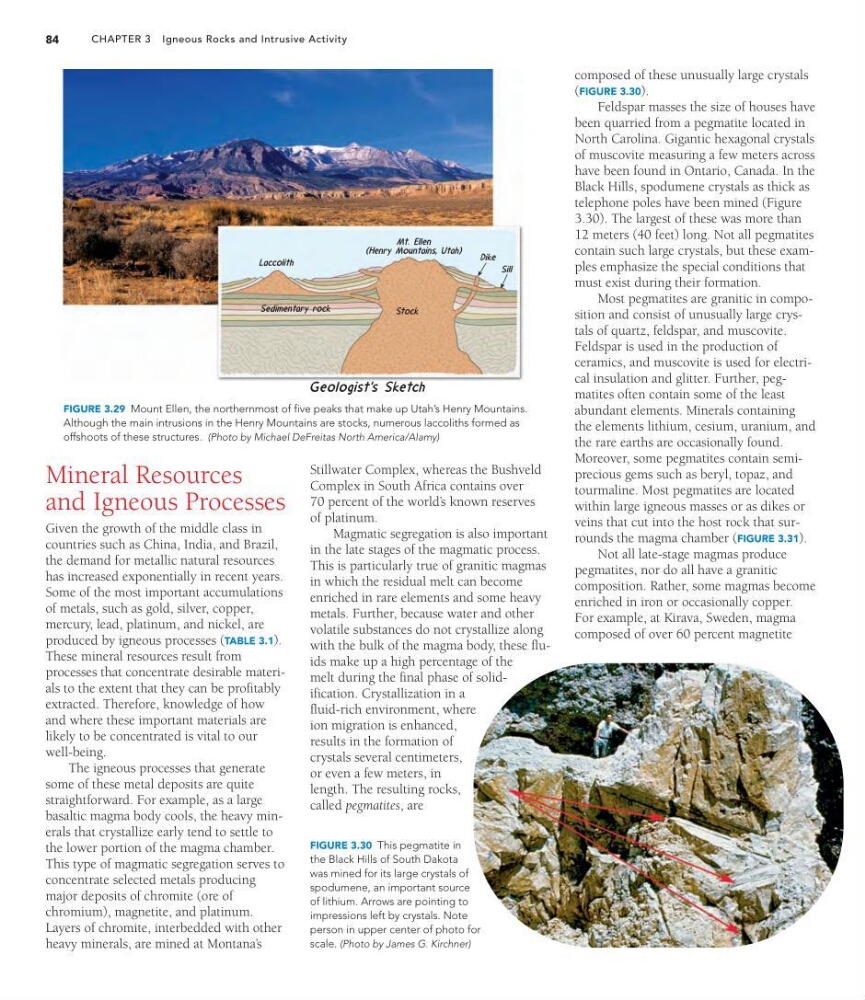
FIGURE 3.29 Mount Ellen, the northernmost of five peaks that make up Utah’s Henry Mountains.
Although the main intrusions in the Henry Mountains are stocks, numerous laccoliths formed as
offshoots of these structures. (Photo by Michael DeFreitas North America/Alamy)
Mineral Resources
and Igneous Processes
Given the growth of the middle class in
countries such as China, India, and Brazil,
the demand for metallic natural resources
has increased exponentially in recent years.
Some of the most important accumulations
of metals, such as gold, silver, copper,
mercury, lead, platinum, and nickel, are
produced by igneous processes (TABLE 3.1).
These mineral resources result from
processes that concentrate desirable materials to the extent that they can be profitably
extracted. Therefore, knowledge of how
and where these important materials are
likely to be concentrated is vital to our
well-being.
The igneous processes that generate
some of these metal deposits are quite
straightforward. For example, as a large
basaltic magma body cools, the heavy minerals that crystallize early tend to settle to
the lower portion of the magma chamber.
This type of magmatic segregation serves to
concentrate selected metals producing
major deposits of chromite (ore of
chromium), magnetite, and platinum.
Layers of chromite, interbedded with other
heavy minerals, are mined at Montana’ s
Stillwater Complex, whereas the Bushveld
Complex in South Africa contains over
70 percent of the world’ s known reserves
of platinum.
Magmatic segregation is also important
in the late stages of the magmatic process.
This is particularly true of granitic magmas
in which the residual melt can become
enriched in rare elements and some heavy
metals. Further, because water and other
volatile substances do not crystallize along
with the bulk of the magma body, these fluids make up a high percentage of the
melt during the final phase of solidification. Crystallization in a
fluid-rich environment, where
ion migration is enhanced,
results in the formation of
crystals several centimeters,
or even a few meters, in
length. The resulting rocks,
called pegmatites, are
composed of these unusually large crystals
(FIGURE 3.30).
Feldspar masses the size of houses have
been quarried from a pegmatite located in
North Carolina. Gigantic hexagonal crystals
of muscovite measuring a few meters across
have been found in Ontario, Canada. In the
Black Hills, spodumene crystals as thick as
telephone poles have been mined (Figure
3.30). The largest of these was more than
12 meters (40 feet) long. Not all pegmatites
contain such large crystals, but these examples emphasize the special conditions that
must exist during their formation.
Most pegmatites are granitic in composition and consist of unusually large crystals of quartz, feldspar, and muscovite.
Feldspar is used in the production of
ceramics, and muscovite is used for electrical insulation and glitter. Further, pegmatites often contain some of the least
abundant elements. Minerals containing
the elements lithium, cesium, uranium, and
the rare earths are occasionally found.
Moreover, some pegmatites contain semiprecious gems such as beryl, topaz, and
tourmaline. Most pegmatites are located
within large igneous masses or as dikes or
veins that cut into the host rock that surrounds the magma chamber (FIGURE 3.31).
Not all late-stage magmas produce
pegmatites, nor do all have a granitic
composition. Rather, some magmas become
enriched in iron or occasionally copper.
For example, at Kirava, Sweden, magma
composed of over 60 percent magnetite
FIGURE 3.30 This pegmatite in
the Black Hills of South Dakota
was mined for its large crystals of
spodumene, an important source
of lithium. Arrows are pointing to
impressions left by crystals. Note
person in upper center of photo for
scale. (Photo by James G. Kirchner)
84
FIGURE 3.29 Mount Ellen, the northernmost of five peaks that make up Utah’s Henry Mountains.
Although the main intrusions in the Henry Mountains are stocks, numerous laccoliths formed as
offshoots of these structures. (Photo by Michael DeFreitas North America/Alamy)
Mineral Resources
and Igneous Processes
Given the growth of the middle class in
countries such as China, India, and Brazil,
the demand for metallic natural resources
has increased exponentially in recent years.
Some of the most important accumulations
of metals, such as gold, silver, copper,
mercury, lead, platinum, and nickel, are
produced by igneous processes (TABLE 3.1).
These mineral resources result from
processes that concentrate desirable materials to the extent that they can be profitably
extracted. Therefore, knowledge of how
and where these important materials are
likely to be concentrated is vital to our
well-being.
The igneous processes that generate
some of these metal deposits are quite
straightforward. For example, as a large
basaltic magma body cools, the heavy minerals that crystallize early tend to settle to
the lower portion of the magma chamber.
This type of magmatic segregation serves to
concentrate selected metals producing
major deposits of chromite (ore of
chromium), magnetite, and platinum.
Layers of chromite, interbedded with other
heavy minerals, are mined at Montana’ s
Stillwater Complex, whereas the Bushveld
Complex in South Africa contains over
70 percent of the world’ s known reserves
of platinum.
Magmatic segregation is also important
in the late stages of the magmatic process.
This is particularly true of granitic magmas
in which the residual melt can become
enriched in rare elements and some heavy
metals. Further, because water and other
volatile substances do not crystallize along
with the bulk of the magma body, these fluids make up a high percentage of the
melt during the final phase of solidification. Crystallization in a
fluid-rich environment, where
ion migration is enhanced,
results in the formation of
crystals several centimeters,
or even a few meters, in
length. The resulting rocks,
called pegmatites, are
composed of these unusually large crystals
(FIGURE 3.30).
Feldspar masses the size of houses have
been quarried from a pegmatite located in
North Carolina. Gigantic hexagonal crystals
of muscovite measuring a few meters across
have been found in Ontario, Canada. In the
Black Hills, spodumene crystals as thick as
telephone poles have been mined (Figure
3.30). The largest of these was more than
12 meters (40 feet) long. Not all pegmatites
contain such large crystals, but these examples emphasize the special conditions that
must exist during their formation.
Most pegmatites are granitic in composition and consist of unusually large crystals of quartz, feldspar, and muscovite.
Feldspar is used in the production of
ceramics, and muscovite is used for electrical insulation and glitter. Further, pegmatites often contain some of the least
abundant elements. Minerals containing
the elements lithium, cesium, uranium, and
the rare earths are occasionally found.
Moreover, some pegmatites contain semiprecious gems such as beryl, topaz, and
tourmaline. Most pegmatites are located
within large igneous masses or as dikes or
veins that cut into the host rock that surrounds the magma chamber (FIGURE 3.31).
Not all late-stage magmas produce
pegmatites, nor do all have a granitic
composition. Rather, some magmas become
enriched in iron or occasionally copper.
For example, at Kirava, Sweden, magma
composed of over 60 percent magnetite
FIGURE 3.30 This pegmatite in
the Black Hills of South Dakota
was mined for its large crystals of
spodumene, an important source
of lithium. Arrows are pointing to
impressions left by crystals. Note
person in upper center of photo for
scale. (Photo by James G. Kirchner)