

60
3 PARTICLES, PORES, AND PERMEABILITY
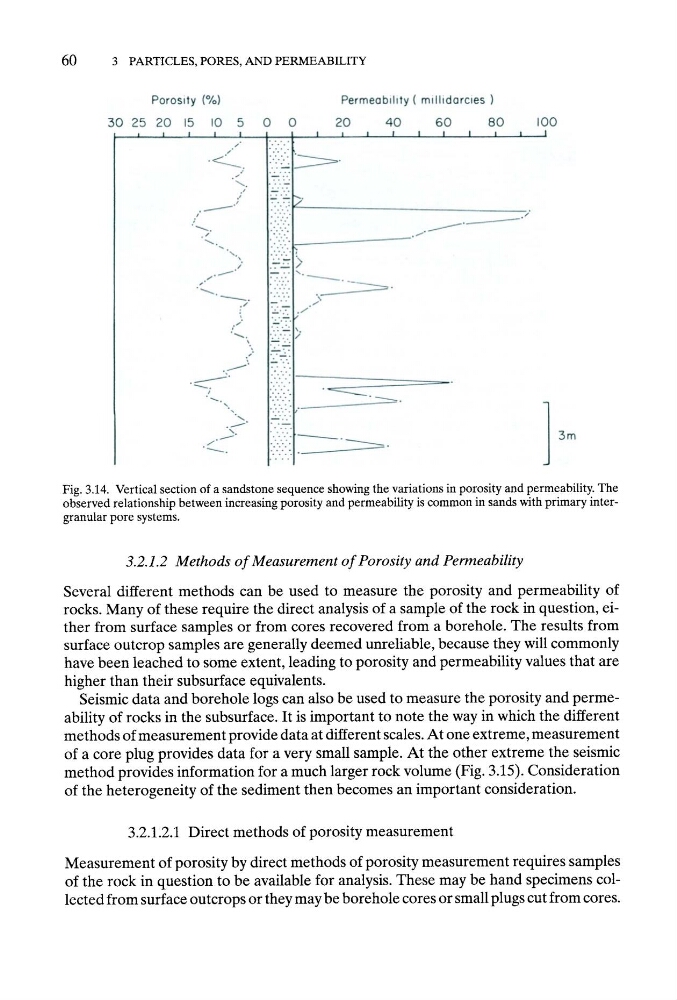
Fig. 3.14. Vertical section of a sandstone sequence showing the variations in porosity and permeability. The
observed relationship between increasing porosity and permeability is common in sands with primary intergranular pore systems.
3.2.1.2 Methods of Measurement of Porosity and Permeability
Several different methods can be used to measure the porosity and permeability of
rocks. Many of these require the direct analysis of a sample of the rock in question, either from surface samples or from cores recovered from a borehole. The results from
surface outcrop samples are generally deemed unreliable, because they will commonly
have been leached to some extent, leading to porosity and permeability values that are
higher than their subsurface equivalents.
Seismic data and borehole logs can also be used to measure the porosity and permeability of rocks in the subsurface. It is important to note the way in which the different
methods of measurement provide data at different scales. At one extreme, measurement
of a core plug provides data for a very small sample. At the other extreme the seismic
method provides information for a much larger rock volume (Fig. 3.15). Consideration
of the heterogeneity of the sediment then becomes an important consideration.
3.2.1.2.1 Direct methods of porosity measurement
Measurement of porosity by direct methods of porosity measurement requires samples
of the rock in question to be available for analysis. These may be hand specimens collected from surface outcrops or they may be borehole cores or small plugs cut from cores.
3 PARTICLES, PORES, AND PERMEABILITY
Fig. 3.14. Vertical section of a sandstone sequence showing the variations in porosity and permeability. The
observed relationship between increasing porosity and permeability is common in sands with primary intergranular pore systems.
3.2.1.2 Methods of Measurement of Porosity and Permeability
Several different methods can be used to measure the porosity and permeability of
rocks. Many of these require the direct analysis of a sample of the rock in question, either from surface samples or from cores recovered from a borehole. The results from
surface outcrop samples are generally deemed unreliable, because they will commonly
have been leached to some extent, leading to porosity and permeability values that are
higher than their subsurface equivalents.
Seismic data and borehole logs can also be used to measure the porosity and permeability of rocks in the subsurface. It is important to note the way in which the different
methods of measurement provide data at different scales. At one extreme, measurement
of a core plug provides data for a very small sample. At the other extreme the seismic
method provides information for a much larger rock volume (Fig. 3.15). Consideration
of the heterogeneity of the sediment then becomes an important consideration.
3.2.1.2.1 Direct methods of porosity measurement
Measurement of porosity by direct methods of porosity measurement requires samples
of the rock in question to be available for analysis. These may be hand specimens collected from surface outcrops or they may be borehole cores or small plugs cut from cores.