

444
9 AUTOCHTHONOUS SEDIMENTS
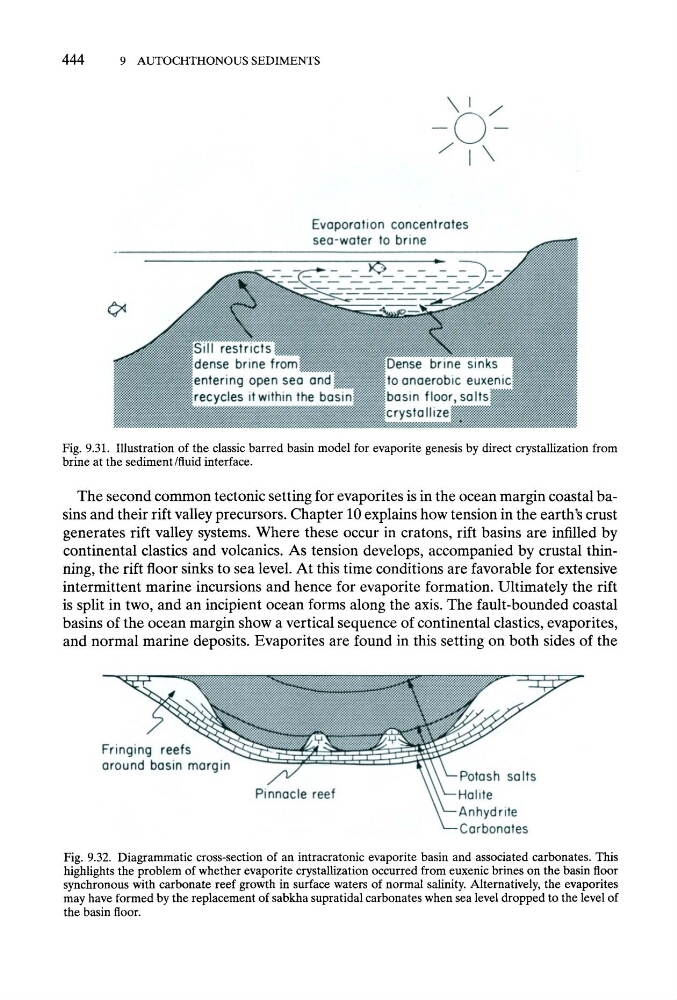
Fig. 9.31. Illustration of the classic barred basin model for evaporite genesis by direct crystallization from
brine at the sediment/fluid interface.
The second common tectonic setting for evaporites is in the ocean margin coastal basins and their rift valley precursors. Chapter 10 explains how tension in the earth's crust
generates rift valley systems. Where these occur in cratons, rift basins are infilled by
continental clastics and volcanics. As tension develops, accompanied by crustal thinning, the rift floor sinks to sea level. At this time conditions are favorable for extensive
intermittent marine incursions and hence for evaporite formation. Ultimately the rift
is split in two, and an incipient ocean forms along the axis. The fault-bounded coastal
basins of the ocean margin show a vertical sequence of continental clastics, evaporites,
and normal marine deposits. Evaporites are found in this setting on both sides of the
Fig. 9.32. Diagrammatic cross-section of an intracratonic evaporite basin and associated carbonates. This
highlights the problem of whether evaporite crystallization occurred from euxenic brines on the basin floor
synchronous with carbonate reef growth in surface waters of normal salinity. Alternatively, the evaporites
may have formed by the replacement of sabkha supratidal carbonates when sea level dropped to the level of
the basin floor.
9 AUTOCHTHONOUS SEDIMENTS
Fig. 9.31. Illustration of the classic barred basin model for evaporite genesis by direct crystallization from
brine at the sediment/fluid interface.
The second common tectonic setting for evaporites is in the ocean margin coastal basins and their rift valley precursors. Chapter 10 explains how tension in the earth's crust
generates rift valley systems. Where these occur in cratons, rift basins are infilled by
continental clastics and volcanics. As tension develops, accompanied by crustal thinning, the rift floor sinks to sea level. At this time conditions are favorable for extensive
intermittent marine incursions and hence for evaporite formation. Ultimately the rift
is split in two, and an incipient ocean forms along the axis. The fault-bounded coastal
basins of the ocean margin show a vertical sequence of continental clastics, evaporites,
and normal marine deposits. Evaporites are found in this setting on both sides of the
Fig. 9.32. Diagrammatic cross-section of an intracratonic evaporite basin and associated carbonates. This
highlights the problem of whether evaporite crystallization occurred from euxenic brines on the basin floor
synchronous with carbonate reef growth in surface waters of normal salinity. Alternatively, the evaporites
may have formed by the replacement of sabkha supratidal carbonates when sea level dropped to the level of
the basin floor.