

7.3 SUBSURFACE FLUIDS
321
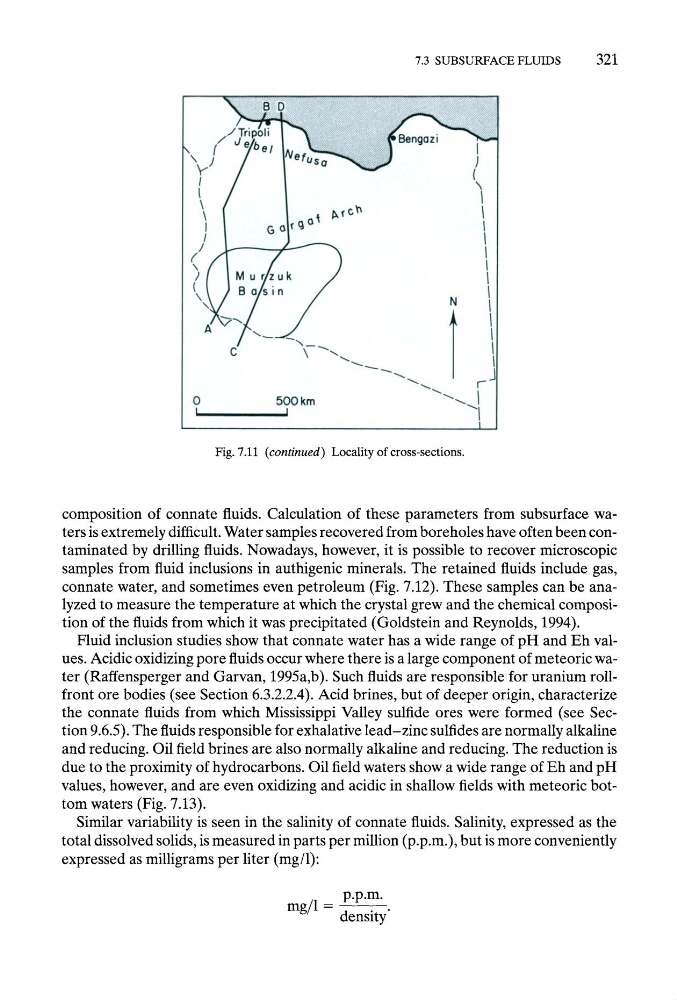
Fig. 7.11 (continued) Locality of cross-sections.
composition of connate fluids. Calculation of these parameters from subsurface waters is extremely difficult. Water samples recovered from boreholes have often been contaminated by drilling fluids. Nowadays, however, it is possible to recover microscopic
samples from fluid inclusions in authigenic minerals. The retained fluids include gas,
connate water, and sometimes even petroleum (Fig. 7.12). These samples can be analyzed to measure the temperature at which the crystal grew and the chemical composition of the fluids from which it was precipitated (Goldstein and Reynolds, 1994).
Fluid inclusion studies show that connate water has a wide range of pH and Eh values. Acidic oxidizing pore fluids occur where there is a large component of meteoric water (Raffensperger and Garvan, 1995a,b). Such fluids are responsible for uranium rollfront ore bodies (see Section 6.3.2.2.4). Acid brines, but of deeper origin, characterize
the connate fluids from which Mississippi Valley sulfide ores were formed (see Section 9.6.5). The fluids responsible for exhalative lead-zinc sulfides are normally alkaline
and reducing. Oil field brines are also normally alkaline and reducing. The reduction is
due to the proximity of hydrocarbons. Oil field waters show a wide range of Eh and pH
values, however, and are even oxidizing and acidic in shallow fields with meteoric bottom waters (Fig. 7.13).
Similar variability is seen in the salinity of connate fluids. Salinity, expressed as the
total dissolved solids, is measured in parts per million (p.p.m.), but is more conveniently
expressed as milligrams per liter (mg/1):
p.p.m.
mg/1 = density"
321
Fig. 7.11 (continued) Locality of cross-sections.
composition of connate fluids. Calculation of these parameters from subsurface waters is extremely difficult. Water samples recovered from boreholes have often been contaminated by drilling fluids. Nowadays, however, it is possible to recover microscopic
samples from fluid inclusions in authigenic minerals. The retained fluids include gas,
connate water, and sometimes even petroleum (Fig. 7.12). These samples can be analyzed to measure the temperature at which the crystal grew and the chemical composition of the fluids from which it was precipitated (Goldstein and Reynolds, 1994).
Fluid inclusion studies show that connate water has a wide range of pH and Eh values. Acidic oxidizing pore fluids occur where there is a large component of meteoric water (Raffensperger and Garvan, 1995a,b). Such fluids are responsible for uranium rollfront ore bodies (see Section 6.3.2.2.4). Acid brines, but of deeper origin, characterize
the connate fluids from which Mississippi Valley sulfide ores were formed (see Section 9.6.5). The fluids responsible for exhalative lead-zinc sulfides are normally alkaline
and reducing. Oil field brines are also normally alkaline and reducing. The reduction is
due to the proximity of hydrocarbons. Oil field waters show a wide range of Eh and pH
values, however, and are even oxidizing and acidic in shallow fields with meteoric bottom waters (Fig. 7.13).
Similar variability is seen in the salinity of connate fluids. Salinity, expressed as the
total dissolved solids, is measured in parts per million (p.p.m.), but is more conveniently
expressed as milligrams per liter (mg/1):
p.p.m.
mg/1 = density"